

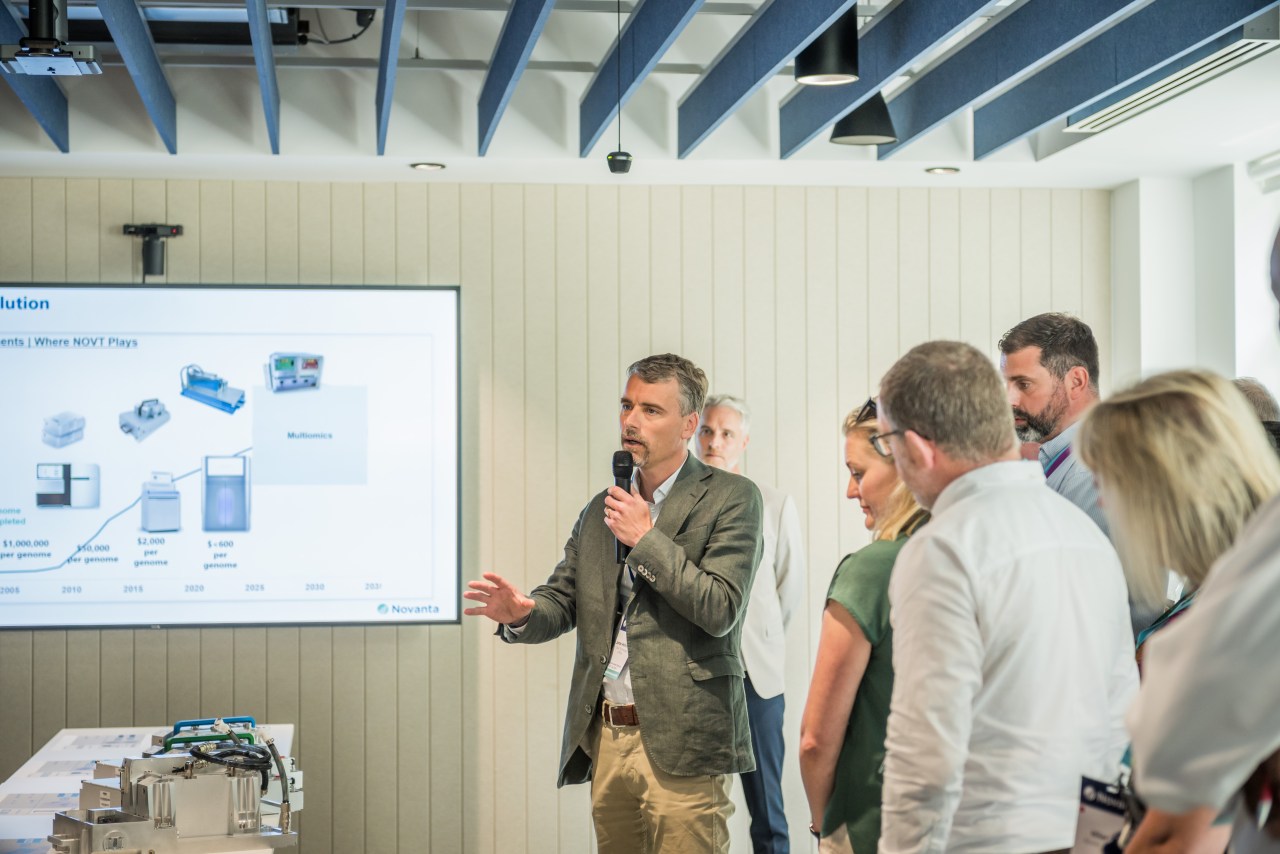
I lead a team of research and development engineers in Stockport, UK. As Chief Technology Officer, I oversee both new and sustaining projects, guiding my team through the constant evolution of technology and innovation. My experience as a CTO, head of R&D, and head of engineering has taught me that technical expertise alone isn’t enough. What matters most is a commitment to continuous learning and improvement. That’s what a growth mindset means to me, and it’s at the heart of how we work.
Change is always a challenge, and it affects each of us differently. The key is learning to accept a certain level of risk. You can’t innovate without it. You can’t win if you’re not trying something new. Taking calculated risks, not reckless ones, is essential to innovation and performance. Failing fast means making mistakes early in the development process, when the impact is smaller and the learning is greater. While it’s not always easy, we can set ourselves up for success by laying the groundwork early. Feasibility and concept studies allow us to make mistakes in a lower-risk phase so that when a project reaches full development, we’re ready to move efficiently.
My own growth mindset has been shaped by experience. When I finished university, I had the degree but not the practical knowledge. Once I started working on real problems, I began to understand where I could take risks. Failure didn’t define me,; it helped me grow. That approach has given me resilience and adaptability, which I bring to my role today. Even as a leader, I don’t see myself as an expert. I see myself as a perpetual learner. It’s important not to just say, “It’s going to work out,” especially when there isn’t a clear technical solution. You have to believe there are always other ways. There’s always a solution. For me, innovation isn’t just about new technology; it’s about cultivating the mindset that drives it.
As a leader, I work intentionally to build that mindset within my team. I talk with managers about embracing change as a positive and necessary part of our work, especially in an environment focused on new product development. If we were developing old products, we could just do the same thing over and over again. But R&D, by definition, means change. We have to lean forward and see the opportunities ahead. I encourage engineers not only to solve problems but also to pause and reflect—recognizing lessons learned, celebrating achievements, and uncovering root causes that drive continuous improvement. As part of this effort, I’m restructuring the R&D department to emphasize growth, timely delivery, and innovation.
To strengthen our culture, I’m partnering with HR and Talent Acquisition to embed growth mindset principles into hiring and leadership development. When interviewing, I recommend asking candidates to describe real situations and how they’ve faced challenges or responded to setbacks. Do they see the glass as half full or half empty? How do they receive feedback? Have they learned from their failures? It’s more valuable to me to hear about a project that went wrong and how it was recovered than to hear only success stories. Experience matters, but the right drive and mindset matter even more. I also champion more training and open discussions around the topic, helping leaders and teams build a shared language and habits that encourage positivity, learning, and smart risk-taking.
Embedding this mindset into company culture isn’t simple. Not delivering has consequences, and everyone has a different comfort level with failure. It’s difficult to find the right balance. Still, I believe creating an environment where it’s okay to fail is essential for innovation and long-term success. This mindset is really a make-or-break for us as a company. We need to keep talking about it, more often and more openly. I’m grateful to our leaders who have helped spark this important conversation on having a growth mindset. Looking ahead, I envision identifying ambassadors across technical departments, selecting people who can lead with positivity, model resilience, and bring others along. Whether it’s through training, sharing success stories from other companies, or simply applying this mindset to the tools we already use, we must keep growing. If we become too sequential and too slow, we stop innovating. Growth comes from change and from the courage to take risks.
At its core, my perspective is simple: A growth mindset is not just a philosophy; it’s how we live our values every day. It’s how we learn faster, deliver smarter, and move forward together to deliver innovation that matters.