

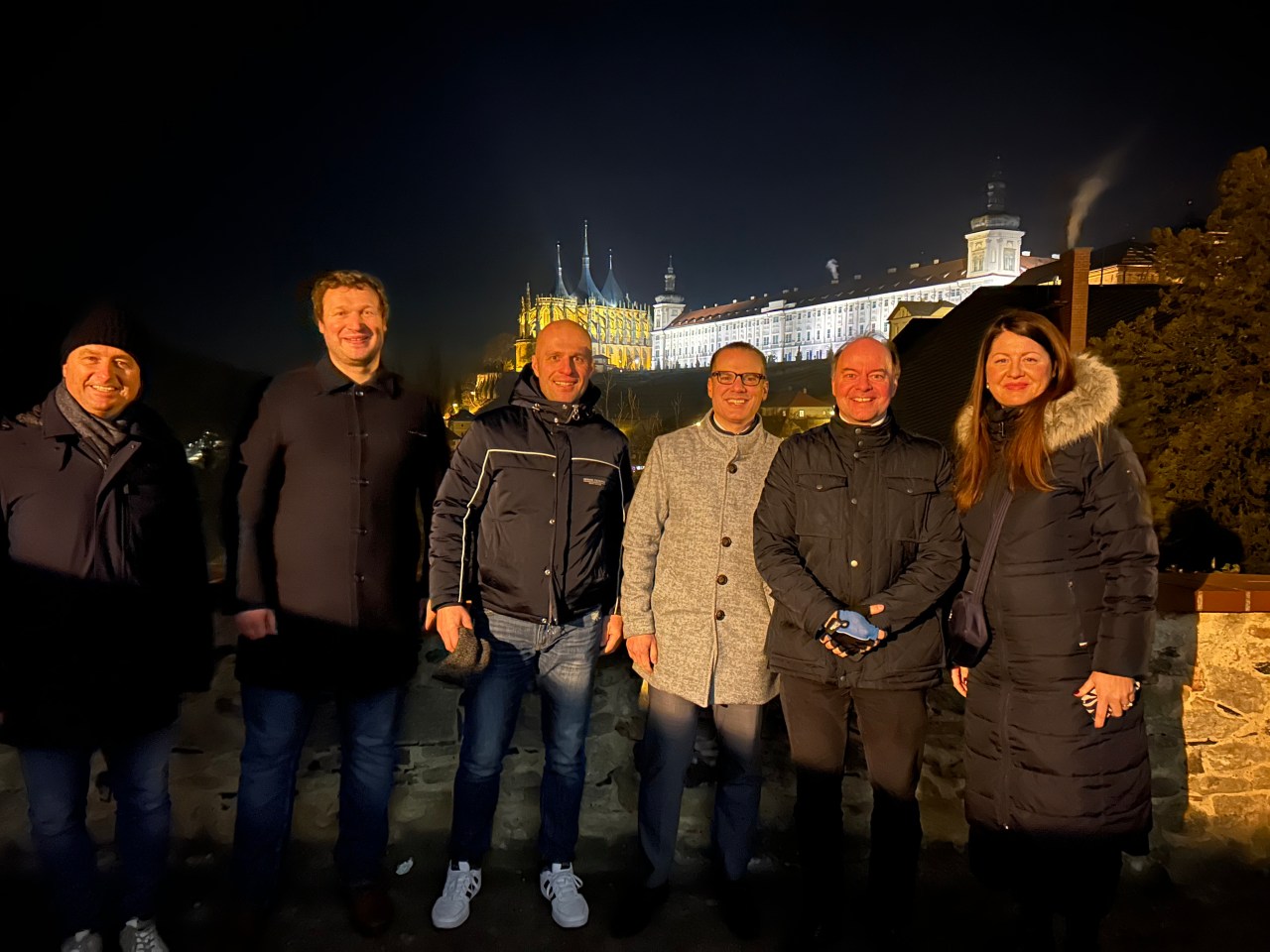
For decades, I’ve had the privilege of working with global teams and customers. Today, I lead our Medical Solutions group, empowering our Advanced Surgery and Precision Medicine teams to support customers and develop innovative products that make a real difference for patients and researchers.
Harnessing the Power of Global Teams
One of the most valuable lessons I’ve learned from working with global enterprises is that needs vary by region. This influences how we engage and how information, products, or services are received. Understanding those nuances, and adapting your approach, products, and solution accordingly, is critical.
I believe in the power of diverse perspectives. A global team brings different ways of thinking to every challenge and opportunity. That diversity leads to better products and stronger solutions because it expands the problem-solving toolbox. You might start with a screwdriver, but sometimes you need a completely different tool. When you have a global team, you’re significantly stronger and able to tackle complex problems with creativity and depth.
Cross-Cultural Problem-Solving in Action
A great example of this cross-cultural problem-solving occurred when our German-based colleagues brought their strong process orientation to a quality issue in Advanced Surgery. The U.S., Czech Republic and German team collaborated to address the problem, and the rigor and step-by-step approach from our Berlin and Ludwigsstadt colleagues proved invaluable. They meticulously worked through each stage, from step one to step ten, which ultimately led us to identify the root cause of the issue.
Without this collaboration, we likely would have approached the problem differently and missed the underlying cause. Sometimes, finding that needle in the haystack requires a disciplined, data-driven process, and this was one of those cases. The Czech Republic and U.S. teams initially focused on a high-level approach, identifying visible symptoms. However, they quickly realized that addressing symptoms alone wouldn’t solve the problem. By pivoting to the detailed methodology suggested by the German team, we achieved the desired results.
Germany uses application-first or inductive reasoning, while the U.S. is driven by principles-first or deductive reasoning. A successful collaboration between these different ways of operating was only possible because of trust and openness. All teams were receptive, willing to share perspectives, and committed to working together. Their mutual trust enabled true collaboration.
Building Trust to Navigate Global Growth
As a business grows, it is inevitable that you will face challenges and opportunities. Trust is the foundation of collaboration, and in a global organization, this takes time and genuine connection to build. Getting to know each other’s backgrounds, roles, and problem-solving approaches is essential. The best way to achieve this is through face-to-face interaction and working together on real challenges and opportunities. These connections allow us to understand how we think collectively and strengthen collaboration.
We’re seeing this firsthand at our site in the Czech Republic. Rapid expansion has introduced multiple cultures and ethnic backgrounds into a previously homogenous team. This shift created new dynamics and highlighted the need to rethink how we integrate colleagues and make them feel part of the organization.
Addressing these challenges requires intentionality and openness. We’re focusing on understanding individual preferences, how people approach problems, what matters most to them, how they receive recognition and feedback, and their training preferences. We are adapting processes and evolving workplace culture to support diversity and create an environment that works for everyone. This can only happen when we truly get to know and understand each other.
We need to create environments that encourage this type of engagement. Building trust cannot be shortcut; it requires investment.
Unlocking Our Global Potential
Continued growth requires creating space to understand one another and find opportunities for meaningful engagement across teams and geographies. As globalization transforms the way we work, we need to decode cultural differences to work effectively with clients, suppliers, and colleagues from around the world.
To succeed, we must approach our goals and challenges as one global team, not as many small teams. This means developing processes that allow talent to move across businesses and functions and ensuring collaboration is incentivized. If we want to bring everyone together, we need to think and act like one global company. That includes creating systems that drive unity and forming global teams when customers overlap between businesses.
Our success is shared: When Novanta wins, we all win. Creating a global culture requires effort from all of us, and our people leaders play a critical role in shaping the right environment. We need to continue taking steps to leverage our size and scale, working together across cultures and geographies to unlock our full potential.