

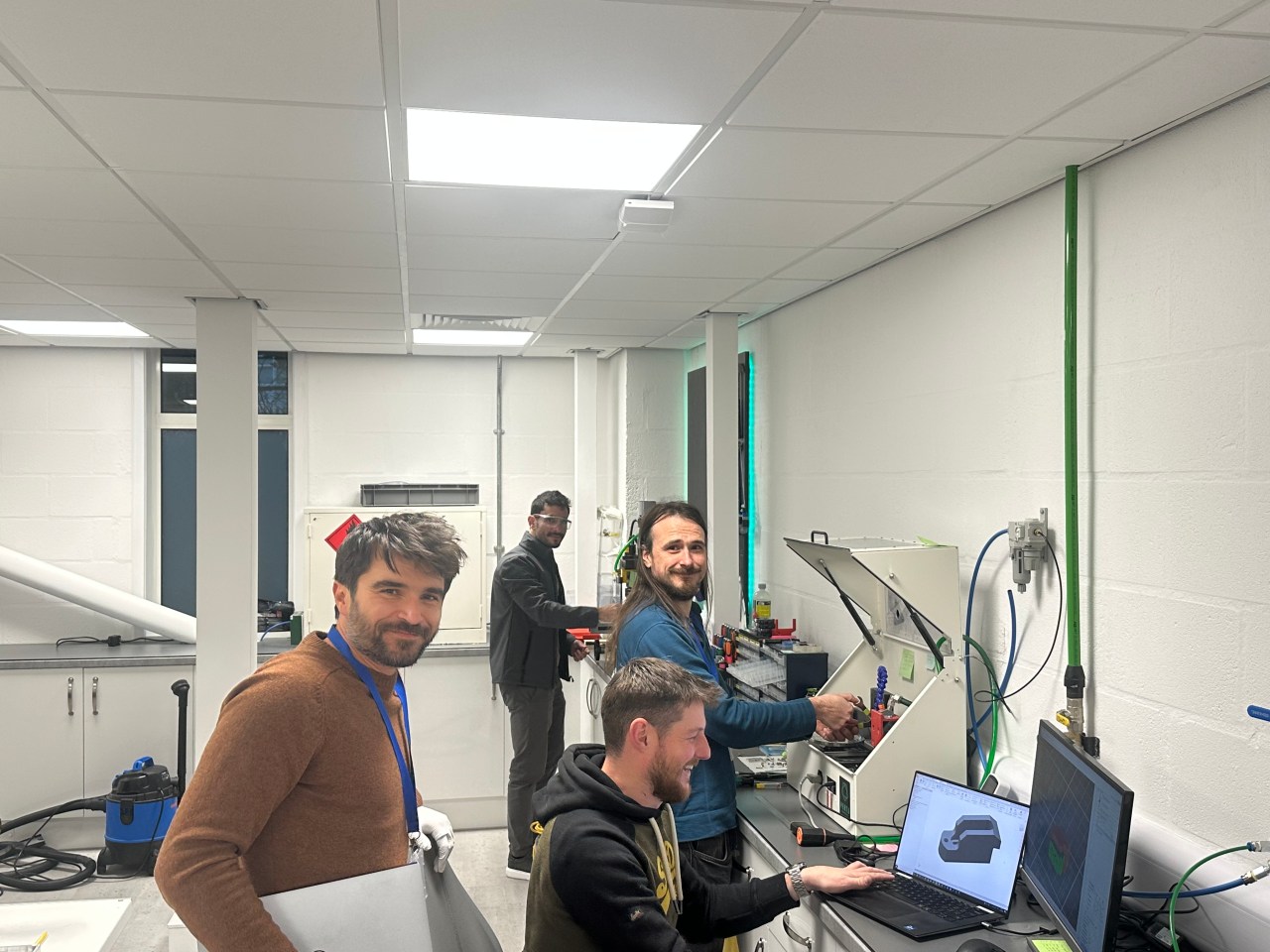
Victor Necsulescu is a Mechanical Design Engineer in Stockport, UK, and has been with our company for over eight years. Beginning his career in laser assembly, Victor transitioned to laser design seven years ago. This experience has been instrumental in fostering a growth mindset and a willingness to take smart, calculated risks. In his current role, Victor strives to balance innovation with established procedures, pushing boundaries where necessary without compromising precision or safety.
One book that left a lasting impression on Victor is Black Box Thinking by Matthew Syed, particularly its insights into how different industries handle failure and the open, analytical approach used in aviation. These ideas reinforced the value of failing fast and learning quickly from mistakes. A passion for aviation and success through calculated experimentation continues to inspire Victor’s approach to growth and improvement. The individuals he admires most are pioneers—people courageous enough to venture where no one else has gone. Risk-taking, after all, requires courage.
In his day-to-day work, Victor applies this innovative mindset by eliminating waste and improving efficiency. Using Computer-Aided Design (CAD) software, he continually seeks smarter, more mindful ways of working. There are countless inefficient methods, and his mission has been to standardize design processes, enabling colleagues to collaborate, edit, and build upon one another’s work. He recalls a time when the team produced complex parts without pausing to plan or refine their approach, noting that sometimes all it takes is five minutes of clever thinking to work more effectively.
Victor’s drive toward a growth mindset stems from the challenges he observes: tight deadlines, evolving requirements, the pursuit of excellence, and the risk of technical debt when short-term decisions compromise long-term goals. He consistently identifies opportunities to do things differently, better, and more efficiently. When implementing change, Victor believes that anything new carries risk—you don’t truly know it’s better until you try.
Peer review plays a crucial role in the team’s workflow. Every design requires colleague approval before release, ensuring compliance and seamless integration. Yet within those guardrails lies room for creativity. Risk-taking depends on both the individual and the project. While engineers can simulate and test designs, true validation often comes only after something is built. Disagreements and experimentation are essential steps in discovering what works best. However, excessive caution can hinder progress.
In the past, Victor’s team was highly risk-averse, clinging to legacy designs even when better solutions were evident. Fortunately, this culture has shifted, driven by leaders and a CTO who introduced the concept of failing fast. By taking controlled risks in a supportive environment, the department now accelerates learning, identifies flaws early, and adapts more quickly.
While valuing risk-taking, Victor remains mindful of avoiding what he considers dangerous levels of risk. This balance is an evolving skill requiring awareness, experience, and judgment. It’s about finding equilibrium between boldness and caution. The team acknowledges the complexity of this process—and the frustration of doing things the same way simply because it’s familiar. Sometimes boldness is necessary, but it must always be tempered with sound judgment.
For Victor, true innovation emerges from the middle ground, where structure meets curiosity and risk-taking thrives within the boundaries of sound engineering. By embracing controlled risk-taking and maintaining an open mindset, he believes teams can continue to grow, adapt, and innovate responsibly.