







Workplaces are built on communication. The way we greet one another, introduce ourselves and collaborate shapes whether people feel respected and included.
How we work together matters. We know that when our employees feel seen and valued, they are better able to contribute and solve meaningful challenges. That is a core part of how we operate.
For transgender individuals, visibility in the workplace can come with unique challenges.
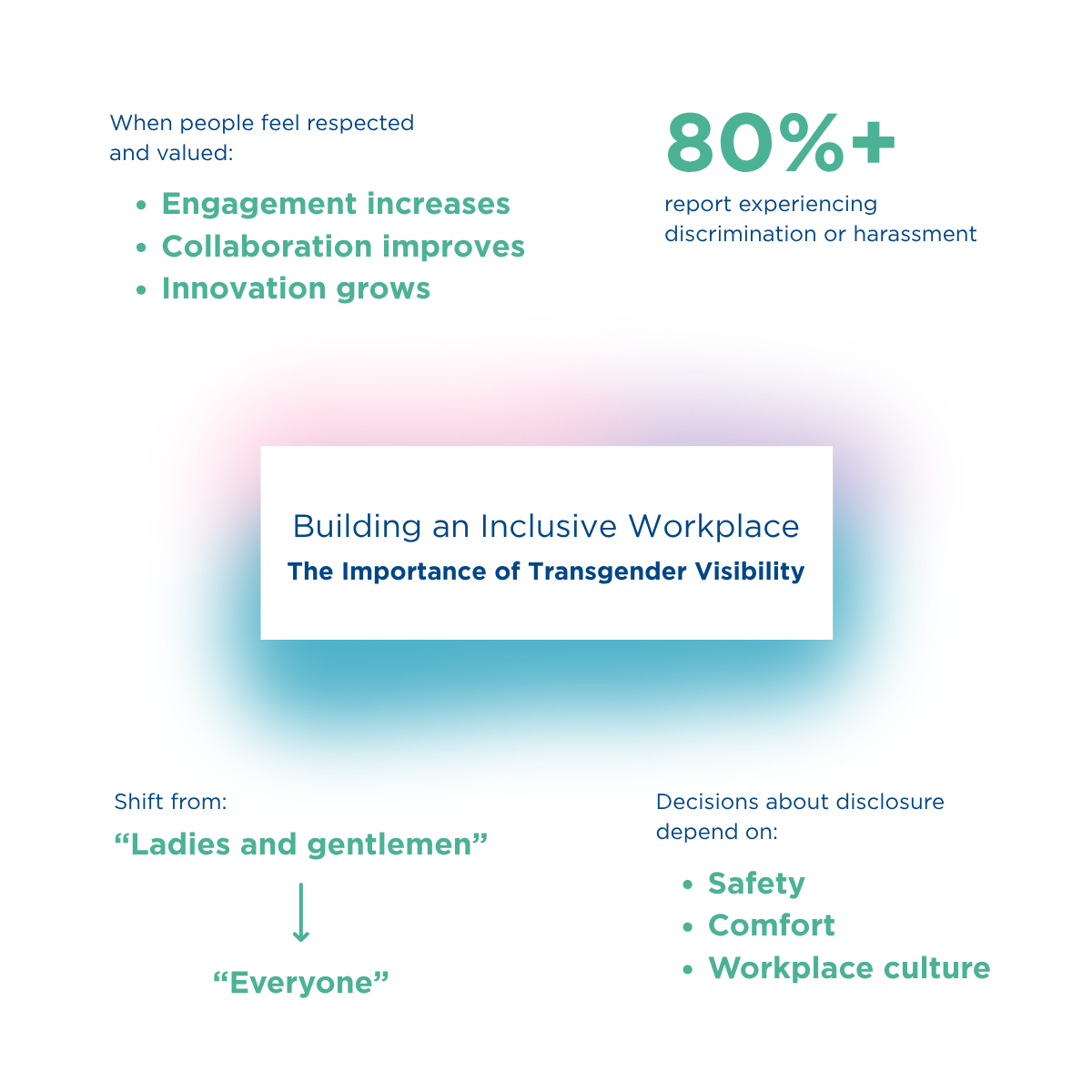
Research from the Williams Institute at UCLA School of Law shows that many transgender professionals are not fully open at work, and more than 80 percent report experiencing discrimination or harassment in the workplace. Because of this, decisions about disclosure often depend on context, comfort and perceived safety.
Creating environments where people feel comfortable being themselves benefits everyone.
Why language matters
Language is one of the most practical tools organizations can use to support inclusion.
Traditional greetings and titles are often gendered. Small shifts, such as using “everyone” instead of “ladies and gentlemen,” can help create spaces where people feel respected and included.
Asking colleagues what pronouns they use, including pronouns in email signatures and normalizing inclusive language are simple actions that signal awareness and respect.
The singular “they,” for example, has been used in English for centuries. As language evolves, organizations that adapt help foster stronger belonging across their teams.
Inclusion is a daily practice
Inclusive workplaces are not built through policy alone. They are built through everyday interactions.
Small moments matter, from introductions in meetings to how we greet a group, and whether we pause to ask rather than assume.
Inclusion and belonging are part of how we work. We know this enables stronger collaboration, better problem-solving and more innovative outcomes. When employees feel respected and valued, they can focus on contributing their skills and ideas, and that drives impact for our customers and our teams.
Inclusion not about having all the answers. It is about being willing to understand and take thoughtful steps that support everyone’s ability to contribute and succeed.
Explore our website to learn more about our culture of inclusion and belonging and what it’s like to work with us. We are committed to supporting our employees and creating an environment where they can do their best work.