



Humanoid robotics is entering a new phase.
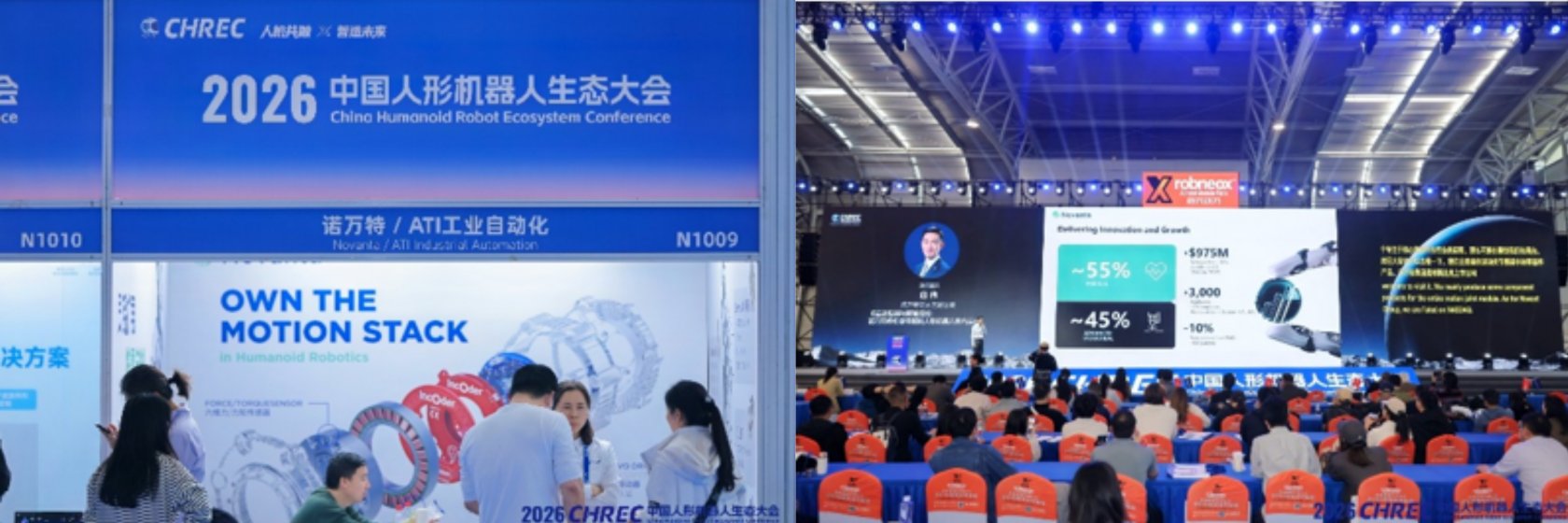
The industry is moving beyond early-stage prototypes toward systems that must perform reliably, scale efficiently, and meet real-world demands. At the 2026 China Humanoid Robot Ecosystem Conference (CHREC) in Shanghai, China, this shift was front and center.
The Shift to Integration
As humanoid robots become more advanced, the complexity of their systems increases. Precision motion, force sensing, control systems, and software must operate seamlessly.
This is where integrated motion becomes essential.
By combining motors, drives, encoders, and force/torque sensing with intelligent software, manufacturers can achieve:
- Greater precision and responsiveness
- Smaller system footprints
- Faster deployment timelines
- Industrial-grade reliability
Integration reduces system complexity and accelerates the path from development to deployment.
Leading the Industry Dialogue
At CHREC, we contributed to the broader industry conversation through a technical keynote delivered by Wei Bai, Vice President of Sales for APAC.
The keynote focused on a critical transition. Humanoid robotics is evolving from functional prototypes to commercially viable systems that require scalability and safety and efficiency.
Integrated motion technologies are central to that evolution, enabling performance while reducing system-level risk.
Industry Recognition That Signals Momentum
We were also honored with the Excellence Award at CHREC, recognizing our innovation and contributions to the humanoid robotics ecosystem.
This recognition reflects our ability to deliver not just components, but integrated solutions that meet the demands of next-generation robotic systems. As the industry continues to evolve, system-level performance will define success.
Enabling Real-World Applications
At the event, we showcased how integrated solutions enable capabilities such as dexterous manipulation, safe human-machine interaction, and consistent performance in dynamic environments.
These capabilities are foundational to applications across manufacturing, logistics, healthcare, and beyond.
Building What Comes Next
The next challenge for humanoid robotics is scale.
To move from innovation to commercialization, systems must meet strict requirements around safety, efficiency, and repeatability. Integrated solutions help bridge that gap.
We continue to invest in technologies that help our customers accelerate development and bring next-generation robotics to market faster.
The future of humanoid robotics will be defined by how seamlessly systems come together. That is where we focus.