





By Meghan Collins, Marketing Specialist
ADLM 2026 brought together leaders from across the laboratory diagnostics industry to explore emerging technologies and share expertise, while discussing the future of laboratory automation. The event reinforced an increasingly important reality: Innovation happens faster when organizations work together.
Throughout the event, conversations focused on a common challenge. Companies are under pressure to shorten development timelines and manage complexity, bringing new technologies to market efficiently. More organizations are looking for trusted technology partners who can help reduce complexity and accelerate development, ready to bring proven solutions to market.
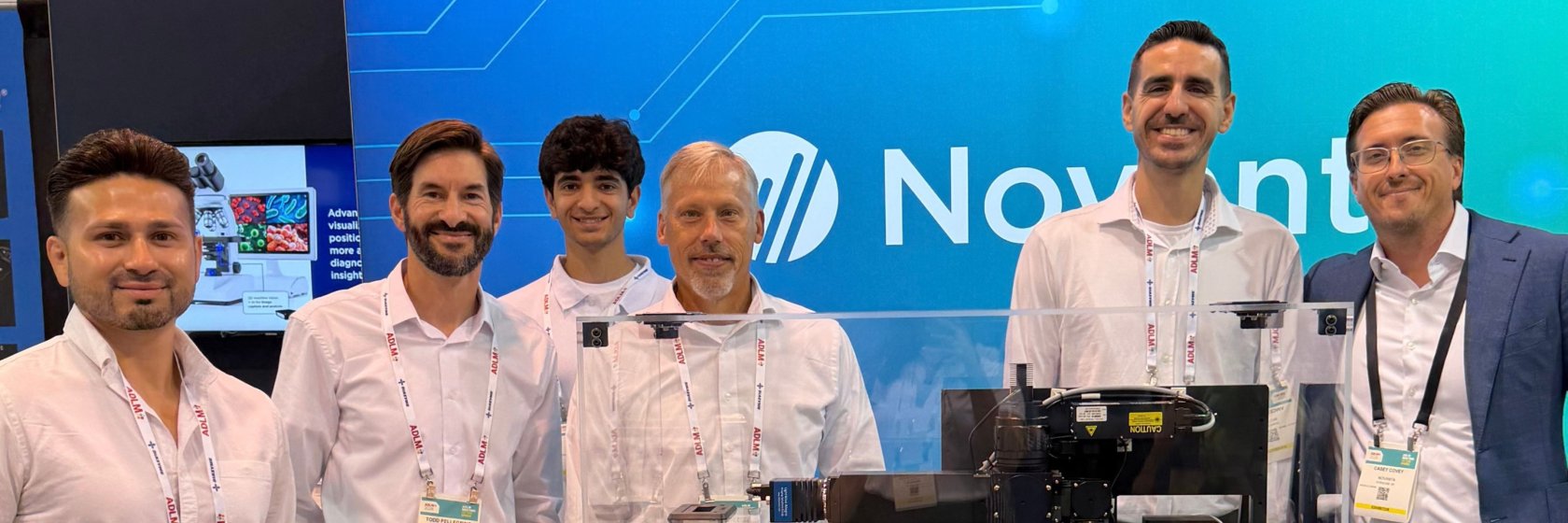
At Booth 1374, we showcased four live demonstrations featuring machine vision, RFID, barcode scanning, embedded displays, precision motion, and integrated imaging technologies. The demonstrations explored applications including real-time sample identification, consumables authentication, robotic diagnostic workflows, and advanced microscopy systems. Together, they illustrated how automation technologies can improve workflow efficiency, accuracy, traceability, and throughput throughout laboratory environments.
One of the most compelling demonstrations was an integrated solution developed through collaboration across our teams and partner Optikos. By combining multiple technologies into a single workflow, the demonstration helped attendees visualize how integrated solutions can simplify development while delivering meaningful performance advantages.
The event also reinforced an important lesson about innovation. While integrated solutions create significant value, customers often begin with a specific challenge they need to solve. The most productive conversations often start with understanding a customer’s immediate challenge. Once that foundation is established, customers can better see how additional technologies and expertise can work together to support broader objectives.
Technical presentations led by our experts brought those concepts to life. Dr. Jörg Vandenhirtz shared how embedded AI vision technologies are advancing laboratory automation through improved accuracy, speed, and reliability. Lawrence Floresca demonstrated solutions designed to support automated microscopy, including autofocus technologies, image stabilization capabilities, and precision motion systems that help improve imaging performance.
Walking the exhibit floor provided another perspective on innovation. I had the opportunity to visit customer booths and see our technologies integrated inside diagnostic instruments already being used throughout the industry. While these technologies often operate behind the scenes, they play an important role in enabling reliable and efficient laboratory workflows.
Conversations with customers highlighted an ongoing shift toward collaboration. Organizations increasingly want partners who can help accelerate development and reduce risk. Cost pressures and evolving market demands, along with the need to bring new solutions to market quickly, are driving greater interest in integrated technologies and engineering partnerships.
Ultimately, these innovations matter because of their impact on the people performing critical work inside laboratories. By automating routine tasks and improving workflow consistency, advanced technologies can create more time for laboratory professionals to focus on analysis, problem-solving, and patient outcomes. As automation continues to evolve, creating time may be one of the most meaningful outcomes technology can deliver.
ADLM 2026 was a powerful reminder that innovation is rarely the result of one product or technology, or an individual team. The most impactful solutions emerge when specialized expertise comes together around a common challenge.
By combining expertise across machine vision, identification technologies, imaging, automation, and precision motion, we help customers solve today’s challenges while creating opportunities for future innovation.
ADLM showed that the future of laboratory automation will be built through partnership and a deep understanding of the problems customers are working to solve.