








By Christine Blinn, Marketing Director
Organizations generate enormous amounts of information every day.
Valuable expertise exists in technical documentation, project work, customer engagements, presentations, application notes, and the experiences of employees across the business. Yet finding the right information often depends on knowing who to ask or where to search. Information may already exist, but it is often spread across teams, systems, and repositories.
That challenge creates an opportunity for AI.
Making Expertise Easier to Access
I increasingly think about AI as a digital chief of staff.
Not because it replaces human expertise, but because it helps organize information, connect knowledge across teams, and surface what people need to keep work moving.
A great example comes from work led by Matthew Tedford, Software Controls Program and Application Manager. Matthew developed a prototype support agent designed to help employees answer technical questions related to software controls, integrations, troubleshooting, and customer applications using existing documentation and knowledge resources.
Instead of searching multiple systems or waiting for a subject matter expert to respond, employees can quickly access relevant information and continue moving forward.
The benefit is not just speed. It is making expertise easier to reach when and where it is needed.
The goal is not to replace experts. The goal is to make their knowledge more accessible so they can spend less time answering repetitive questions and more time solving the complex challenges that truly require their expertise.
Building a Connected Knowledge Framework
As Matthew worked on the support agent, it became clear that the opportunity extended far beyond answering individual questions.
Organizations generate vast amounts of information, but valuable insights often remain scattered across multiple systems and repositories. Employees frequently need to know where information lives or who created it before they can access it.
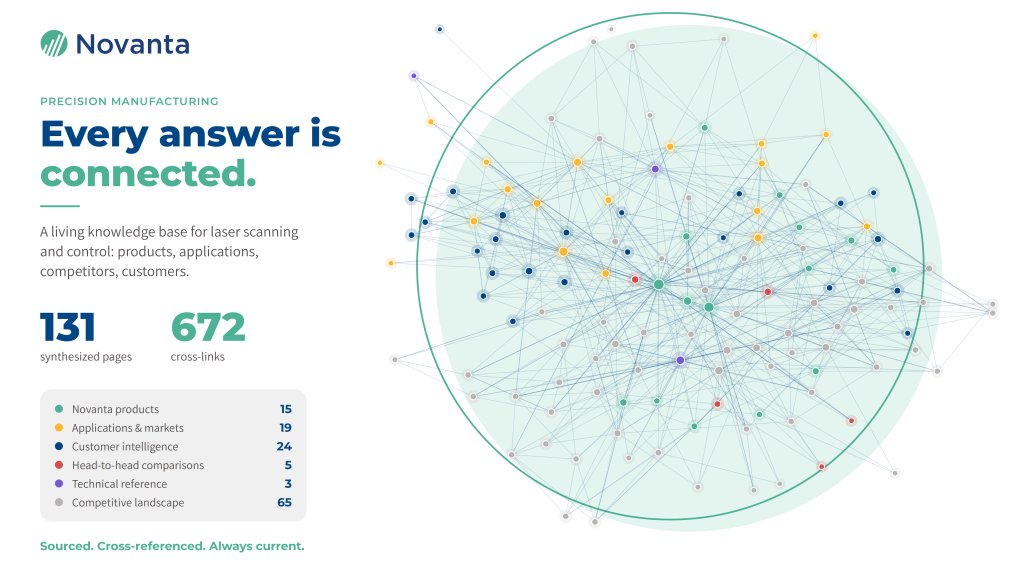
That realization led to the development of a broader knowledge framework that brings information together in a more accessible way.
AI helps organize material, maintain traceability back to original sources, and connect employees with relevant information without requiring them to know exactly where it resides.
The goal is not to create more information. The goal is to help people find, understand, and use the information that already exists.
Technology Matters. People Matter More.
One of the most important lessons I have learned is that successful AI adoption depends on people.
In our Precision Manufacturing business, we established a structured AI operating model and a cross-functional network of AI Champions that help identify meaningful use cases, share best practices, and ensure projects remain aligned with business priorities and governance requirements.
The value of that approach becomes clear when employees learn from one another.
Earlier this year, the Robotics & Automation team shared a Kaizen project demonstrating how they use Confluence and AI to surface answers from their knowledge base. The ideas they shared influenced projects across the organization, including Matthew’s work, and reinforced the value of sharing knowledge across functions rather than solving similar challenges independently. That collaborative approach reflects One Novanta in action.
These experiences also reinforce something I believe strongly: AI works best when it complements human expertise.
Technology can help organize information, accelerate routine tasks, and surface insights, but people provide the judgment, experience, context, and accountability needed to turn information into effective action.
Turning Information Into Action
As organizations grow, valuable expertise becomes distributed across teams, systems, and individuals. Too often, knowledge becomes difficult to locate even though it already exists somewhere within the business.
Making that knowledge easier to access creates opportunities for employees to spend less time searching for information and more time solving problems, supporting customers, and driving innovation.
For me, that is the real value of AI.
It is not simply about working faster. It is about preserving expertise, creating visibility, and making knowledge more accessible so employees can benefit from the collective experience of the organization.
When paired with human expertise and a mindset of continuous improvement, AI becomes more than a productivity tool. It becomes a coordination tool that helps organizations connect knowledge, create visibility, and turn information into action.
That is the opportunity we are working toward: using technology not to replace people, but to help people work with greater clarity, connection, and impact.