








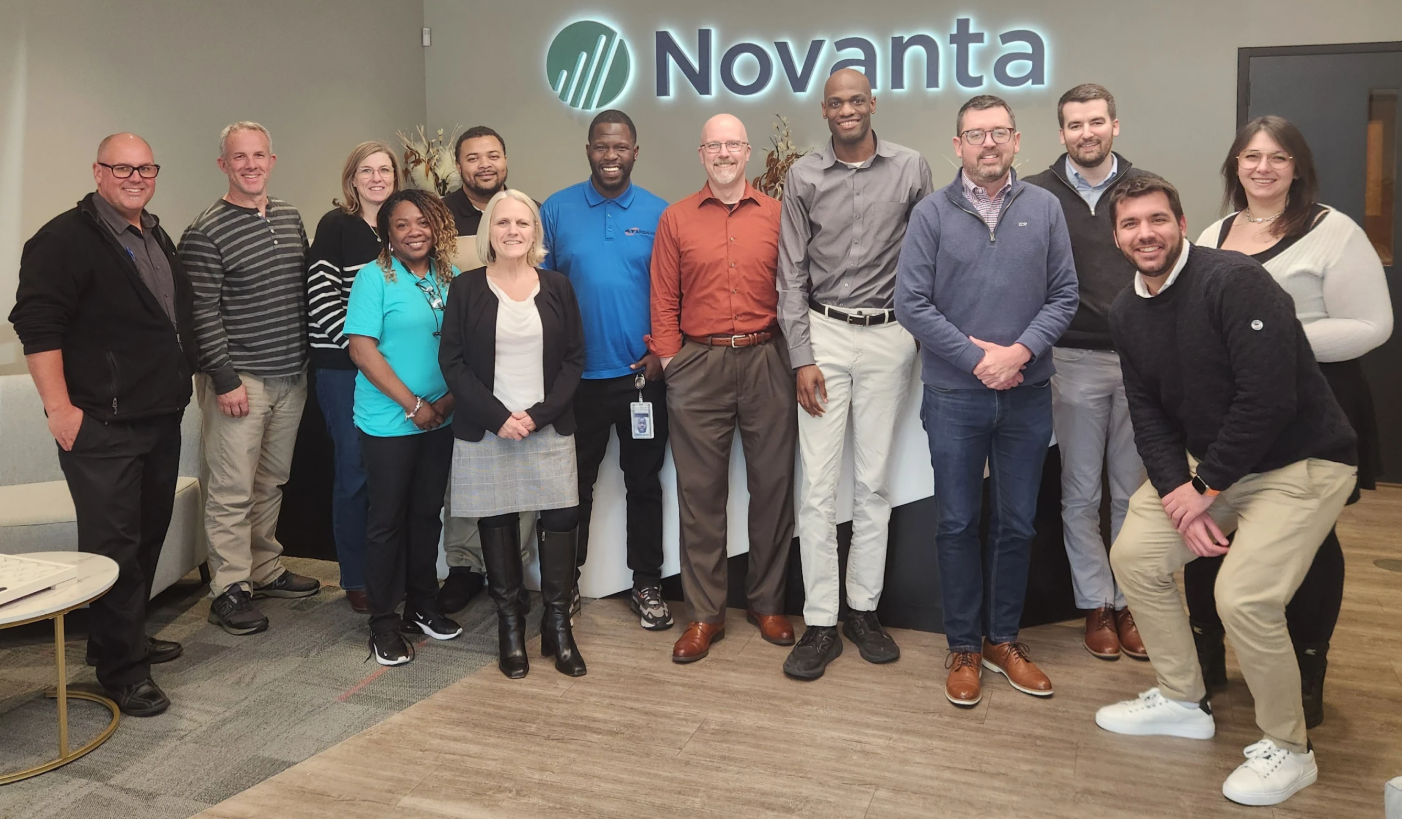
At our problem-solving bootcamp in Apex, North Carolina, we brought together cross-functional teams to focus on a simple question: How do we close the gaps that matter most to our customers and our business?
The answer starts with structure.
We use the Novanta Growth System (NGS) to define problems clearly, analyze root causes, and implement countermeasures that drive measurable improvement. This approach ensures we focus on real performance gaps and take action that lasts.
Three Problems, One Mindset
During the bootcamp, three teams focused on distinct challenges across our business.
One team examined growth in the emerging humanoid robotics market. They identified shifts in the force/torque landscape as the primary driver of a performance gap and developed actions that could reduce that gap by nearly half within the year.
Another team focused on operational execution, specifically on-time delivery. Their work showed that part shortages are the leading cause of delays. By addressing key constraints during the session and prioritizing next steps, they created a clear path to improved delivery performance.
A third team addressed the speed of time from quote to customer. They found that incomplete data in the quoting process is responsible for about half of the cycle time gap, doubling turnaround time from the 20-day standard. By improving process clarity and reinforcing accountability, they are enabling faster, more consistent customer response.
What This Means for Customers
These efforts are not theoretical. They directly impact how we deliver.
- Faster quoting means customers can move forward with confidence
- Improved delivery performance increases reliability
- Stronger market alignment helps us invest where it matters most
Across each problem, the goal is the same: remove friction and improve performance so that we can deliver better outcomes.
A Consistent Pattern
While each challenge was different, the themes were consistent.
- High-quality data enables better decisions.
- Clear processes enable faster execution.
- Aligned teams enable stronger results.
By focusing on these fundamentals, we create momentum that extends beyond a single project.
Building Capability That Scales
What makes this type of problem-solving approach powerful is not just the outcomes but the repeatability.
When teams follow a structured problem-solving process, they build capabilities that scale across the organization. That allows us to respond faster to change, improve continuously, and deliver long-term value for customers.