






By Matthijs Glastra, Chair and Chief Executive Officer
The most valuable market insights rarely come from presentations or analyst reports. They come from conversations with customers and from seeing firsthand where innovation is heading.
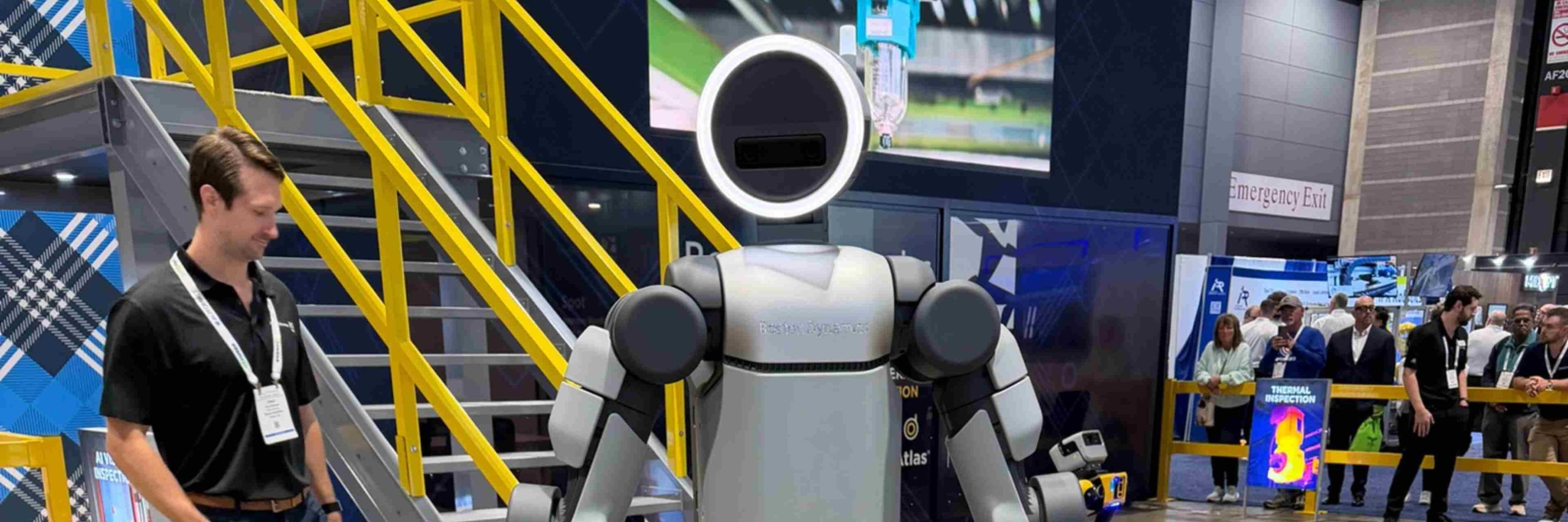
I recently had the opportunity to meet with several customers and industry leaders at Automate, North America’s largest automation trade show. Those conversations reinforced something important.
The opportunity in front of us is growing, but so are expectations.
Customers are looking for partners who can move quickly.
Across my discussions with customers, the message was clear.
Innovation matters. Strong technology matters. Long-term relationships matter.
But execution is what determines who earns the next opportunity.
Customers are looking for partners that can help them solve increasingly complex challenges around functional safety, system integration, cost competitiveness and scalability. They want solutions that allow them to innovate faster while maintaining reliability and reducing complexity.
Those priorities align directly with where we continue to invest.
Physical AI is moving from possibility to reality.
At Automate, one trend stood above the rest.
The conversation has shifted beyond traditional industrial automation.
Physical AI is becoming one of the defining forces shaping the next generation of robotics.
Whether it’s warehouse automation, humanoid robotics or intelligent manufacturing systems, customers are no longer asking whether physical AI will happen. They’re asking how quickly they can deploy it and who can help them succeed. That evolution depends on technologies capable of delivering precise motion, advanced sensing, functional safety and intelligent control.
These are areas where we believe Novanta is uniquely positioned to create value.
Across the exhibition floor, analysts, OEMs and technology leaders consistently highlighted the growing importance of enabling technologies that allow physical AI systems to operate safely and reliably in real-world environments.
The pace of innovation is accelerating.
The market is rewarding companies that combine innovation with execution.
Customers are not simply searching for new technology.
They are looking for partners who can help them commercialize innovation.
That requires deep application expertise, long-term collaboration and the ability to deliver consistently.
As conversations expand across robotics, automation and intelligent systems, it’s increasingly clear that customers value partners who understand their applications as well as the technology itself.
Those relationships create opportunities to solve larger, more complex problems over time.
Opportunity creates responsibility.
Markets with strong long-term tailwinds naturally attract investment and competition.
Success belongs to organizations that can respond quickly while maintaining operational excellence.
Our responsibility is straightforward. We must stay close to customers. We must continue investing in technologies that matter. And we must execute with speed and discipline.
The momentum we are seeing today is encouraging. The window of opportunity is open, but momentum only creates value if we turn it into long-term customer success.
That is where our focus remains.