






By Maya Dave, Marketing Campaign Manager
As AI continues to reshape manufacturing, IMTS 2026 underscored the importance of the technologies that enable intelligent machines to operate in the physical world.
Across our booth and partner exhibits, we demonstrated how force sensing, intelligent tool changing, and advanced robotics are helping manufacturers build automation systems that are more adaptable, precise, and scalable. Whether supporting machine shops, CNC tending, laboratory workflows, or high-mix production environments, the common thread was clear: Robots need the ability to sense, adapt, and respond.
Giving Robots the Sense of Touch
One of the most important conversations at IMTS centered around physical AI.
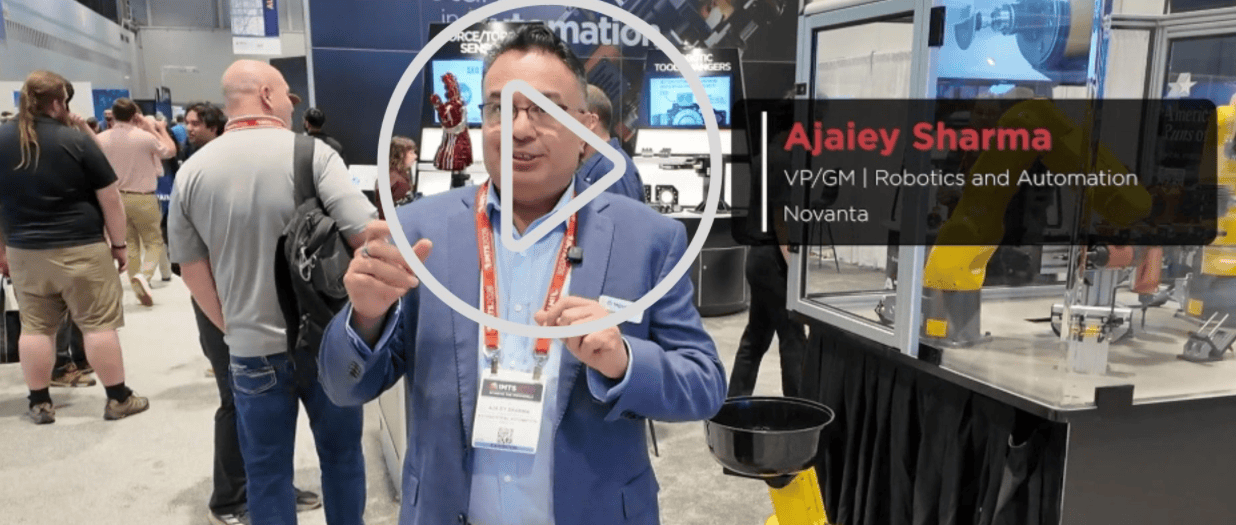
According to Ajaiey Sharma, Vice President & General Manager, Robotics and Automation, AI depends on large amounts of data to understand and interact with the world around it. Our force/torque sensors provide that data by measuring force and torque in six axes.
While cameras give robots vision, force torque sensors give them touch. Together, they provide the perception robots need to operate with greater precision, speed, and adaptability.
Helping Manufacturers Scale Through Flexible Automation
At our booth, Baron Kendrick, Senior Product Manager, showcased a collaborative demonstration with FANUC focused on manufacturing flexibility.
The application featured two FANUC robots using coordinated motion software alongside our tool changers and material removal tools. By automatically switching between deburring, filing, and finishing tools while processing an engine casting, the system demonstrated how manufacturers can automate multiple processes within a single cell and scale more efficiently.
Enabling Smarter Automation Across Industries
Our technologies were featured in demonstrations across manufacturing and laboratory automation. At Relling, our material removal tools enabled automated deburring and finishing for high-mix manufacturing environments. At Intrinsic, our force/torque sensors supported AI-driven CNC tending applications developed with Trinity Automation, helping robots adapt to variation and perform tasks requiring submillimeter precision.
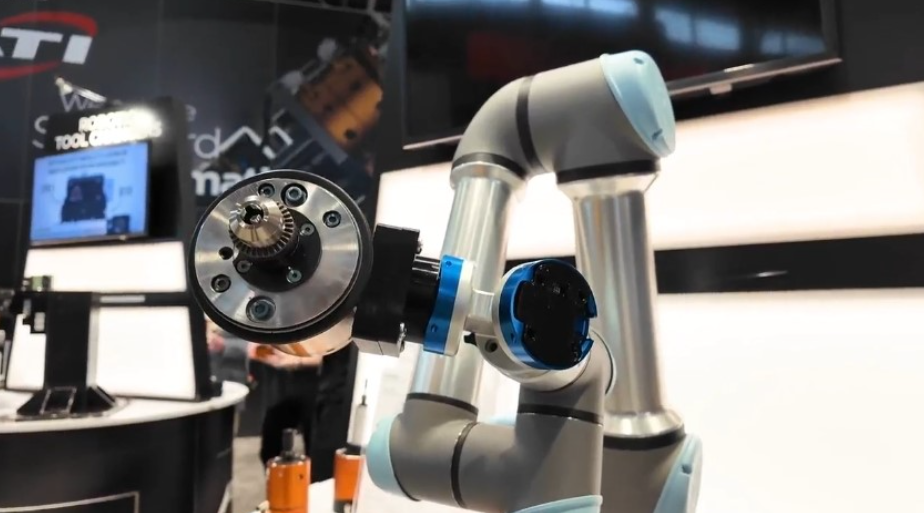
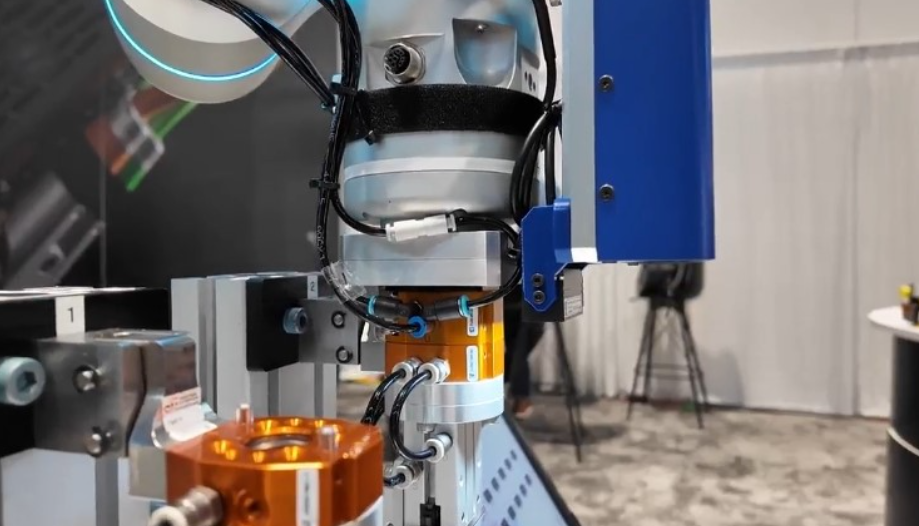
At Kurabo Industries, 3D vision, tool changers, and sensing solutions automated applications ranging from cable routing and connector insertion to pipetting and liquid handling in laboratory environments.
Together, these demonstrations showed how intelligent sensing, robotic tooling, and automation technologies help manufacturers and laboratories tackle complex processes with greater precision, flexibility, and efficiency. By enabling robots to adapt to real-world variation, automate multiple tasks, and maintain consistent performance, these solutions help expand what automation can achieve across a wide range of applications.
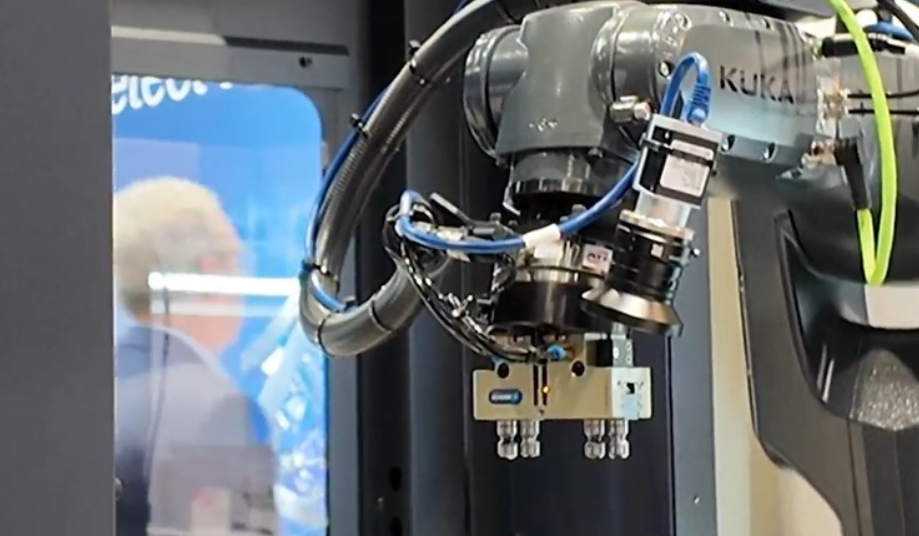
Enabling Smarter Robotic Decisions
At our booth, Michael Manfredo, Field Sales Manager, demonstrated how force sensing and tool changing can work together to create more intelligent automation.
The application combined our force/torque sensors, QC29 tool changers, and FANUC Force Control technology. The robot used force feedback to determine whether the installed gripper could perform a pick operation, automatically changed tools when necessary, verified the part using weigh-in-motion capabilities, and completed a force-controlled insertion process.
The result was a system capable of making decisions based on real-world conditions rather than following a fixed sequence of movements.
Building the Future of Physical AI
Across every demonstration at IMTS 2026, one message emerged. As AI moves from software into real-world environments, robots need more than intelligence. They need the ability to sense, adapt, and respond.
From machine tending and material removal to factory automation, laboratory automation, and advanced assembly, our force sensing and tool changing technologies are helping manufacturers unlock the full potential of physical AI.