









By Michelle Sharidan, UK HR Enablement Manager
Employee engagement is often discussed in terms of programs, initiatives, and metrics. While those elements are important, the most engaged workplaces are built on something much simpler: people who feel connected to their team and the opportunity to make a meaningful contribution.
Recently, I spoke with Finance Director Ian Edwards about employee engagement and what helps create an environment where people can thrive. While the conversation covered a range of topics, one message stood out: Engagement grows when people are encouraged to connect, learn, ask questions, and contribute.
Throughout my career in HR, I have seen the impact engagement can have on both individuals and organizations. Engaged employees are more likely to support one another and embrace opportunities for growth. They help create cultures where teamwork and continuous improvement become part of everyday work.
What I found particularly interesting during my discussion with Ian was his emphasis on curiosity.
Curiosity is not always the first trait people associate with employee engagement, yet it plays a significant role in helping employees feel connected to the bigger picture. When people understand how products are developed and how different teams contribute to success, they gain a stronger sense of purpose and ownership.
That belief is driving efforts to create more opportunities for employees to learn about the products and technologies they support. Through product-focused discussions and cross-functional conversations, employees will have opportunities to hear directly from experts across the business and deepen their understanding of how their work contributes to customer outcomes.
These types of conversations do more than share knowledge. They help build connections between teams and create a greater appreciation for the diverse expertise that exists throughout an organization.
Engagement is also strengthened when employees feel comfortable sharing their perspectives.
Open dialogue between employees and leaders helps build trust while creating opportunities for meaningful change. Whether through employee forums, team discussions, one-on-one conversations, or employee resource groups, providing channels for communication helps ensure people feel informed and valued.
Of course, engagement is not solely the responsibility of leaders or HR teams.
Creating a positive workplace culture is a shared effort. Every employee contributes through the questions they ask, the ideas they share, the relationships they build, and the support they provide to colleagues. The strongest cultures are created when people feel empowered to participate rather than simply observe.
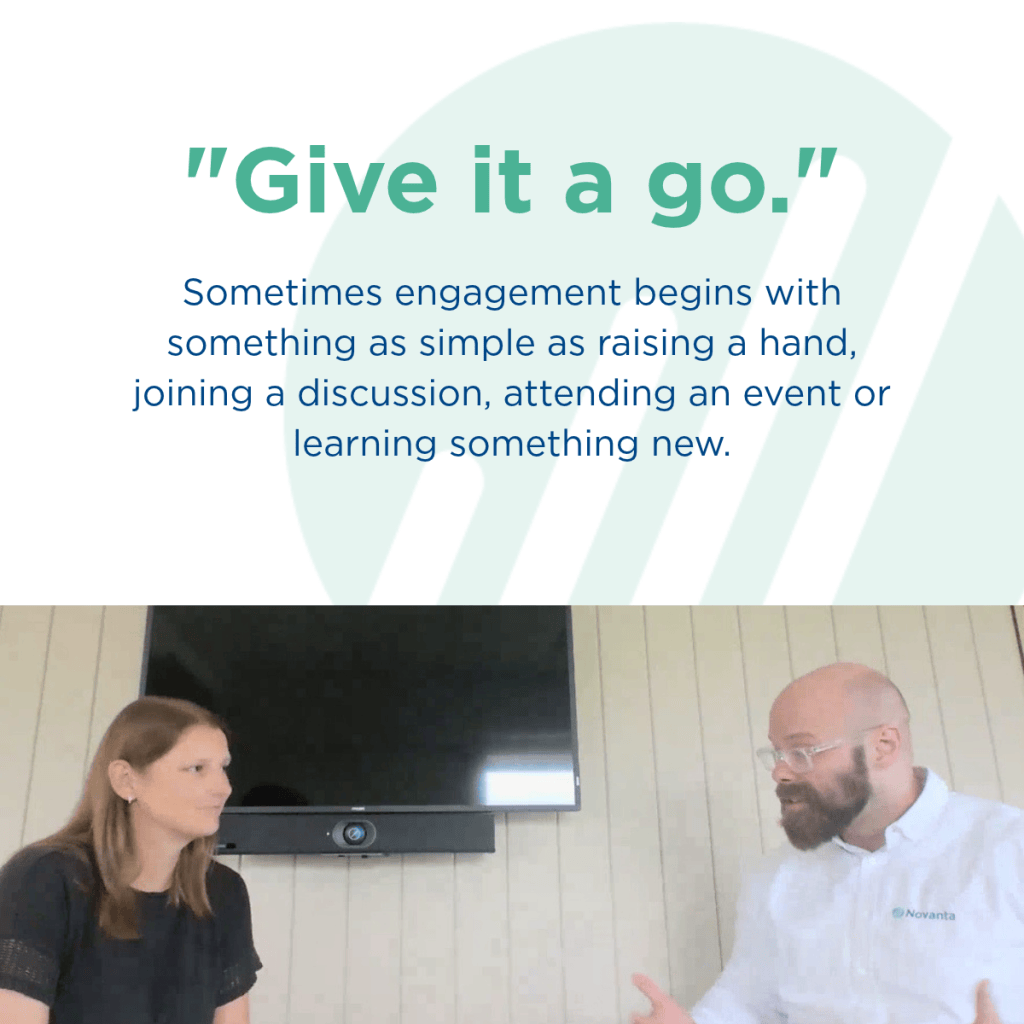
That is why one of the most powerful pieces of advice from my conversation with Ian was also one of the simplest: give it a go.
Join the discussion and ask the question, share the idea and participate in the event, always taking the opportunity to learn something new.
Employee engagement does not happen all at once. It develops through countless small interactions that help people feel connected.
When organizations create environments that encourage curiosity and strengthen personal connections, engagement becomes more than an initiative. It becomes part of the culture.
When that happens, everyone benefits.