

Technical Paper Overview
Ultrafast Laser Noise Measurement: Below 0.02% RMS
Below 0.02% RMS, commercial noise meters stop reporting accurately.
For ultrafast and Ti:Sapphire researchers, pump-laser noise is one of the dominant experimental error sources — but at modern noise floors (under 0.1% RMS), commercial measurement systems start producing spurious readings from ND-filter interference, pick-off wedge artifacts, and bandwidth limitations. The question becomes: how do you trust a laser’s published noise spec when commercial verification tools can’t actually measure it?
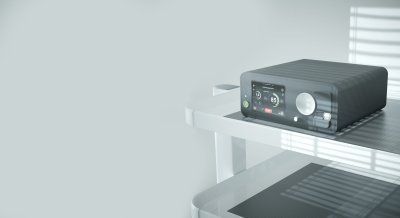
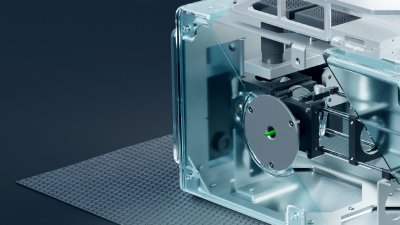
This technical guide from Laser Quantum (a Novanta brand) documents the three-stage proprietary methodology Laser Quantum uses to measure noise below 0.02% RMS on its CW visible lasers — including a ceramic-plate diffuser front-end (no ND filters), a 6 MHz custom photodetector, 1024-sample fast averaging, and a minimum 300-hour burn-in test that verifies each laser against design spec before shipment.
Key takeaways include:
- Why intracavity frequency-doubled lasers carry inherent ~3% RMS noise — the long-standing “Green Problem”
- How Laser Quantum’s cavity and electronic innovations have driven that noise floor below 0.02% RMS over 17 years
- When laser-noise measurement matters most: Ti:Sapphire pumping, where the 800 kHz transfer function determines what survives
- What’s inside the three-stage measurement system: ceramic-plate diffuser, 6 MHz photodetector, 1024-sample averaging, 300-hour burn-in
- A practical understanding of why noise specifications require manufacturer-grade infrastructure to verify accurately
Download the full technical paper to get the 17-year RMS noise reduction timeline, the three-stage measurement methodology Laser Quantum applies to every shipped laser, and the engineering rationale behind sub-0.02% RMS performance — before you commit a Ti:Sapphire experiment to a pump laser you can’t independently verify.