




Technical Paper Overview
Intelligent Light Engine Platforms for Life Sciences Applications
Power-independent noise, not peak wattage, decides fluorescence data quality.
Fluorescence instruments are being pushed toward higher throughput — wider fields of view, faster scan speeds, denser data per frame. Every lever demands more excitation power, but increasing wattage exposes a deeper problem: noise and beam instability that vary with power setting. When DPSS noise spikes outside a narrow operating window or speckle artifacts corrupt a 50 μm fiber output, the throughput gain disappears into degraded data.
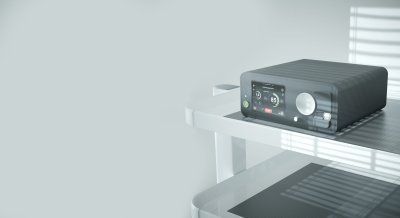
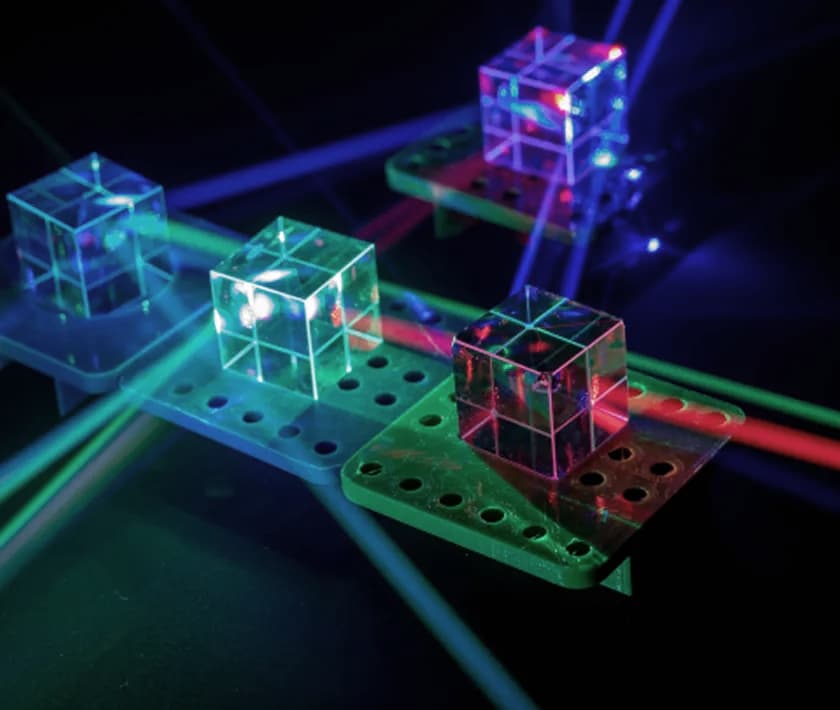
This white paper introduces Novanta’s FUSIONultra Configurable Light Engine Platform — covering multi-line excitation (up to 4 wavelengths, 1 W per line into a 50 μm fiber), sub-microsecond modulation (<50 ns rise on diode lines, <200 ns on DPSS), three-decade dynamic range with power-independent noise via the GEMultra+ Variable Optical Attenuator, and integrated despeckling that holds speckle contrast below 10%.
Key takeaways include:
- Why power-independent noise — not peak optical power — limits data quality across a fluorescence instrument’s full dynamic range
- How the GEMultra+ Variable Optical Attenuator holds flat noise from 2 mW to 1000 mW, unlike conventional DPSS sources
- When sub-microsecond modulation materially improves throughput in sequencing, cytometry, and super-resolution workflows
- What ULTRALOQ™ delivers: stable fiber coupling into cores as small as 50 μm, including exotic geometries (octagonal, rectangular)
- A practical 4-color configuration example (405/488/561/638 nm) with measured rise times, noise profiles, and speckle contrast data
Download the full white paper to get the measured noise profiles across the full dynamic range, rise-time data for both diode and DPSS laser lines, and the speckle contrast results at 50 μm fiber output — an evaluation framework you can apply to any multi-line light engine, not just Novanta.