















Incremental Encoders
Poor precision and inconsistent motor control can derail your projects, leading to costly errors, performance issues and decreased output. You need reliable, real-time data to ensure your machines and robots operate flawlessly.
Fortunately, incremental encoders from Celera Motion deliver the accuracy and speed you are looking for, providing exact position and movement feedback with every rotation. Cost-effective and easy to integrate, our encoders enhance performance and streamline your operations. Upgrade today and keep your projects on track with our incremental encoders.
What is an Incremental Encoder?
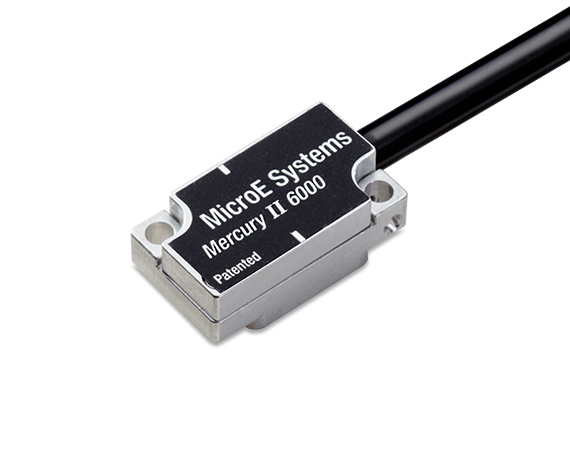
An incremental encoder is a type of sensor used to convert the angular position or motion of a shaft into electrical signals, measuring the change and direction of motion. They are commonly used in automation, robotics, and motor control systems to ensure accurate and efficient operation.
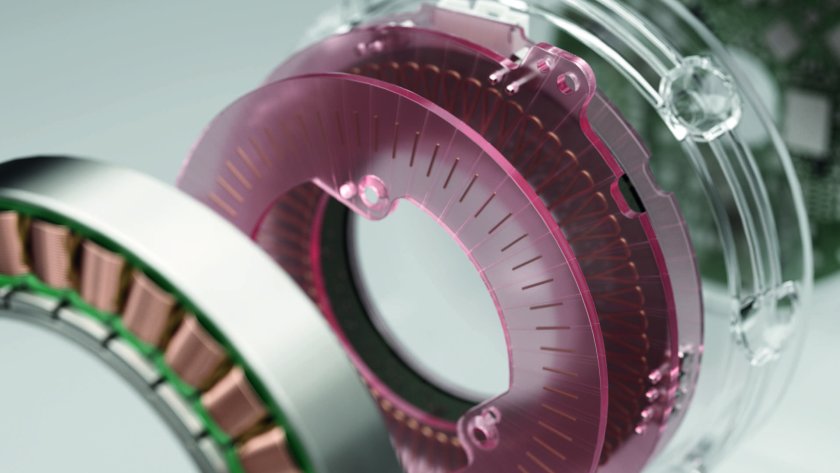
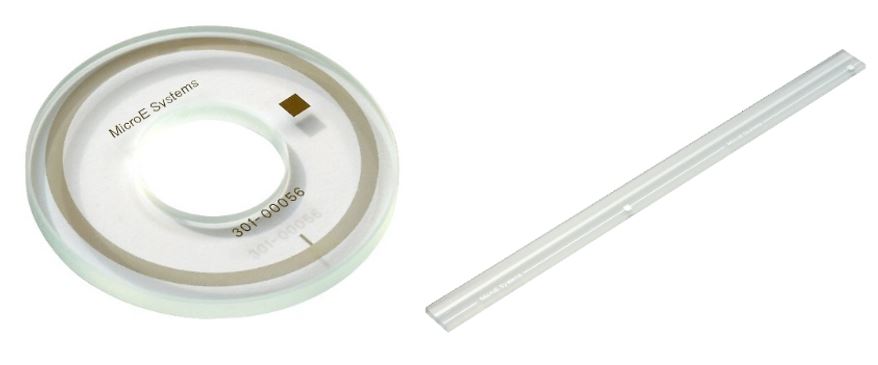
These encoders consist of a readhead and scale. The readhead includes a specific sensor technology and light source, along with any other filtering optics required to direct the light onto the sensor. The incremental encoder scale has a main track comprising lines of equal pitch and an index track. The main track alone does not provide absolute position information, so an index mark is added on a second track to provide a reference position.
How does an Incremental Encoder Work?
An incremental encoder works by generating electrical output signals as a rotating shaft moves, providing real-time speed and movement feedback. Inside the encoder, there’s a disc with a pattern of transparent and opaque segments. As the disc rotates with the shaft, a sensor reads this pattern, creating pulses of light that are converted into electrical signals. The controller or drive system counts these pulses to determine the shaft’s position, speed, and direction.
When the encoder’s readhead passes over the index mark, it generates an output signal. At power up, the index track tells the controller/drive when the encoder’s scale is in the zero position; a process that is called a homing routine. After the home or reference position is located, the controller/drive tracks incremental position changes relative to zero.
How is the Resolution of an Incremental Encoder Increased?
The encoder’s main track is detected to measure high resolution change in position through the conversion of a light intensity signal to sine and cosine signals. By interpolating these signals, the system can increase the counts detected per revolution, and therefore increase the overall resolution of the encoder.
Incremental Scale
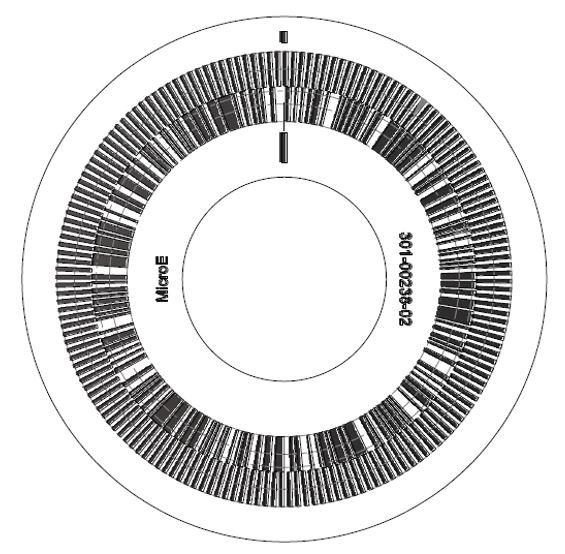
Because of the simplicity of the scale, incremental encoders require less complex sensor technology. They also have zero communication latency which is introduced in absolute encoders. An absolute track provides a unique signal at each location on the scale and due to this added complexity, requires a more advanced sensor technology. The simple design of an incremental encoder makes it a lower cost option for systems that do not require absolute position feedback.
Absolute Scale
Absolute encoders give you a unique position value for each shaft angle, offering exact position feedback without needing a reference point.
Other Benefits of Incremental Encoders:
- Inexpensive
- Quick and easy installation
- Highly versatile and can be used in a variety of applications
- Low maintenance
Incremental Encoders FAQs
What is the Difference Between Incremental and Absolute Encoders?
Incremental encoders track relative movement with pulses, providing real-time position and speed data. Absolute encoders, on the other hand, give a unique position value for each shaft angle, offering exact position feedback without needing a reference point.
How does an Incremental Encoder Determine Direction?
An incremental encoder determines direction by using two output signals, A and B, which are offset by 90 degrees. The system compares the order in which these signals pulse. If A leads B, the rotation is clockwise; if B leads A, it’s counterclockwise, for example.
How does an Incremental Encoder Determine Speed?
An incremental encoder determines speed by counting the number of pulses generated in a specific time period. The faster the pulses are counted, the higher the rotational speed of the shaft, allowing precise speed measurement.
Contact Celera Motion for a Quote Today
Interested in ordering incremental encoders to improve the reliability and efficiency of your machines? Simply get in touch with our team at Celera Motion and request a quote today. We are here to answer any questions and provide support wherever we can.