






Technical Paper Overview
Analog vs. Digital Galvanometer Technology: An Introduction
Galvanometer choice, not optics alone, decides scan-head performance and cost.
When designing a scan-head subsystem, engineers obsess over mirror size, coatings, and materials — but often defer to vendor defaults on galvanometer technology. That’s a mistake. The choice between analog and digital position detectors, and between analog and digital servos, drives the system’s accuracy, drift, serviceability, and price — and the hybrid option often beats either extreme.
This technical paper from four Novanta authors compares three Cambridge Technology architectures: fully analog (62xxK/83xxK + 67x driver in MOVIA scan heads), hybrid (62xxK/83xxK galvos + digital servo in VERSIA), and fully digital (encoder-based Lightning II). Each is benchmarked across accuracy, drift, mirror-size range, field serviceability, predictive control, and price.
Key takeaways include:
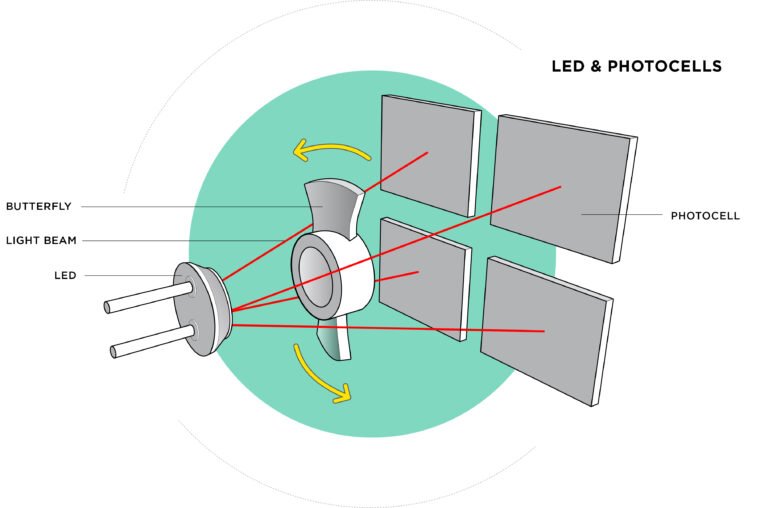
- Why position detector type (optical vs encoder) — not mirror aperture — determines drift behavior and EMI immunity
- How a digital servo on top of an analog galvanometer unlocks field serviceability, predictive control (ScanPack), and decoupled builds
- When fully digital (Lightning II) becomes worth the price premium — and when hybrid (VERSIA) is the right value pick
- What mirror aperture ranges each architecture supports: fully analog 3-100 mm, hybrid 3-50 mm, fully digital 14-50 mm
- A practical six-column comparison table to specify the right scan-head architecture for your application
Download the full technical paper for the position-detector comparison, the ScanPack predictive-control case study (perfect circles vs. teardrop-shaped low-bandwidth circles), and the six-criteria comparison table — before locking in a scan-head architecture you can’t easily change.