






Technical Paper Overview
High Quality Micro-Processing with Picosecond Lasers
Beam roundness across depth of field, not power, decides micromachining quality.
In high-aspect-ratio micromachining — via-hole drilling in PCBs, glass substrates, probe cards, stainless steel — any imperfection in the focused beam amplifies across the depth of the cut. Asymmetric holes, tapered walls, microcracks in brittle materials, and surface roughness that demands post-processing aren’t laser-power problems. They’re beam-quality-over-depth problems that scale with aspect ratio.
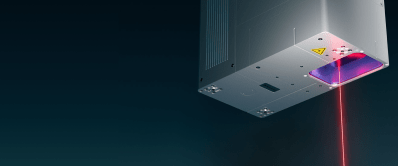
This technical paper documents how Novanta’s Dart 8 picosecond laser combined with the PRECESSION ELEPHANT multi-axis scan head delivers >93% beam roundness sustained across ±3 Rayleigh lengths — producing zero-taper 200 µm via holes in stainless steel and in 0.7 mm glass with entrance and exit diameters matching within 0.5 µm, and surface walls smooth enough to eliminate post-processing.
Key takeaways include:
- Why beam roundness across depth of field — not focal spot at one plane — determines micromachining quality
- How 8 picosecond pulses keep Heat Affected Zone (HAZ) low enough to prevent microcracks in glass
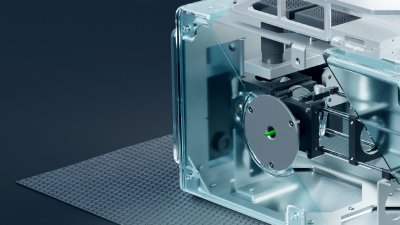
- When to specify multi-axis scan heads (X/Y/Z + tilt): tapered holes, 90° wall angles, undercuts
- What integration matters: Dart + PRECESSION ELEPHANT from a single supplier with matched boresighting
- A practical reference geometry — 200 µm via holes with <0.5 µm entrance/exit diameter difference
Download the full technical paper to get the Dart beam-roundness profile across ±3 Rayleigh lengths, side-by-side images of via holes in stainless steel and glass, and the integration rationale behind Novanta’s matched picosecond-laser-plus-scan-head sub-system — before specifying mismatched components that cap your micromachining quality.