






Technical Paper Overview
Specifying Laser + Scan Head for EV Battery Anode Foil Cutting
Scan-head architecture, not laser brand, decides EV battery line throughput at meters per second.
EV cell production runs roll-to-roll at meters per second, and the line manager isn’t buying “a laser” — they’re buying an integrated cutting sub-system where the scan head, F-Theta lens, and laser source either deliver throughput together or compromise each other. Specify the wrong scan-head architecture or the wrong F-Theta focal length and you cap your m/s before the laser source ever becomes the bottleneck. Specify the wrong laser modality (CW vs ns vs ps) and you trade burr quality against cell-stability risk for the life of the line.
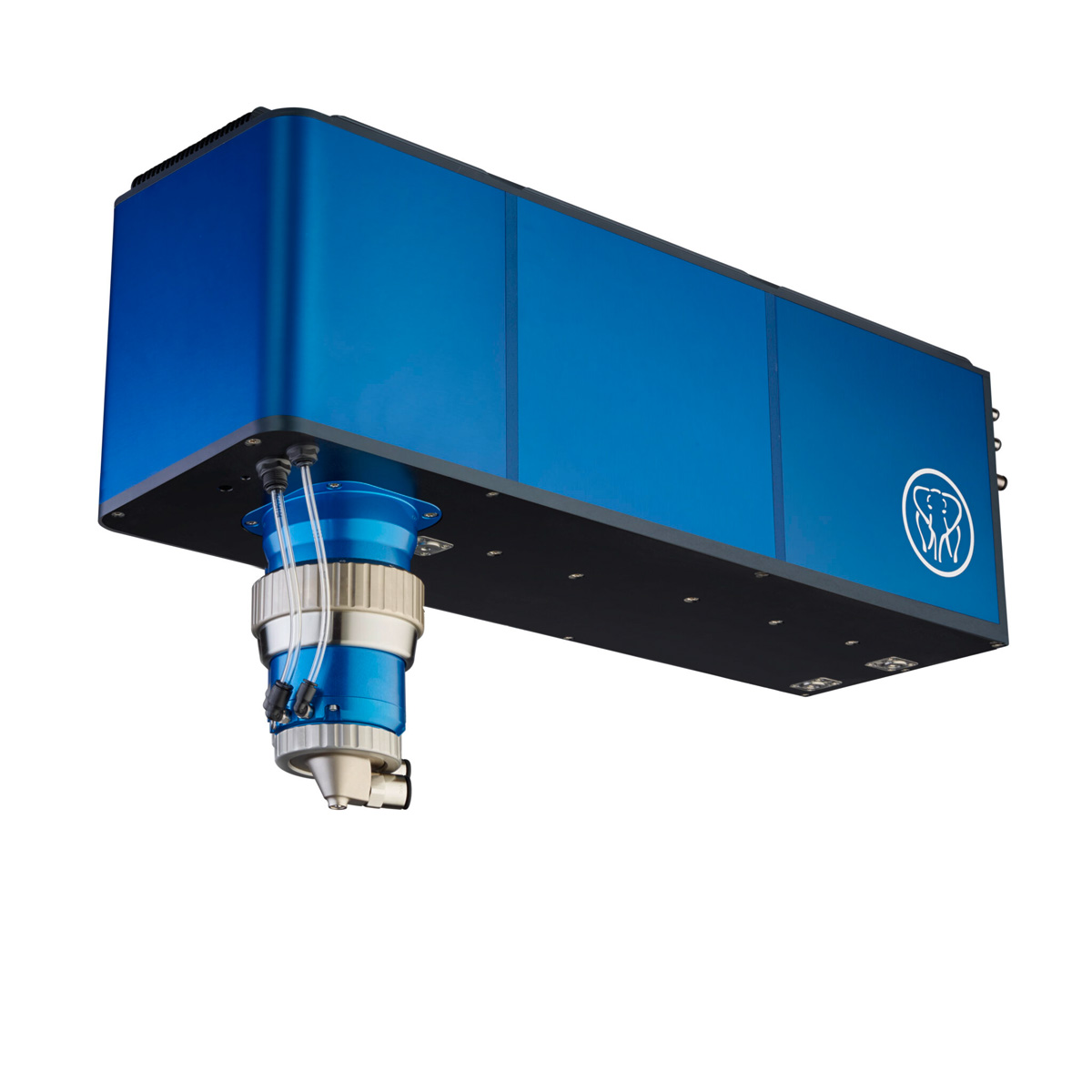
This technical paper documents the full CW / ns / ps benchmark on coated copper anode (100-150 µm) through Novanta’s FIREFLY3D digital 3-axis and VERSIA hybrid 2-axis scan heads — and pairs naturally with Novanta’s companion Hairpin Stripping paper for the motor-side of EV production, where the Chameleon dual-wavelength scan head and Firestar i401 CO₂ + fiber two-step process complete the laser-line capability map for both cell and stator manufacturing.
Key takeaways include:
- Why scan-head architecture is the EV-line lever buyers underweight — digital 3-axis (FIREFLY3D) and hybrid (VERSIA) selection decides what your downstream lens choices can do
- How F-Theta selection wins or loses the spec sheet: longer focal length = larger spot but longer Rayleigh length = process stability under real-world foil tolerances
- When CW fiber is right for your line, when ns delivers the speed-quality middle, and when ps is the only acceptable answer for cell-stability-critical premium cells
- What single-vendor EV laser coverage looks like in practice: anode/cathode cell cutting + hairpin stator stripping + scan-head + control infrastructure under one ecosystem
- A practical procurement framing: don’t spec lasers in isolation — spec laser-lens-scan-head as one sub-system, and audit the vendor on both cell-side and motor-side application proof
Download the full technical paper for the side-by-side microscopy of cut entrance and exit sides across all four laser setups, the laser scanning microscope burr and clearance profiles, and the qualitative ranking matrix — plus cross-reference the Hairpin Stripping companion paper for the motor-side process — before specifying a battery-line laser-and-scan-head package on average power alone.