

Technical Paper Overview
Choosing the Right Laser Source for Lattice Light Sheet Microscopy
Hours of stable output, not nanoseconds of peak power, decides LLSM laser choice.
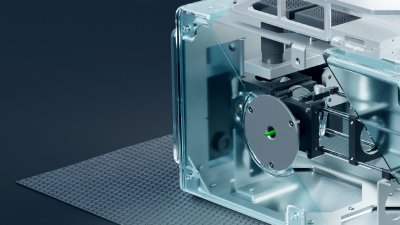
Spec a Bessel-lattice optical engine and the geometry takes care of itself — but only if the excitation laser holds its specs across an entire imaging session. Pointing drift breaks lattice alignment; power RMS variation modulates fluorescence intensity through the dataset; fibre-launch losses kill signal-to-noise. The optical engine engineers don’t fail at LLSM — the laser source they specified does, hours into the experiment, when the biology was finally going to resolve.
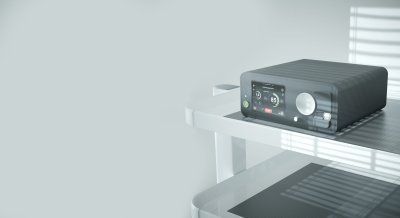
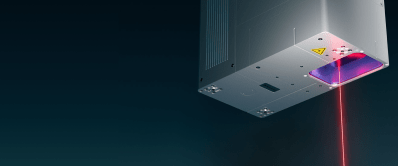
This technical paper documents why Novanta’s Laser Quantum gem series of cw fibre-coupled DPSS lasers became the reference excitation source for LLSM systems built on the Betzig/HHMI Janelia architecture — specifically the spec envelope that survives long live-cell sessions: M² <1.1 beam spatial profile, <10 μrad/°C beam pointing stability, and <0.8% RMS output power stability over 100 hours at constant temperature.
Key takeaways include:
- Why “good enough” laser stability is the silent killer of long live-cell experiments — fluorescence intensity drift contaminates 4D datasets long before the user notices
- How the three gem specs that matter for LLSM map directly to system failure modes: M² (lattice geometry), pointing (lattice alignment), power RMS (intensity normalization)
- When to specify CW fibre-coupled DPSS over pulsed sources: LLSM excitation doesn’t need ultrafast peaks, it needs hours of geometrically precise CW
- What the gem visible-wavelength menu covers: a fluorophore-matched range for the most common LLSM fluorescence panels, delivered through one mechanical and electrical interface
- A practical forward-looking note: AO-LLSM “guide-star” adaptive optics extends LLSM into deeper tissue, raising the bar further on excitation-source stability
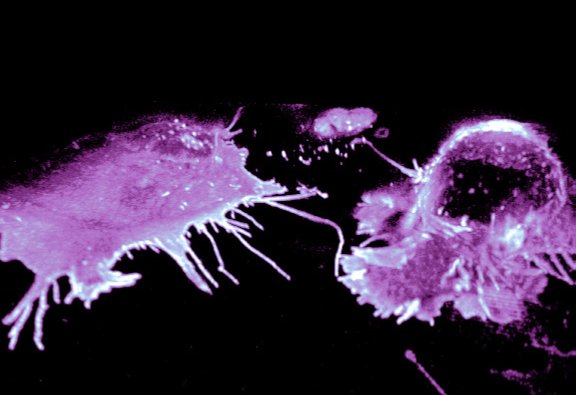
Download the full technical paper for the gem laser spec table mapped to LLSM optical-engine requirements, the Betzig/Janelia architecture context, and the AO-LLSM developments researchers are using for hours-long live-cell video of endocytosis, organellar dynamics, and zebrafish neurite growth — before specifying a laser that holds tolerance on the datasheet but not over the imaging session.