




Technical Paper Overview
Tube Temperature Monitoring for Sealed CO₂ Lasers
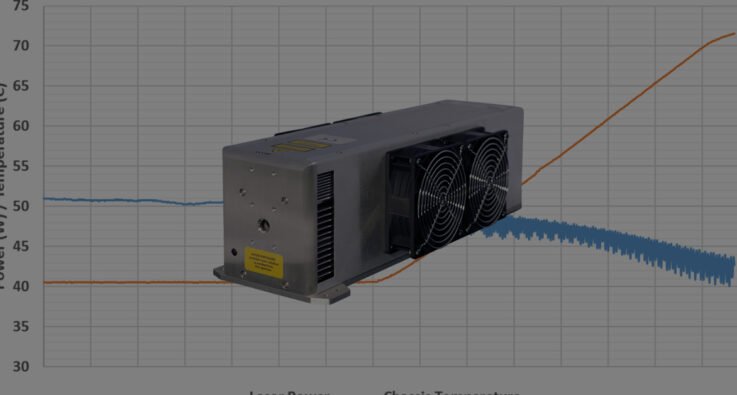
Tube temperature is the earliest warning a CO₂ laser is about to fail.
Sealed CO₂ lasers degrade predictably — but only if you can see them
degrading. Tube temperature drifts above spec, conversion efficiency drops,
output power becomes unstable, and the first signal on the production floor
is usually a yield problem that has already cost a shift’s worth of parts.
By that point the cooling system that was the actual root cause has been
silently underperforming for hours.
This technical paper explains how tube temperature drives CO₂ laser output
power and stability, what causes temperature drift in real production
environments (ambient conditions, cooling-system degradation, and pulse
duty cycle), and how Novanta’s vi40 Temperature Broadcast feature exposes
real-time tube-temperature data on the laser’s DB-9 I/O — so machine
control systems can catch cooling problems before they reach the laser.
Key takeaways include:
- Why tube temperature is the leading indicator of CO₂ laser performance loss
- How ambient conditions, cooling-system drift, and duty cycle each affect tube temperature
- When to integrate real-time laser-temperature data into your machine control system
- What the vi40 Temperature Broadcast feature delivers — 250 ms refresh on the DB-9 output
- A practical framework for closed-loop cooling control that protects power stability and lowers operating cost
Download the full technical paper to get the operational impact data,
integration details for the vi40 Temperature Broadcast feature, and a
practical framework for predictive cooling control — before a silent
cooling-system drift turns into an unscheduled production shutdown.