



Technical Paper Overview
Why Carrier Envelope Phase Stabilization Matters
As pulse durations approach the single-cycle limit, CEP stability becomes critical to laser performance.
Ultrafast lasers are pushing toward ever-shorter pulse durations, making carrier-envelope phase (CEP) stability increasingly important. In few-cycle pulses, even small phase variations can impact pulse-to-pulse electric field consistency, affecting advanced nonlinear and strong-field physics experiments.
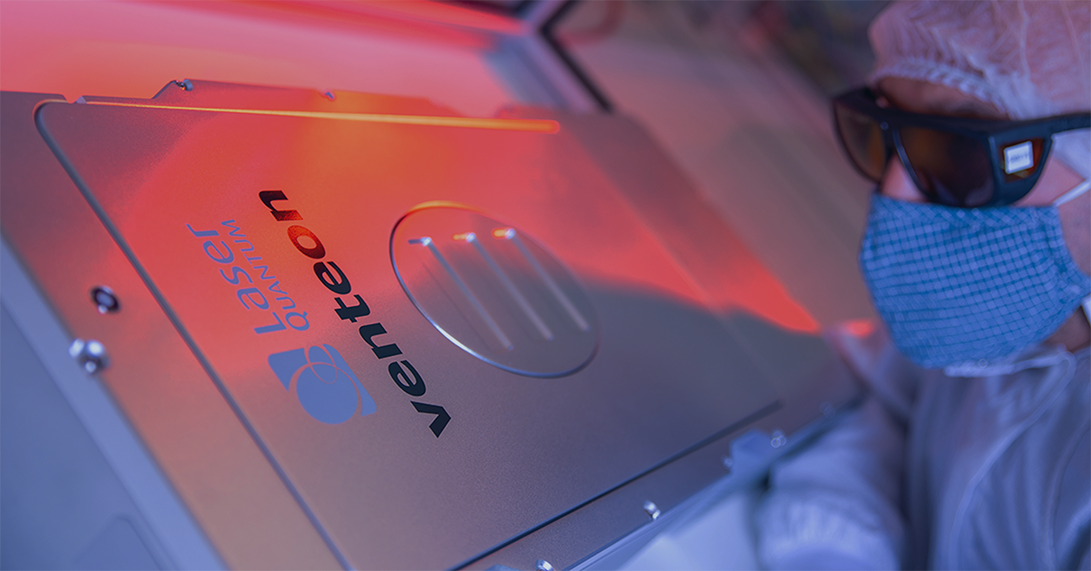
This technical paper explores two innovations behind Novanta Light Engines’ venteon CEP5 that enable long-term CEP stabilization, low phase noise, and sub-5.5 fs pulse durations while preserving output power and beam quality.
Key takeaways include:
- Why CEP stabilization becomes critical in few-cycle ultrafast lasers
- How CEP drift impacts pulse-to-pulse consistency and experimental results
- The limitations of traditional CEP stabilization approaches
- How direct pump-laser feedback improves stability and locking bandwidth
- Why octave-spanning spectra eliminate additional bandwidth-generation stages while maximizing usable output power
Download the full technical paper for detailed CEP phase-noise measurements, long-term stability data, f-to-2f self-referencing architecture insights, and a closer look at the technologies enabling sub-5.5 fs CEP-stabilized laser performance for advanced photonics research applications.Power Stability in Thin Film CO₂ Laser Cutting