





Key Takeaways
- Laser additive manufacturing (LAM) builds parts layer by layer from a 3D model, using a laser to cure resin or fuse powder.
- The three main processes are stereolithography (SLA) for resins, selective laser sintering (SLS) for polymer powders, and selective laser melting (SLM) for metal powders, also known as laser powder bed fusion.
- In every process, the galvanometer scanner and controller decide part accuracy, material consistency, and throughput, and with them cost per part.
- Scanner selection balances wavelength, beam size, scan speed, accuracy, stability, build envelope, integration effort, and budget.
- Novanta supplies the beam steering, scan heads, and controllers at the core of LAM machines, from compact desktop systems to multi-head metal printers.
The Quiet Revolution on the Production Floor
Advances in digital technology have made additive manufacturing a serious force in industrial production. By offering fast, precise methods to create fully unique three-dimensional objects, additive manufacturing is changing how products are designed, prototyped, and built.
Also known as 3D printing, additive manufacturing is the process of joining materials to make objects from a 3D model, adding material layer by layer from the bottom up rather than cutting it away from a solid block.
Laser additive manufacturing (LAM) uses laser beam technology to cure, sinter, or melt material one layer at a time. Because parts are built directly from digital data, engineers gain a new freedom in design: internal channels, lattice structures, and consolidated assemblies that would be impractical to machine or cast.
Laser Additive Manufacturing Processes
There are three main types of laser additive manufacturing processes: stereolithography (SLA), selective laser sintering (SLS), and selective laser melting (SLM).
- SLA uses UV laser sources to solidify photo-reactive resins layer by layer, producing very fine detail.
- SLS uses CO2 lasers to sinter polymer powders, such as polyamides, into solid parts.
- SLM uses fiber lasers to fully melt layers of fine metal powder into a dense final structure.
SLM belongs to the broader family of laser powder bed fusion (LPBF) processes. Direct metal laser sintering (DMLS) is a closely related term, often used interchangeably with SLM for metal powder bed systems.
How the Laser Beam Scanner Shapes Every Build
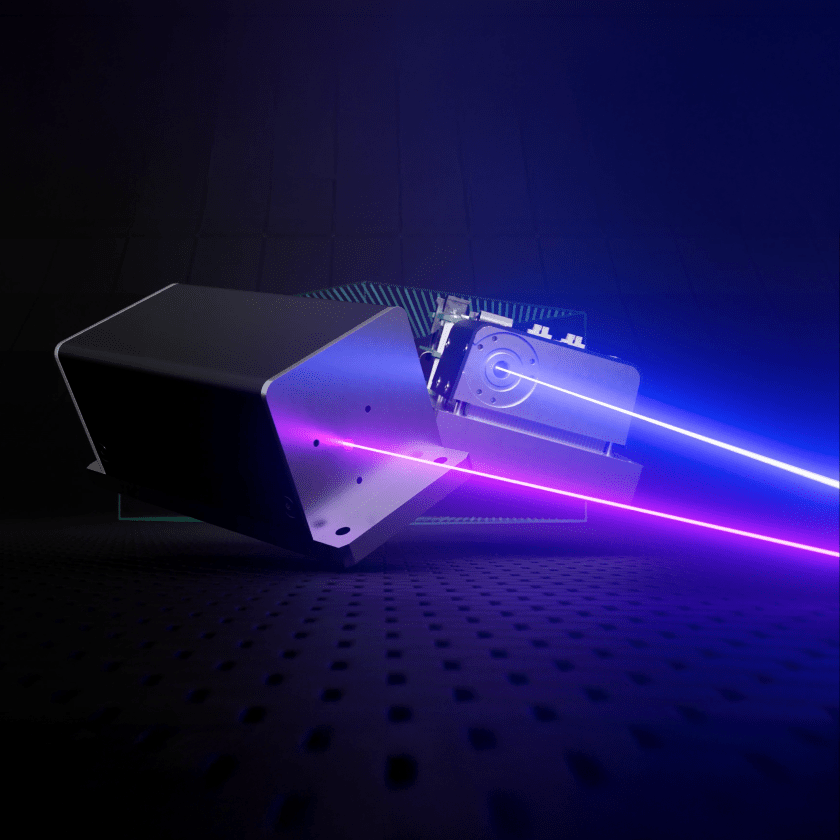
In all three LAM processes, a galvanometer-based laser beam scanner steers the beam at high speed to target locations on the build plane, as defined by the 3D model. The scan controller and software convert the 3D model into a series of motion and laser control commands that synchronize scanner motion with laser firing.
Reducing the cost of each part built and improving part quality have been two key challenges for expanding LAM applications, particularly for SLM. Laser beam steering is critical, and scanner and controller selection directly affects system-level performance:
- Geometric precision. How accurately the scanner steers the beam to its target location on the build plane determines the part’s dimensional accuracy.
- Material consistency. A high-quality part requires uniform laser energy density across the material to ensure homogeneous properties, which depends on precise coordination of laser firing and modulation with scanner motion.
- Throughput. Scanning speed while the laser is on, and jump speed while it is off, together set overall build time and cost per part.
Industries and Markets
Manufacturers have used stereolithography since the 1990s to produce medical models and prototype parts. Those medical models now help guide the manufacture of personalized implants.
With the capability to build larger parts and turn them around quickly, SLS prototypes are increasingly used in design cycles for automotive, aerospace, defense, and electronics hardware. Some of these polymer parts also serve as final products.
In recent years, selective laser melting has shown the most rapid growth, producing functional metal parts for implants, dental, automotive, and aerospace applications. SLM can build complex geometries and lightweight structures that are difficult to achieve with conventional subtractive methods. It is also flexible and cost-effective for custom parts, such as individual dental restorations.
Choosing a Scanner for Laser Additive Manufacturing
Many galvanometer-based laser beam scanners are on the market today. Each configuration has benefits and limitations, depending on the LAM system’s requirements and how they are prioritized. Typical factors to consider include:
- Laser wavelength and optical power
- Feature size or beam size
- Build rate or scanning speed
- Position accuracy
- Stability over long builds
- Build size or envelope
- Ease of integration
- Budget
SLA, SLS, and SLM use different laser types and power levels and require different beam sizes on the build plane, so scanning mirrors and coatings must be matched to each. The physical size of the finished part, the build rate, and the minimum feature size often dictate how complex the laser scanning system and its integration need to be. Large-format metal machines, for example, increasingly use several scan heads working over a shared powder bed to raise throughput.
How Novanta Can Help With Laser Additive Manufacturing
Novanta Laser Solutions offers a wide range of beam steering and control options, so system integrators can choose based on the trade-offs that matter for their machine. A compact desktop system may be best served by an 83xxK series XY galvanometer set on a small mounting block, driven by a low-noise analog servo or an easy-to-use DC series digital servo driver. A machine producing large, high-quality metal parts may instead require multiple 3-axis, full-digital laser scan heads for high accuracy and stability.
Product spotlight: LIGHTNING II 3-axis digital scan head. The LIGHTNING II pairs a 24-bit digital encoder with an advanced digital servo model for scanning accuracy of 10 µm or better, and maintains consistent spot quality across field sizes up to 1.5 m × 1.5 m. Its modular design can be taken apart and built around your machine. For metal laser powder bed fusion, the FireFly3D scan head builds on LIGHTNING II architecture in an enclosed package with dedicated process-monitoring ports for multi-head machines.
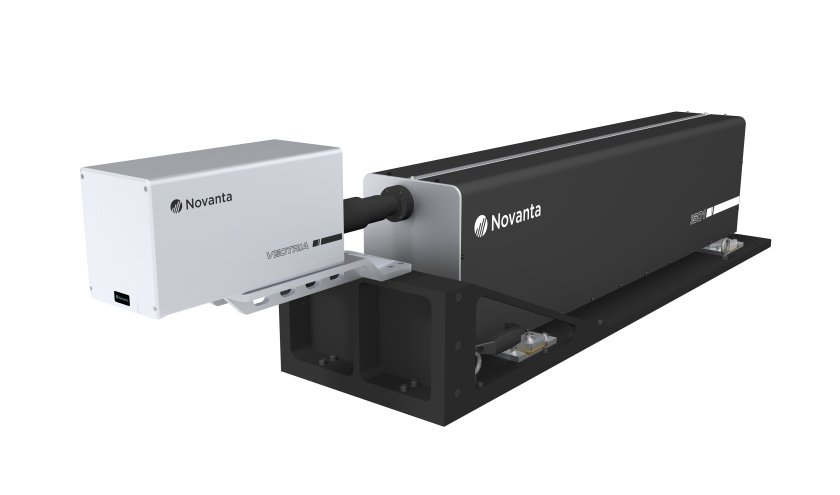
Intelligent control. Adding the ScanMaster Controller (SMC) from our controllers and software portfolio orchestrates laser firing with scanning motion, improving accuracy, processing flexibility, and throughput. For SLS machines, Novanta CO2 lasers complete the optical path from source to scanner.
Go deeper with our Essential Elements for Laser Additive Manufacturing ebook and our whitepaper on wobble-based scanning in additive manufacturing, or see how Novanta works with build-preparation software partners such as Dyndrite and has built scan heads with integrated quality assurance. Explore the full additive and advanced manufacturing applications page.
Building or upgrading a laser additive manufacturing system? Talk to a Novanta application engineer or request a quote to match scan heads, controllers, and lasers to your build requirements.