












Why should you use a glass scale with your Optical Encoder?
Position encoders are electromechanical devices capable of very precise measurement of position, playing a fundamental role in robotic systems by providing vital feedback about the position of actuators, joints, and other moving parts. Encoders that use glass scales offer unparalleled performance in applications that demand ultra-precise position feedback.
Encoders of all types consist of two fundamental parts: a sensor and a scale. The job of the sensor is to measure the position of the scale as it moves in a straight line (as in linear encoders) or rotates about an axis (as in rotary encoders). This can be done using various methods – common approaches include inductive and optical encoders.1
While inductive encoders may be preferred in certain applications (especially in extreme environments), optical encoders are preferred for precision applications like surgical robotics, as they offer the highest level of accuracy. Optical encoders use photosensitive sensors to detect the change in position as the scale moves relative to the sensor. Depending on the encoder technology, that change in position is detected as light is either transmitted through transparent lines on the scale, reflected off the lines of the scale, or as coherent light interferes to create an image of the scale pattern at the sensor plane (talbot imaging). Optical encoders typically also feature an index mark or pattern on the scale that enables the system to detect the zero-point or null position.2
Glass scales vs metal scales
Metal scales are common in cost-driven applications where highest-class accuracy is not critical. They are typically lower cost and are less prone to breakage. Metal scales feature laser-etched lines that enable a good degree of precision. Celera Motion’s PurePrecision metal scale optical encoders are capable of accuracies of in linear applications.
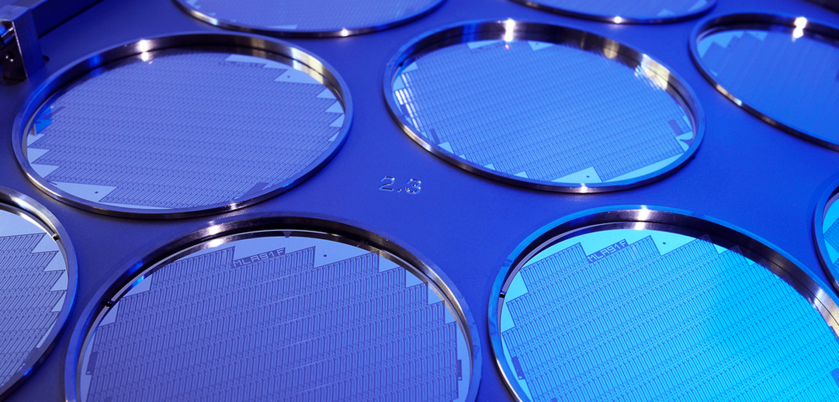
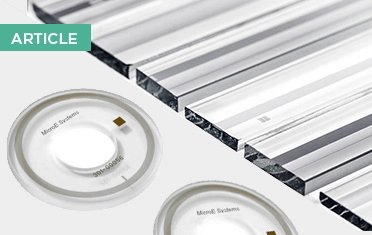
Glass scales, however, are capable of much higher levels of precision. This is in part due to their increased rigidity, which enables high-resolution pitches to be produced on the surface, either by laser etching or chrome deposition with less scale irregularities than tape scales. Another advantage of glass compared to metal is it has a lower coefficient of thermal expansion. In high-precision robotics applications, this is significant: heat produced by friction between moving parts can cause significant thermal expansion with metal scales, but this effect is substantially reduced when using glass scales.3
While certain applications may be driven to use lower-cost tape scales, glass scales are most beneficial for high-precision applications.
Glass scales and glass scale encoders from Celera Motion
Our highest-precision encoders rely on glass scales for unparalleled accuracy.
For linear encoding applications, Celera Motion’s Aura series linear encoders use high-precision glass scales to enable accuracies of ±2 μm.
For rotary encoding applications, our PurePrecision technology offers rotational accuracy down to ±2 arc seconds while our Aura series rotary encoders offer accuracy down to ± .005°.
As well as a complete range of linear and rotary encoders, we offer a variety of tape and glass scales for integration into encoding systems. To learn more about encoding technologies from Celera Motion, get in touch with a member of our team today.
References and Further Reading
- Incremental Optical Encoder Technologies. MicroE Optical Encoders https://www.celeramotion.com/optical-sensors/support/technical-papers/optical-encoder-technologies/.
- What is an optical encoder? – Celera Motion. MicroE Optical Encoders https://www.celeramotion.com/optical-sensors/optical-encoders/.
- Where are glass scale linear encoders used? Linear Motion Tips https://www.linearmotiontips.com/where-are-glass-scale-linear-encoders-used/ (2018).