





Key Takeaways:
- STO means no Torque – A certified safety function that guarantees the disabling of the drive’s power stage so the motor can’t generate any more torque.
- With STO active, control power can stay on – the axis coasts to a stop. Add a brake or safety stop 1 if you need a controlled stop.
- Celera Motion’s servo drives with integrated & certified functional safety help to eliminate external motor contactors in many designs, reducing wiring, components, and maintenance.
- Safety torque off works with modern safety networks and system architectures – the function is easily commanded via PROFIsafe, CIP Safety, or FSoE, or through hard-wired dual-channel inputs.
- STO is used when designs need certified risk mitigation.
- The feature is built into Celera Motion drives – Everest S, Capitan and Denali servo drives offer TÜV-certified STO to streamline safety compliance.
Modern production lines, robots, and automated machines move fast, carry energy, and operate near people. That’s why advanced safety functions are built directly into today’s motion control systems, so manufacturers and logistics specialists can reduce risk without sacrificing productivity.
One of the most widely adopted functions is Safe Torque Off (STO). It prevents a motor from generating torque during faults, emergency stops, or maintenance, helping you meet standards and protect personnel and equipment.
In this guide, you’ll learn what STO is, how it works, why it matters, and how modern safety networks use STO alongside other safety mechanisms. You’ll also see where STO fits in real applications and how Celera Motion integrates certified STO into our Servo Drive families to help you build safer machines.
Consult a Celera Motion Technician on Safe Torque Off
Need an expert view on your application or build? Explore our Motion Control Products or go straight to the Everest Servo Drive Series.
Prefer to talk?Contact Us Directly orRequest a Quote.
What is Safe Torque Off (STO)?
Safety torque off (STO) is a safety function built into motor drives that prevents a motor from generating torque when triggered (for example, by an emergency stop).
In practical terms, activating STO disables the drive’s ability to energise the motor phases, so the axis coasts to a stop under inertia and friction or is brought to a halt by a mechanical brake, but the drive does not need to be fully powered down to achieve this.
In many implementations, safety torque off is commanded by a safety-rated input, often represented as a single or dual-channel digital signal from a safety relay, PLC, or safety controller. Dual channels are common in high-integrity and more complex designs to detect wiring faults and provide redundancy. In typical industrial setups, the safety input uses 24 V DC logic and is monitored for integrity and timing.
Safe torque off is codified in IEC/EN 61800-5-2, the international standard for adjustable-speed drive safety, which defines functional-safety requirements and the design measures – diagnostics, redundancy, and systematic capability – needed to achieve them.
Why is Safety Torque Off Important?
- Personnel safety. STO eliminates drive-generated torque during hazards, helping prevent unintended motion and reducing the chance of injury during interventions such as clearing jams or setting up a machine. In the language of IEC 60204-1 stop functions, safe torque off corresponds to what engineers refer to as a Category 0 “uncontrolled stop.”
- Equipment protection. By removing torque quickly and reliably, STO helps avoid mechanical damage caused by unexpected starts or drive faults.
- Compliance and confidence. Because STO is defined in international standards and is commonly certified to high performance levels (e.g., SIL 3 / PL e when implemented with dual channels and appropriate diagnostics), it’s a proven, auditable way to meet machine safety requirements.
How does STO Work?
At a high level, STO prevents the drive from energising the motor windings, so the motor cannot produce torque. The axis then decelerates naturally (coasts) or is held by a brake if one is installed. Importantly, mains power can remain present at the drive – STO targets the power stage (the transistors that switch current to the motor) rather than the upstream DC inputs.
From an implementation standpoint, a safety input (wired or networked) is monitored by certified circuitry. When the safety input indicates “safe stop,” the drive’s power devices are positively disabled by hardware, regardless of firmware or control state. This is what differentiates STO from non-safety “inhibit” functions: it’s designed to be fail-safe and independent of normal control.
Because STO does not actively brake the motor, stopping time depends on load inertia, friction, and the presence of external brakes. Where a controlled (ramped) stop is required first, machine builders often combine functions (e.g., a “safe stop 1” sequence that performs a controlled deceleration before transitioning to the safety torque off safe state).
Physical vs. Electrical Disconnect
Think of safety torque off as a functional, internal disconnect focused on torque production, not a complete physical isolation of power.
- With STO active, the drive’s output stage is disabled, so no torque is produced. Power may still be present for control electronics.
- For maintenance requiring zero energy (e.g., wiring changes), you’ll still apply lockout/tagout and isolate primary power upstream. STO complements, but does not replace, those procedures.
Advantages of STO
- Fast, simplified architecture. Drive-integrated STO removes the need for external contactors on motor phases, reducing wiring and maintenance.
- Predictable behaviour. STO positively disables the power stage via certified hardware – no torque regardless of firmware state.
- Standards alignment. Defined in IEC/EN 61800-5-2, STO is well understood by assessors and safety professionals, easing validation.
Common Devices with STO Function
STO is widely available across motion applications, including:
- Servo motor systems (BLDC/BLAC) used in robots, cobots, and precise positioning systems.
- Stepper motor systems used in indexing and pick-and-place environments.
- Induction motors for conveyors, pumps, or fans.
- Linear transport platforms and gantries.
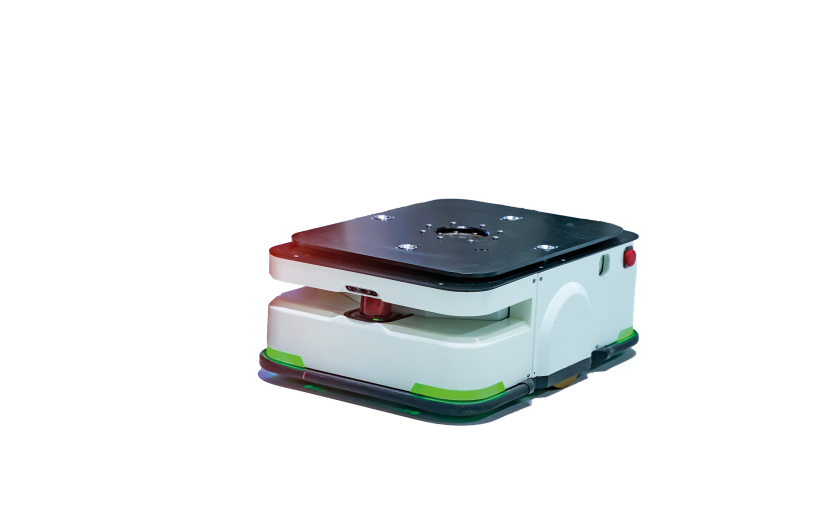
- Autonomous and mobile platforms with safety-rated servo drives.
You may also see vendor-specific terms like “inhibit,” “enable,” or “drive disable.” Some of these are not safety-rated and should not be treated as STO equivalents for risk reduction unless they are explicitly certified as safety functions.
STO vs. Inhibit Functions
Both STO and “inhibit” aim to stop the motor from being driven, but they are not equivalent:
Servo Drive Inhibit
- A general-purpose control input, often implemented in firmware or standard logic, that requests the drive to stop output.
- Useful for sequencing or basic interlocks, but not designed to be fail-safe. It typically lacks the diagnostics, redundancy, and certification required for risk reduction claims in a formal safety assessment.
Safe Torque Off (STO)
- A safety function independent of firmware that is implemented in certified hardware to disable the drive’s output stage, so no torque can be produced.
- Typically supports dual-channel architectures and provides diagnostic coverage to meet targets like SIL 3 / PL e when used per the manufacturer’s safety manual.
Modern Industrial Safety Protocols
Historically, STO was activated using hard-wired safety relays running to each drive’s STO inputs. That approach remains valid, especially for small automation requirements. However, today’s plants often rely on distributed, networked safety that transmits safety messages alongside standard network traffic over the same cable, commonly called the “black channel” principle.
Widely used functional safety communication protocols include:
- PROFIsafe (on PROFINET)
- CIP Safety (on EtherNet/IP)
- FSoE – Functional Safety over EtherCAT.
These protocols allow a central safety controller to command and monitor devices (e.g., drives, light curtains, scanners) with deterministic, certified communication, reducing wiring complexity and simplifying large systems.
Where does STO fit into a control system?
In a networked safety architecture, the safety controller can command STO over the safety network (or via a safety module) – the drive executes STO locally in certified hardware. This keeps safety logic centralised and enables fast diagnostics.
Discuss the Application of STO with a Technician
Planning a new robotics build or retrofitting for safety? Our team can help you weigh up hard-wired vs. networked safety and map STO into your overall safety function design.
Safe Torque Off: What Do You Need to Remember?
- STO disables torque generation. It doesn’t cut all power. The axis coasts to rest unless you provide braking or a controlled stop. Use STO plus a mechanical brake or a “controlled stop” sequence when required by your risk assessment.
- It aligns with international standards. STO is defined in IEC/EN 61800-5-2 and maps to Stop Category 0 in IEC 60204-1 terminology.
- Use safety-rated implementations (often dual-channel) when you need to claim risk reduction (e.g., SIL/PL targets). A non-safety inhibit input should never be classified as a suitable substitute.
- Networked safety (PROFIsafe, CIP Safety, FSoE) can simplify large systems and centralise diagnostics, while STO executes locally in the drive’s certified hardware.
Celera Motion: Experts in Motion Control Systems
Celera Motion builds high-performance motion components for the world’s most demanding applications. Our Everest and Capitan servo drives integrate certified safe torque off so you can implement safety with confidence, without adding external motor contactors or complicated wiring to robotic builds.
- Everest Series: Ultra-compact, high-power servo drives with STO. The Everest XCR’s STO feature received TÜV Rheinland certification, and STO coverage extends across the Everest family.
- Capitan Series: High-power-density servo drives with SIL 3 / PL e STO certified by TÜV Rheinland across CORE, NET, and XCR variants.
Ready to move forward? Request a Quote or Contact Us.
Safe Torque Off FAQs
Does STO stop the motor instantly?
No. STO prevents torque, so the axis coasts to a stop. Stopping time depends on inertia, friction, and any brake components that you apply. For a controlled ramp-down, pair a “safe stop 1” function with STO.
Is STO the same as removing mains power?
No. With STO active, control power and communications may remain on, but the output stage is disabled, so the motor cannot be energised. For electrical work, technicians still need to isolate the mains power and apply lockout/tagout.
Is STO always dual-channel?
Safety-rated STO implementations often provide dual-channel inputs to achieve higher integrity, while some applications may use single channel at lower targets. Consult the drive’s safety manual and any risk assessment documentation.
Safety Torque Off Implementation Checklist
When planning on featuring STO in your machine:
- Define the safety function and target (e.g., SIL/PL) in your risk assessment.
- Select drives with certified STO matching your targets (e.g., SIL 3 / PL e) and verify with the safety manual.
- Decide on the architecture: hard-wired safety relays vs. networked safety (PROFIsafe, CIP Safety, FSoE). Consider diagnostics, scalability, and wiring.
- Plan stopping performance: STO is torque-off, so include mechanical brakes or a controlled stop step if complete, controlled stopping is required
- Verify and validate: apply the drive manufacturer’s proof tests, monitoring, and reset procedures. Ensure to document results for your compliance files.