














Optical Encoders
MII5000 Mercury™ II Series Cabled Encoders
Superior resolution, seamless integration.
Compact Performance in Tight Envelopes
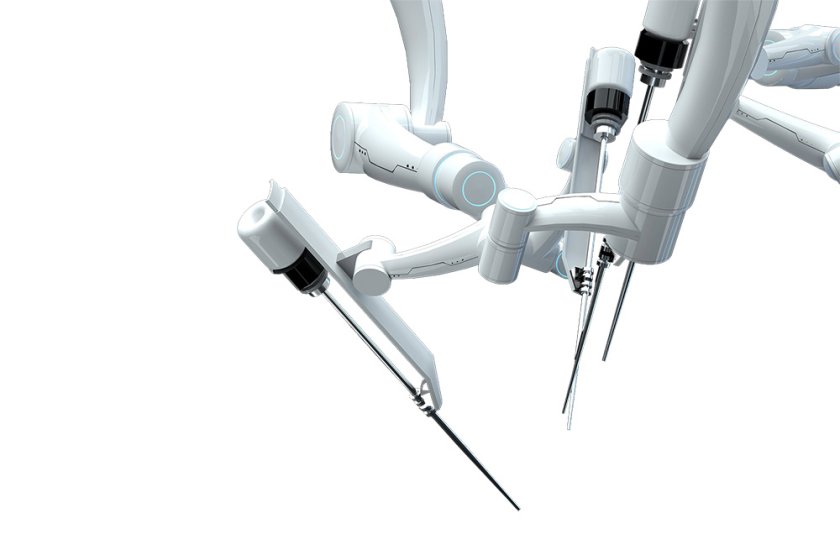
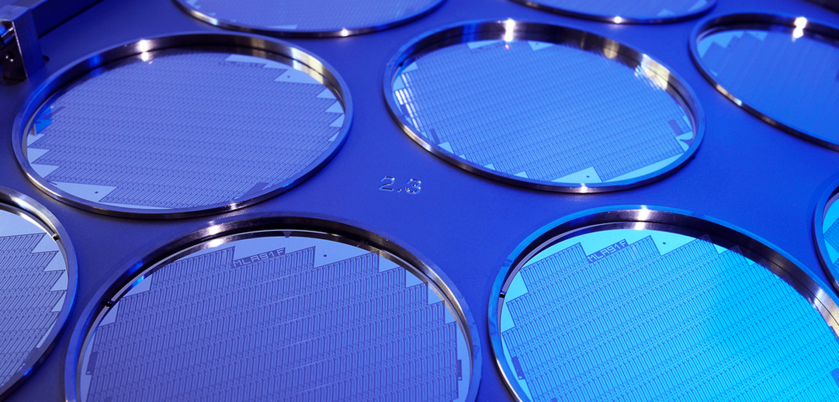
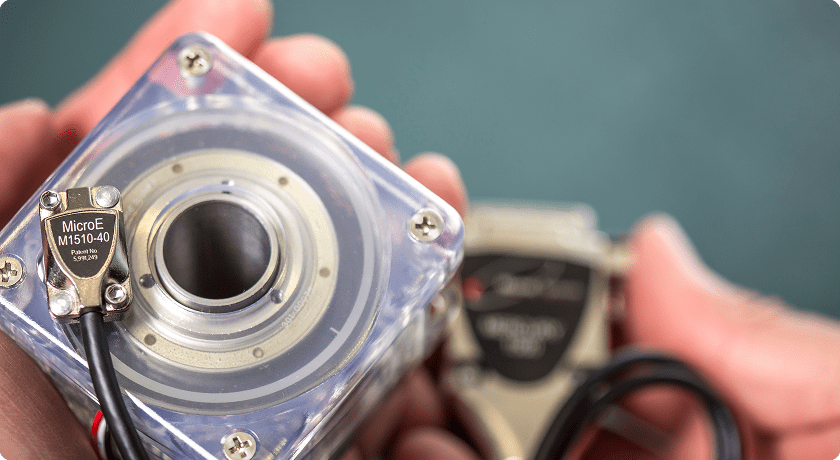
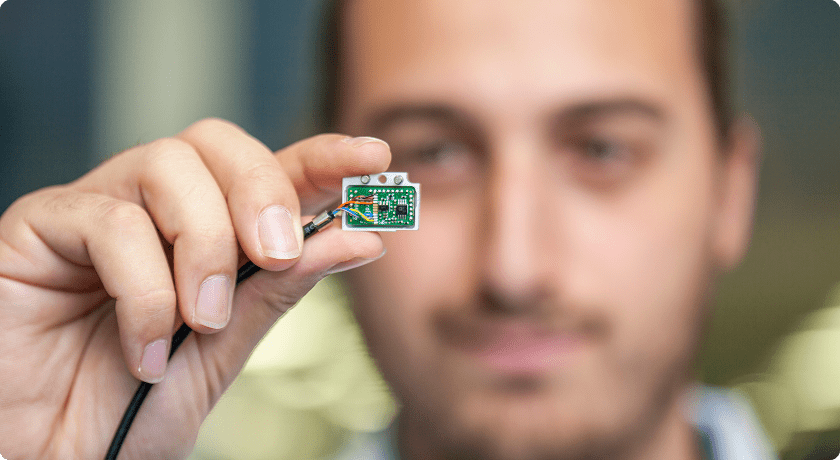
The Mercury series is engineered for applications where the sensor must fit into an extremely small mechanical space while the electronics are housed remotely. With a sensor head just 8.4mm tall, these kit encoders are significantly smaller and lighter than traditional models, making them perfect for medical robotics and semiconductor handling. The remote electronics module keeps heat-generating components away from precision stages, ensuring maximum thermal stability.
Maximum Noise Immunity
Built for durability, the Mercury Cabled series features a double-shielded, high-flex-life cable that provides best-in-class EMI/RFI immunity. This ensures consistent signal integrity even in the most electromagnetically noisy industrial environments. The series is highly versatile, with a single sensor capable of working across linear tape, linear glass, and rotary scales, allowing for a unified feedback solution across multiple machine axes.
Overview
- Mercury II’s encoder technology achieves the highest resolution and accuracy in its class, with low cyclical error, low jitter, smaller sensors, and lower power consumption.
- Mercury II’s low cyclical error surpasses every other 20μm encoder. The benefits are smoother velocity control for linear motors, stages and wire bonders; More precise, and faster linear positioning.
- Smallest tape scale system available: only 6mm wide, including index and limits – less than 1/2 the width of other encoder systems.
- Broadest Alignment Tolerances: With the broadest alignment tolerances in the industry, a full +/-2 degrees, Mercury II is the easiest and the fastest sensor to align and setup. You can align the Mercury II sensor in under 30 seconds.
- Built-in or Stick-on Optical Index and Limits: Order tape or linear glass scales with built-in markers for fastest installation, or install stick-on index and limit markers anywhere on cut-to-length tape scales.
Specifications
| Linear | Rotary | |
|---|---|---|
| Dimensions | 38.5 x 13.5 x 11 mm | 38.5 x 13.5 x 11 mm |
| Interface, Digital | A quad B with index and limits | A quad B with index and limits |
| Interface, Analog | – | – |
| Interpolation | up to ×16,384 in the sensor | up to ×16,384 in the sensor |
| Resolutions | 5 µm – 1.2 nm | 20k to 268M CPR |
| Accuracy Class, Glass | up to +/- 1 µm | up to +/- 2 arc-seconds |
| Accuracy Class, Metal Tape | up to +/- 5 µm/m | – |
| Grating Pitch | 20 µm | 20 µm |
| Max Speed | 5 m/s | 6,000 rpm |
| Operating Environment | Atmospheric | Atmospheric |