



















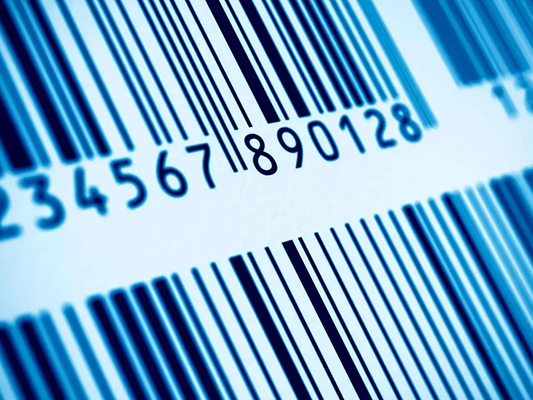
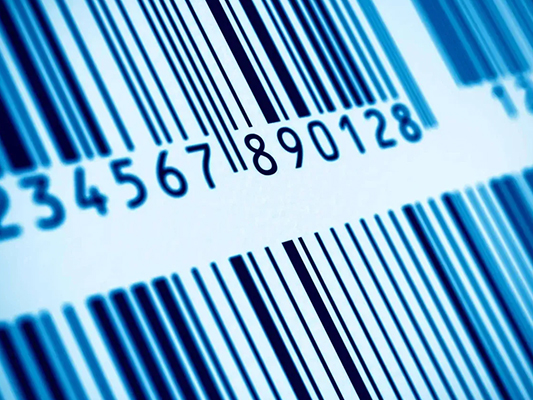
Barcode patterns have to follow pre-set symbology specifications in order to be read. If certain barcode standards aren’t met due to poor printing, lack of contrast, or incorrect dimensions, the codes are unverifiable and can’t be read by barcode scanners.
All barcodes are verified against ISO standards, developed to ensure universal consistency so that all codes can be reliably decoded at the point of use. In this article, JADAK outlines the three main ISO barcode standards, how they can be met, and the types of barcode that each standard applies to.
What are ISO Barcode Grading Standards?
ISO barcode grading standards are grading criteria determined by the International Organization for Standardization. These standards are in place to ensure barcodes meet quality levels and can be scanned reliably at different end points, including in retail and logistics settings.
There are currently only 3 ISO standards that are applicable to barcode quality and verification. These include ISO/IEC 15416 for 1D barcodes, ISO/IEC 15415 for 2D barcodes, and ISO/IEC TR 29158 for DPM (Direct Part Marking) barcodes.
| ISO Standard | Barcode Type |
| ISO/IEC 15416 | 1D label-based |
| ISO/IEC 15415 | 2D label-based |
| ISO/IEC TR 29158 | 2D DPM (Direct Part Marking) |
Barcodes are graded against different parameters pertaining to their ability to be scanned, and are assigned grades A – F.
ISO/IEC 15416 barcode standard
Applicable to: 1D label-based barcodes
What is a 1D Barcode?
A 1D, or one-dimensional, barcode (also known as a linear barcode) is the most widely recognized barcode in use. These barcodes consist of vertical lines and spaces that vary in diameter, and hold encoded data that is read horizontally from left to right.
1D barcodes only contain alphanumeric data, and can hold up to 85 characters. They are typically used for product packaging, where they will be used to store product IDs, prices, serial numbers, and other crucial product information.
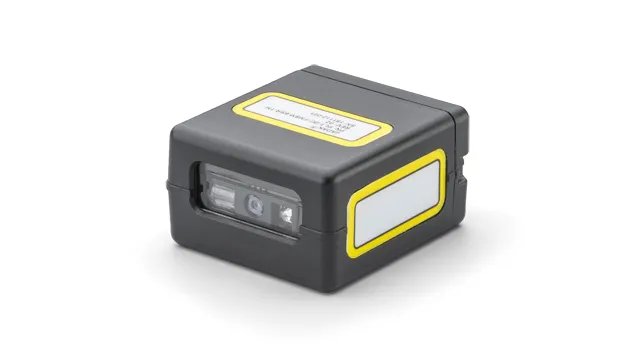
ISO Grading Parameters for 1D Barcodes
1D barcodes are made up of 10 scan lines, each of which is graded using the ISO/IEC 15416 standard to determine an overall grade.
The following parameters are measured against the ISO standard and assigned a pass or fail grading.
| Parameters | Detail Assessed |
| Minimum Reflectance | If the bars are dark enough to meet ratio requirements |
| Decode | If the code can be read using the standard reference decode algorithm |
| Minimum Edge Contrast | The color distinction between bars and spaces |
If the barcode achieves a pass for all 3 parameters, the grading software then assesses several more areas, awarding each scan line a grade from A to F. The final grades are then collated to deliver a final overall grade for the barcode.
| Parameters | Detail Assessed |
| Symbol Contrast | Contrast of dark and light areas of the barcode |
| Decodability | Whether the bar and space widths are accurate |
| Defects | Any markings or print errors |
| Modulation | Local variations in contrast |
ISO/IEC 15415 Barcode Standard
Applicable to: 2D label-based codes
What is a 2D Barcode?
A 2D barcode is a two-dimensional barcode that contains information on the horizontal and vertical axis. They can contain more data than traditional black and white lined barcodes.
Examples of 2D barcodes include:
- QR code
- Micro QR code
- Data matrix
- Maxicode
- PDF417
ISO Grading Parameters for 2D Barcodes
The first test for 2D barcodes is whether they can be successfully decoded. If they can’t, they immediately receive an ‘F’ grade. A ‘no decode’ can occur for several reasons, such as the wrong aperture being used, disproportionate cell sizes, or missing finder pattern components.
External factors, including an unfocused scanning camera, can also be the cause of a ‘no decode’.
If the 2D barcode can be decoded, the following parameters are assessed and graded from A – F:
| Parameters | Detail Assessed |
| Modulation | The uniformity of reflectance across dark and light modules. Low modulation makes it hard for dark and light modules to be distinguished from one another |
| Symbol Contrast | Contrast between dark and light areas of the 2D barcode |
| Fixed Pattern Damage (FPD) | The FPD grade takes all fixed-pattern components into account and assesses if there are imperfections in each zone |
| Grid Non-Uniformity (GNU) | Deviation of the grid center, between the center of the calculated module center and its ideal center |
| Axial Non-Uniformity (ANU) | Aspect ratio of the symbol |
When grading 2D barcodes, the lowest individual grade awarded to one of multiple parameters becomes the overall grade for the barcode. For example, if the 2D barcode receives an ‘F’ grade for modulation, the whole barcode will be assigned that grade, regardless of scoring for other parameters.
ISO/IEC TR 29158 Barcode Standard
Applicable to: 2D DPM (Direct Part Marking) barcodes
What is a DPM Barcode?
Direct Part Marking (DPM) barcodes use 2D DataMatrix and QR code formats, but are etched directly into surfaces, rather than being printed in the standard black and white.
ISO Grading Parameters for 2D DPM Barcodes
ISO TR 29158 standards share many similarities with ISO 15415, but certain parameters have been adjusted to accommodate the different materials that DPM codes appear on. Others have different names to avoid any confusion.
Below is a summary of the parameters that have been modified to grade DPM barcodes.
| Parameters | Detail Assessed |
| Cell Contrast (CC) | Changed from Symbol Contrast to reflect relativity to light backgrounds |
| Cell Modulation (CM/CMOD) | Changed from Modulation to reflect changes to grading and calculations |
| Distributed Damage Grade (DDG) | Changed from Average Grade to leave out C level |
| Minimum Reflectance (MR) | An addition that adds a 5% limit to catch low-contrast symbols |
Barcode Standards are Crucial to Everyday Operations
Barcode standards have been developed to ensure that consistent, reliable decoding can be achieved in all settings. 1D, 2D and DPM barcodes that are up to standard are crucial for keeping up-to-date inventories, tracking products, and more across healthcare, logistics, retail, and other industries.