
















The role of RFID in the food and beverage industry can be wide-ranging, helping manufacturers, retailers, and hospitality businesses to transform their operations, improve food safety, and reduce waste, supporting sustainability.
The Food and Drug Administration (FDA) in the US is in the process of introducing the Food Traceability Rule, with recordkeeping requirements beginning from January 2026, and compliance necessary from July 2028. The new rule requires businesses manufacturing, handling, or using certain food products to keep detailed traceability records on origin, ingredients, and supply chain touchpoints to enable quick identification and recall in the event of a foodborne illness outbreak. Affected foods include (but are not limited to):
- Cheeses
- Shell eggs
- Nut butters
- Fresh tomatoes
- Fresh peppers
- Melons
- Finfish
- Crustaceans
- Ready-to-eat deli salads
Through the use of RFID, food traceability can be improved and streamlined, with RFID tags holding data about a product from every stage of the supply chain, helping businesses to remain compliant. But how does this work exactly, and what are the other uses of RFID technology in food industry settings? In this article, we explore the benefits and challenges of RFID in the food and beverage industry.
What is RFID Technology?
RFID (radio frequency identification) is a tracking technology used across multiple industries to monitor the status of items in real-time via electromagnetic fields. RFID tags can be attached to assets, such as food or drink packaging, medical consumables, or clothing items; when scanned using an RFID reader, data on the product’s location and status will be communicated to a central system. This information can then be used to make stock, merchandising, or even recall decisions.
For example, RFID tags in food packaging will transmit key information about a product’s origin, ingredients, and expiration date, allowing manufacturers and retailers to manage their inventory better and remain compliant with traceability regulations.
9 Key Uses of RFID in Food Industry Environments
From improving food safety to enabling greater traceability, there are many ways that manufacturers and retailers can use RFID in the food and beverage industry to support quality control and enhance customer experience.
1. Enhance Food Safety
RFID food tracking helps to improve safety by enabling retailers, restaurants, and other businesses to identify and isolate contaminated food items quickly should a recall be issued. Contaminated food carries a risk of potentially serious illness, so brands need to have complete supply chain visibility from origin to table. Using RFID technology, companies can easily find out which products need to be removed from sale, keeping customers safe.
In addition, RFID tags in food packaging or attached to beverages can store data on factors such as temperature, humidity levels, and expiration dates. This helps businesses manage stock rotation, make discounting decisions, and prevent customers from consuming unsafe items.
2. Improve Traceability
Adding RFID in food packaging, or the container ingredients are stored in, from source to processing to packaging to shelf to table, means businesses can trace ingredients at every stage of the supply chain. Scanning the RFID tags in food packaging at each stage gathers and records data at every step.
RFID food traceability measures can enhance safety and quality control, allow contaminated products to be easily identified, and support businesses with reporting requirements.
3. Streamline Supply Chain Efficiency
RFID in the food and beverage industry can support operational, cost, and supply chain efficiencies. RFID enables automated data capture and reduces the need for manual checks at every stage of the supply chain, making processes faster and more efficient.
RFID food distribution speeds up the rate at which goods can be dispatched. It enables items to be scanned and analyzed in bulk, reducing the risk of human error and facilitating further efficiency savings. Find out more about using intelligent RFID in supply chain management.
4. Support Compliance
Complying with safety and traceability standards is a legal requirement, and RFID technology can play a key role in this. Real-time RFID food tracking ensures accurate traceability and helps businesses remain compliant with products’ recommended ‘best before’ and ‘use by’ dates. This level of visibility will become even more critical when the Food Traceability Final Rule comes into force. View the complete list of foods affected by the incoming FDA requirements.
RFID systems also provide detailed data on storage conditions, allowing companies to make sure items are stored under the required temperature and humidity conditions for freshness, quality, and safety.
5. Transform Inventory Management
By providing greater visibility into the origin, journey, and status of ingredients, RFID in food industry systems enhances and streamlines inventory management.
RFID allows food manufacturers, retailers, and restaurant businesses to monitor stock levels in real time, reducing the risk of overstocking and associated waste. In addition, it helps to avoid stockouts that could impact everything from menus to customer satisfaction levels.
RFID food tracking also reduces the need for manual stocktakes, eliminating the risk of human error, further transforming inventory management. With more detailed insights into their inventory, businesses are better able to forecast demand, monitor shelf life, streamline operations, and create a smoother customer experience.
6. Quality Control
RFID food industry solutions support businesses to manage quality control via improved traceability. Use RFID tags in food packaging to:
- Manage temperature conditions
- Prevent tampering or bottle refilling
- Promptly recall products that fail to meet quality standards
7. Vending Machines
Another everyday use of RFID in the food and beverage industry is in vending machines. RFID allows the machine to instantly identify and charge the user for the selected item without the need for barcode scanning. If customers who regularly use the same vending machine (for example, in a commercial premises or hospital) access it via an RFID card, the machine will recognize them each time. It can subsequently offer a more personalized service.
Utilizing RFID in a vending machine can also improve security by preventing theft and loss, triggering alerts when items are stolen, and even continuing to track them as they are removed from the premises. Learn more about RFID retail loss prevention systems.
8. Enhance Customer Experience
Radio Frequency Identification enhances customer experience at different stages of the shopping journey, creating a more streamlined process. RFID enables fast, contactless payments, reducing checkout times, and it makes stockouts less likely, increasing customer satisfaction.
What’s more, the data collected by RFID tags in food packaging and at other customer journey touchpoints can build a profile on individuals’ preferences, enabling tailored, personalized recommendations for an innovative, more enjoyable shopping experience.
9. Increase Sustainability
Using RFID in food industry environments can also play an essential role in a business’s sustainability strategy. Through greater supply chain visibility, improved inventory management, and enhanced shelf life monitoring, waste levels can be reduced, benefiting budgets and the wider environment.
Moreover, RFID food traceability systems help companies make better-informed decisions about the ingredients they use, as they’ll have complete transparency into how sustainably everything is sourced, handled, and transported. Thanks to RFID, food distribution teams can get more detailed insights into their supply chain logistics, using this information to make data-driven decisions regarding routes, suppliers, and even modes of transportation.
What are the Benefits of RFID in the Food and Beverage Industry?
There are many benefits to using RFID technology in food industry applications, including:
- Real-Time Tracking: RFID enables products to be tracked in real time, providing complete, up-to-the-minute visibility into the location and status of assets. This supports enhanced inventory management to reduce stock level errors and improve the efficiency of supply chains.
- Enhanced Efficiency: Use RFID to automate inventory checks, expiration date monitoring, and other key processes. This will reduce labor costs, helping businesses to improve both operational and cost efficiencies.
- Reduced Food Waste: RFID food tracking allows for better shelf life monitoring, helping businesses to minimize food waste, saving associated costs, while supporting sustainability.
- Compliance: The data provided by RFID in the food and beverage industry enables brands to remain compliant with traceability regulations, as well as requirements around product shelf life, keeping consumers safe and preventing reputational damage.
- Faster Recall Management: RFID tags in food packaging support faster, more efficient recall management to keep consumers safe and safeguard a brand’s reputation.
- Build Consumer Trust: RFID allows businesses to build trust with consumers, as this technology helps to prevent counterfeiting and enables precise traceability of ingredients, supporting enhanced food safety. Using RFID in food packaging means contaminated batches can be quickly identified and recalled, helping to prevent the spread of foodborne illness. If brands are unable to do this, both customers and a business’s reputation can be put at risk.
What are the Challenges of Using RFID in Food Industry Applications?
The use of RFID in food industry settings may also present some challenges, which are essential to understand before implementing an RFID-based system. Potential challenges can include:
- Implementation Cost: The rollout of RFID technology in food industry environments can come with a high cost, with businesses required to invest in RFID tags, readers, software, and integration, as well as staff training. Working with JADAK to build a custom RFID food tracking system means you can develop a system that aligns with your organization’s budget.
- Signal Interference: Moisture and certain metals can interfere with RFID signals, preventing tags from being read, which can lead to data inaccuracies. These substances are frequently present in food environments, so this needs to be considered when implementing RFID in the food industry.
- Data Security: Any RFID system presents data privacy and security concerns, as there’s a risk of data being collected by neighboring businesses’ RFID readers. It’s therefore crucial for retailers to implement robust security measures to protect sensitive information.
- Industry Standardization: The use of RFID in the food and beverage industry can vary significantly from company to company, leading to a lack of uniform standards in different parts of the sector. JADAK has experience developing custom RFID solutions for food and drink businesses, so we have a deep understanding of industry best practices.
Case Study: Leading Food Scale System Producer Enhances Grocery Workflows with JADAK RFID Solution
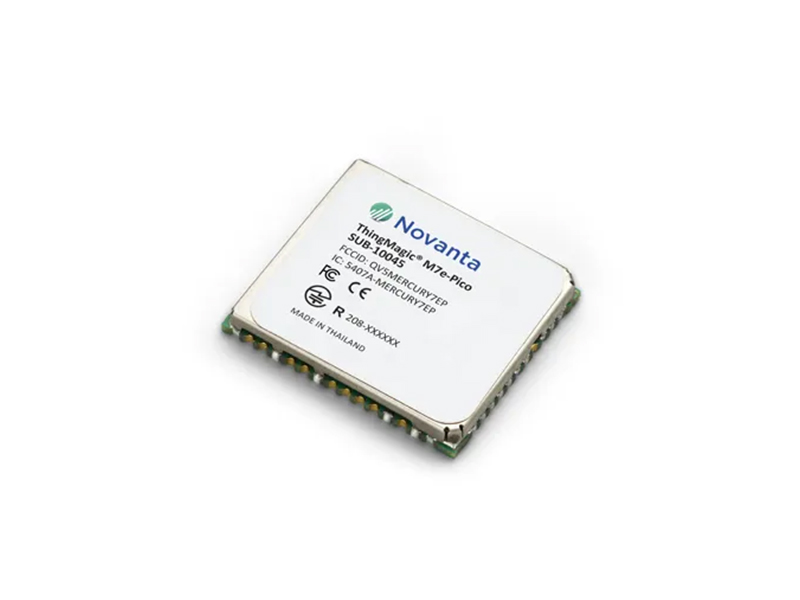
The largest producer of industrial and food retailing scale systems in the US collaborated with JADAK to enhance its grocery workflows as part of a drive to leverage technology to improve overall efficiency. Working with the company’s OEMs, JADAK implemented the compact ThingMagic® Pico RFID module to facilitate real-time inventory tracking for food retailers in store backends.
When used alongside RFID tags in food packaging, this system improves management while helping to reduce waste. Customers can weigh produce on RFID-enabled scales, and the technology will communicate the products’ expiration dates, elevating the shopping experience. Explore more RFID supermarket and grocery store solutions.
Prepare for the Future of RFID in the Food and Beverage Industry
Develop a custom RFID food tracking or RFID food traceability system for your business’s unique requirements with JADAK. Through an engineer-to-engineer approach, we’ll work closely with your in-house team to build a tailored solution for your retail or manufacturing business. Improve safety for your customers and transform operational and supply chain efficiencies.
Contact us today to speak to an engineer and find out more about our custom engineering solutions.