




















RFID access control can improve security and transform the way access is managed for organizations across multiple sectors. Using RFID to monitor access enables hospitals, retail stores, and logistics companies to gain greater visibility and control over the location and access level of individual staff members.
In this article, we’ll explore how RFID access control works, its benefits, the challenges it may present, and how JADAK’s custom-engineered solutions can help to keep your business secure.
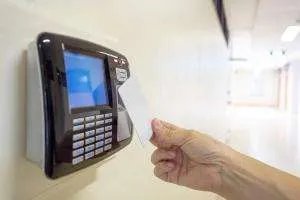
What is RFID Access Control?
RFID access control is a type of security system that organizations use to grant or restrict access to particular areas or pieces of equipment. An RFID access control system uses radio frequency identification technology to control access management.
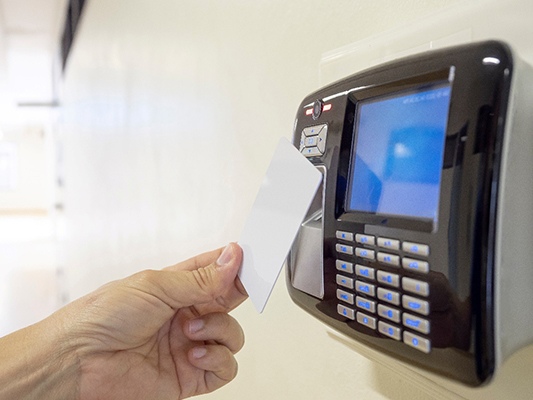
RFID access control systems typically use fobs or cards embedded with RFID modules, which communicate with RFID readers found in door lock systems or attached to specific pieces of equipment. RFID-powered access control provides fast access, tightens security, and supports efficiency.
There are different types of RFID technology used within access control systems, including:
- Active RFID: This type of RFID system operates via battery power. This means batteries will need replacing or charging regularly to facilitate smooth access control.
- Passive RFID: With passive RFID, access control cards and fobs are read via the waves emitted by an RFID reader embedded within the door lock system.
- Low-frequency (LF) RFID: Operating at 125 to 134 kHz, this is the most common type of RFID frequency used in access control systems due to its short read range.
- High-frequency (HF) RFID: Operating at 13.56 MHz, HF RFID has a moderate read range (up to a meter) and is often used in inventory tracking, as well as access control.
- Ultra-high frequency (UHF) RFID: UHF RFID operates between 300 MHz and 3 GHz and has a longer read range than the other frequencies. This means it may not be the most suitable frequency for an RFID door access control system in a healthcare facility or other secure location, but it can be used to control access to vehicles or for managing access to an entire premises, rather than specific rooms.

BLOG: Active vs Passive RFID: Understanding Which Is Right For Your Application
How Does RFID Access Control Work?
An RFID access control system has three key components:
- RFID tags
- An RFID reader
- A central system or server
The RFID tag (also known as an RFID module or chip) contains a unique ID code. This is embedded within a key fob, access card, or wristband. Individuals will scan their mode of access against a panel or lock system when they arrive at a locked door or restricted piece of equipment.
The access panel or lock system will feature an RFID reader. It will receive a signal from the scanned card or fob to either grant or deny access, cross-referencing the unique ID code with the data stored on the central database, where access permissions are stored and updated.
When a person gains access to an authorized location or has their access denied, this is communicated to the central system, where this data is stored for monitoring, audit, and workflow optimization purposes.
What is an RFID Door Access Control System?
An RFID door access control system is a type of security system used to grant access through certain doors to only authorized personnel. Access may be managed via an ID card or key fob embedded with an RFID tag; the door lock system will feature an RFID reader, so when the ID tag is scanned, access can be granted or denied.
Environments where an RFID door access control system may be used include hospitals and other healthcare facilities, schools, office buildings, and manufacturing settings. Using this type of RFID access control eliminates the need for traditional keys, which can be easily duplicated, and it automatically logs entry and exit times, providing a detailed audit trail for enhanced security monitoring. It also allows security to be managed remotely, with system administrators able to update access permissions from a central location.
However, RFID door access control systems do present some challenges, such as the risk of fobs or ID cards being lost or stolen. In this event, individuals need to ensure the loss is reported immediately so access permissions can be cancelled remotely.
What is an RFID Security Access Control System?
An RFID security access control system is any security system that uses radio frequency identification technology to manage and restrict entry to secure areas. RFID door access control systems are just one example. Other types of RFID security access control systems may grant access to:
- RFID medical cabinets
- Automated dispensing systems
- Medical equipment, such as vital signs monitors or portable ultrasound machines
- Vehicles
- Luggage items
- Pieces of manufacturing machinery that require specific qualifications to use
What are the Benefits of RFID Access Control?
From enhanced security to ease of use, there are many benefits of using an RFID-based access control system. Advantages include:
- Improved security: Tighten security to specific areas, wards, or even individual pieces of equipment, such as medical cabinets, to reduce the risk of unauthorized access
- Real-time tracking: Track the location of staff and patients in real time, including the exact time individuals enter or exit a secure location. This data can be used in security audits and for operational analysis to streamline workflows and improve overall efficiency.
- Faster access: RFID access control enables access to be granted quickly and easily, without the need for people who are in a hurry to find the right key or to struggle with different types of locks. Fast access can be the difference between life and death in a hospital setting, and RFID can grant this instantly, playing a key role in supporting patient outcomes.
- Flexibility: An RFID access control system offers flexibility in access management and integration, particularly when you work with JADAK to develop a custom solution tailored to your organization’s needs.
What are the Security Challenges Associated with RFID Access Control?
Any security system comes with challenges, and these are minimal with an RFID access control system. However, potential risks may include:
- Loss, theft, or damage: If RFID fobs or access cards are lost or stolen, the entire security system can be compromised. In this instance, it’s imperative to inform the relevant people immediately so the missing access keys can be cancelled. Cards that are damaged or tampered with can also cause issues and may prevent access in critical situations.
- Duplication: RFID cards and fobs may be cloned, which can threaten security. Organizations need to set out a clear policy regarding where and how fobs and access cards are carried or stored, both in and out of work.
- Interception: There is a possibility that the electromagnetic signals used for RFID access control may be intercepted as part of a denial of service (DoS) attack, preventing vital access to legitimate users while also putting physical locations and sensitive data at risk. Assess the potential risks here when developing your RFID access control system.
How Easy is it to Integrate an RFID Access Control System?
Ease of integration when implementing an RFID-based access control system will depend on your organization’s existing security control infrastructure. JADAK’s custom-engineered RFID access control solutions can be developed to integrate seamlessly with your existing security measures and software for a smooth, straightforward rollout.
Our expert engineers’ll support you at every stage of development and installation, and we can work with OEMs to build a solution that can be scaled as your business needs continue to evolve.
Training is also a key part of rolling out a new RFID access control system to ensure all staff are aware of their access levels, responsibilities, and the process to follow if they lose an RFID access card or believe the system to be compromised in another way. While training requires time and resource investment, it could help businesses save the costs associated with a future system breach.
Which Industries Can Benefit From RFID Access Control?
Multiple industries can benefit from implementing an RFID security access control system, including:
1. Healthcare
Many hospitals, clinics, and pharmacies use an RFID access control system to manage who can access specific rooms, wards, buildings, and pieces of equipment, such as automated dispensing systems, vital signs monitors, and portable ultrasound machines. This helps to prevent unauthorized access to medications and sensitive patient information, reducing the risk of error and supporting improved patient safety. Find out more about the important role of healthcare access control technology.
2. Retail
RFID access control systems can be used in retail stores to manage access to the stockroom and other staff areas to tighten security. Implementing this technology can help to secure high-value products while facilitating real-time asset tracking, supporting stock management, and reducing the risk of theft and loss.

WHITEPAPER: How RFID Technology is Shaping Healthcare Security
3. Hospitality
Hotels and other hospitality businesses can utilize RFID access control for many tasks, including:
- Providing access to rooms or specific facilities via RFID-embedded access cards or wristbands
- Checking in guests without a member of staff present
- Improving customer experience by providing a seamless, contactless service
Implementing an RFID-based access control system in hospitality settings can improve security, while also potentially reducing business costs, as the secure system can be managed remotely, without the need for staff to be present 24/7 to check in guests or provide access to facilities.
4. Logistics
The transportation and logistics industry uses RFID across multiple applications, including inventory management and vehicle tracking, and it can also be used to provide secure access control.
Logistics businesses can use an RFID security access control system to restrict access to high-security areas, and to track the location and status of shipments in real time. The insights provided by the access control system can then be used to make data-driven decisions to tighten security further or improve operational efficiency.
5. Commercial Property
Commercial property landlords can benefit from implementing an RFID door access control system in their premises to monitor who can enter specific offices or meeting rooms in order to enhance security. Automating access management creates a seamless experience for commercial property tenants, and can help businesses to remain compliant with security and data protection regulations.
6. Waste Management
The waste management sector also makes use of RFID access control. Personnel can scan RFID tags to view up-to-date data on how full waste containers are, with this information connected to a central system to ensure timely collection. Furthermore, RFID access control can be used to ensure only authorized individuals have access to bins to prevent unauthorized waste disposal, supporting safety while helping organizations to minimize costs.
RFID Access Control Solutions by JADAK
Develop an RFID-based access control system tailored to your organization’s specific needs with JADAK. Through engineer-to-engineer collaboration, our RFID technology experts will work with your in-house team to build an RFID access control solution in line with your requirements.
Get in touch today to speak to an engineer and find out more about our market-leading ThingMagic® RFID technologies.