








When a system has more moving parts, it tends to have more points where things can go wrong, leading to inefficiencies and reduced reliability. This is why power transmission systems are often the main cause of vehicle problems and one of the biggest sources of mechanical losses. This happens because they rely on multiple interconnected gears and shafts to drive the load. Additionally, gearboxes often produce high levels of noise, vibration, and harshness (NVH), which consumers find undesirable.
Direct drive technology has been around for quite some time, but its use has recently grown, especially in industries ranging from automotive to clean energy generation. But what advantages do direct drive motors offer compared to traditional motors?
In our blog, we will outline everything you need to know about direct drive motors, including what they are, the methodology they follow and their benefits.
What is a Direct Drive System?
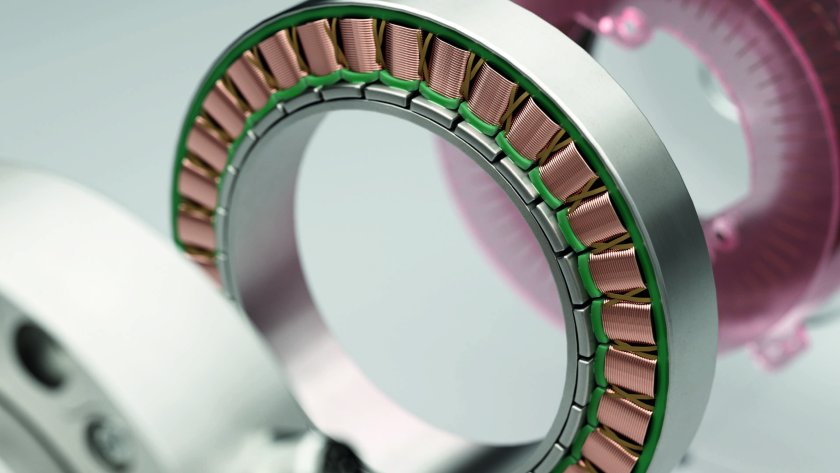
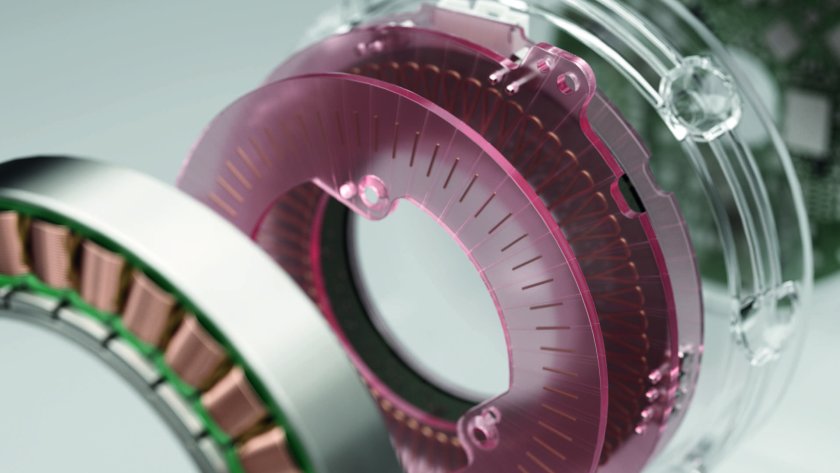
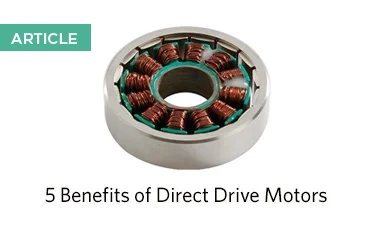
A direct drive motor describes any linear or rotary motor that is directly connected to the load, driving it without means of mechanical transmission. Instead of mechanical couplings, direct drive systems use permanent synchronous magnets and stator windings to produce an applied electromagnetic field to directly transmit motor power without intermediate components.
What is the Direct Drive Method?
The direct drive method is a mechanical system where the power from a motor is directly transmitted to the load without using intermediary components like belts or gears. In this configuration, the motor is coupled directly to the driven equipment, resulting in greater efficiency, reduced energy loss, and lower maintenance needs. Commonly used in applications like turntables, fans, and electric vehicles, the direct drive method provides smoother operation and improved precision due to the elimination of mechanical friction and backlash from traditional transmission systems.
Benefits of Direct Drive Motors
There are many benefits of Direct Drive motors which you can take full advantage of in order to have a reliable frameless motor solution. Explore all of the benefits of direct-drive motors below to learn more about why you should use a direct-drive instead of a transmission motor.
Compactness
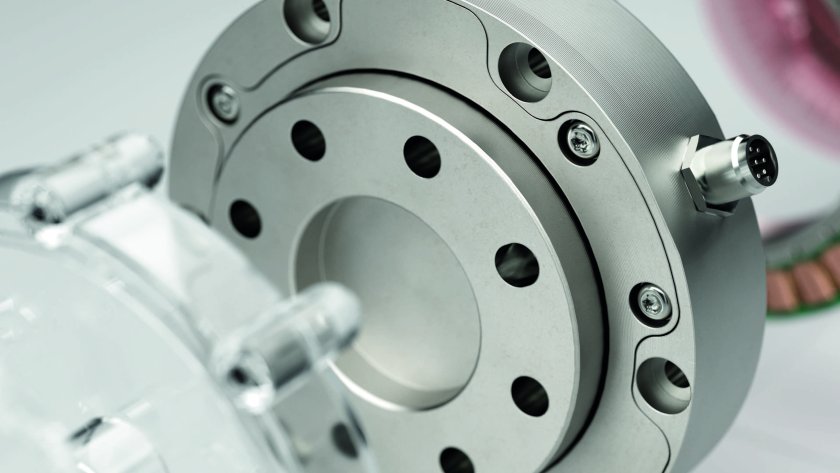
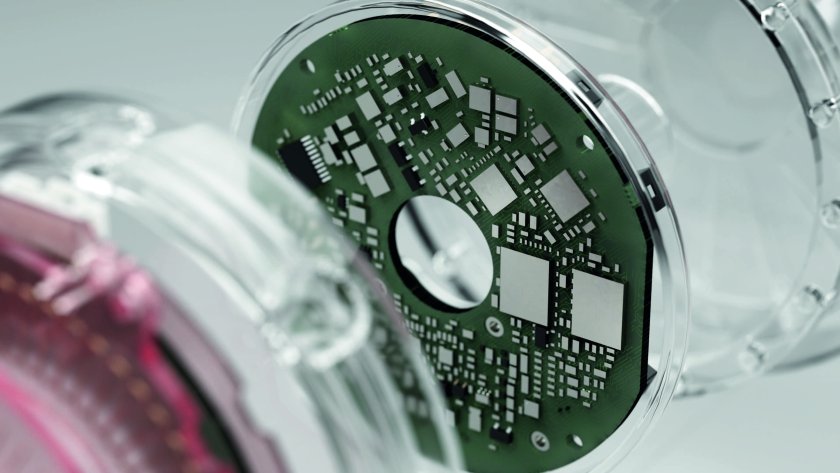
Direct drive motors offer significant design advantages, particularly due to large through-hole diameters (rotor ID) and low axial height. As direct drive motors consist of just two parts—the stator and rotor—they can be engineered to extremely compact form factors.
Power
With optimised motor constant, direct drive motors offer exceptional power density. In rotary motors, this represents elite torque density torque-carrying capabilities with a small footprint and low energy consumption.
Performance
Direct drive systems use a choice of high-resolution positional feedback devices (optical encoders, capacitive encoders, brushless resolvers, etc.) for extremely accurate dynamics and speed, resulting in dramatic improvements in precision.
Reliability
The low part count of frameless direct drive motor kits significantly increases component reliability. By eliminating additional mechanical elements, the cost of assembly is significantly reduced, while detrimental effects like backlash or wear are avoided.
Low Maintenance
The high reliability of direct drive systems also translates to reduced maintenance requirements. In many cases, frameless motors can run for their entire lifetime without maintenance cycles, which results in reduced downtimes, thus maximum throughput and performance over the full-service period of the part.
Limitations of direct drive motors
Although there are many advantages to using direct drive motors, they do have some limitations. It is important to know exactly what those limitations are before considering if they would be the correct solution. Below are some of the ways in which direct drive motors have limitations.
Some design challenges
Direct drive motors, which directly connect the motor to the load without the use of gears or belts, have certain design limitations. One key limitation is their relatively low torque output compared to geared systems, requiring larger and more powerful motors to achieve the same performance, which can increase cost, size, and weight.
Electrical
This high current demand can lead to increased power consumption and generate excessive heat, requiring robust cooling systems to maintain performance and prevent overheating. Additionally, direct drive motors often operate at lower voltages, which can reduce efficiency and make it challenging to achieve the desired speed-torque characteristics without sophisticated control electronics.
No backlash
Direct drive motors have no backlash limitations because they are directly coupled to the load without the use of intermediate gears, belts, or other mechanical linkages that typically introduce backlash. Backlash, which is the slight movement or “play” between mechanical components, is entirely eliminated in direct drive systems, resulting in highly precise and responsive motion control.
Direct Drive Motors from Celera Motion
Although direct drive systems represent a clear improvement over conventional systems, a lack of familiarity with synchronous magnet technologies often leads machine builders to stick by classical systems. At Celera Motion, we have developed a range of pre-engineered direct drive solutions designed for optimal system integration. Our goal is to reduce the friction associated with onboarding new technologies and to provide tangible returns for end-users in a range of application areas.
Our Omni Series direct drive motors are optimised to fit into various actuation systems or rotary stages with custom windings and form factors available to meet specific application requirements. Interested in learning more? Contact a member of the Celera Motion team today.
FAQs
What is the meaning of direct drive?
Direct drive refers to a system in which a motor is directly connected to the load it is driving, without the use of intermediate components like gears or belts. This design allows for more efficient power transfer, reduces mechanical wear, and often results in smoother, quieter operation.
What is an example of a direct drive?
An example of a direct drive is a turntable, where the motor is directly connected to the platter, allowing for precise and smooth rotation without the use of belts or gears. This design improves speed accuracy and reduces mechanical noise.
How does direct drive work?
A direct drive works by connecting the motor directly to the load it powers, eliminating the need for intermediary components like belts or gears. This allows the motor to transfer power more efficiently and directly to the device, resulting in quicker response, reduced mechanical wear, and smoother operation.
What does a direct drive engine mean?
A direct drive engine refers to an engine in which the power from the engine is transferred directly to the load or propeller without using intermediary components like gears.