















The traditional way to source components for these systems is to go wide: one vendor for the camera, another for the RFID reader, a third for the display, and an internal team stitching it all together after the fact. It works, eventually. But “eventually” is the problem. Every additional vendor relationship is another driver stack to validate, another set of certifications to chase down, another integration point where something breaks during acceptance testing — usually right when you can least afford the delay.
If you’re a design engineer, systems architect, or firmware developer walking the floor at Embedded World North America this year, you already know the pressure industrial OEMs are under. Customers want smarter, more connected equipment. Production schedules keep compressing. And the systems themselves — factory automation cells, logistics robots, test and measurement equipment, warehouse asset trackers, industrial control panels — keep adding more subsystems that all have to work together correctly from the first unit off the line.
Novanta builds embedded RFID modules, machine vision cameras, and rugged displays engineered specifically for the demands of industrial and advanced manufacturing OEMs — high-throughput automation, harsh factory environments, and long product lifecycles. Here’s what that means for your workflow, and why it’s worth a conversation at the show.
The Real Cost of “Good Enough” Components in Industrial Systems
Anyone who has taken a piece of automation equipment from prototype to production knows the deceptive part of the timeline isn’t usually the initial design — it’s everything that happens after. EMC and environmental testing. Driver and firmware validation. Long-term component availability checks. Field reliability testing in dusty, vibration-heavy, temperature-swinging environments that no lab perfectly replicates.
This is where a lot of embedded engineering time quietly disappears. You’re not spending it on the interesting problems — the ones your team was hired to solve. You’re spending it reconciling a camera SDK that doesn’t play well with your display controller, or re-running vibration and ingress testing because an RFID module wasn’t shielded or sealed for the enclosure you designed around it. None of that adds value to the system. It’s friction, and it compounds every time your BOM changes or a component gets end-of-lifed mid-program.
Novanta’s approach is to remove as much of that friction as possible before it ever reaches your desk — by engineering identification, imaging, and visualization subsystems to be modular, pre-integrated where it matters, and built for the realities of industrial deployment: long lifecycles, tough environments, and high-volume production.
Embedded RFID: Traceability and Asset Visibility Without the Custom Engineering Burden
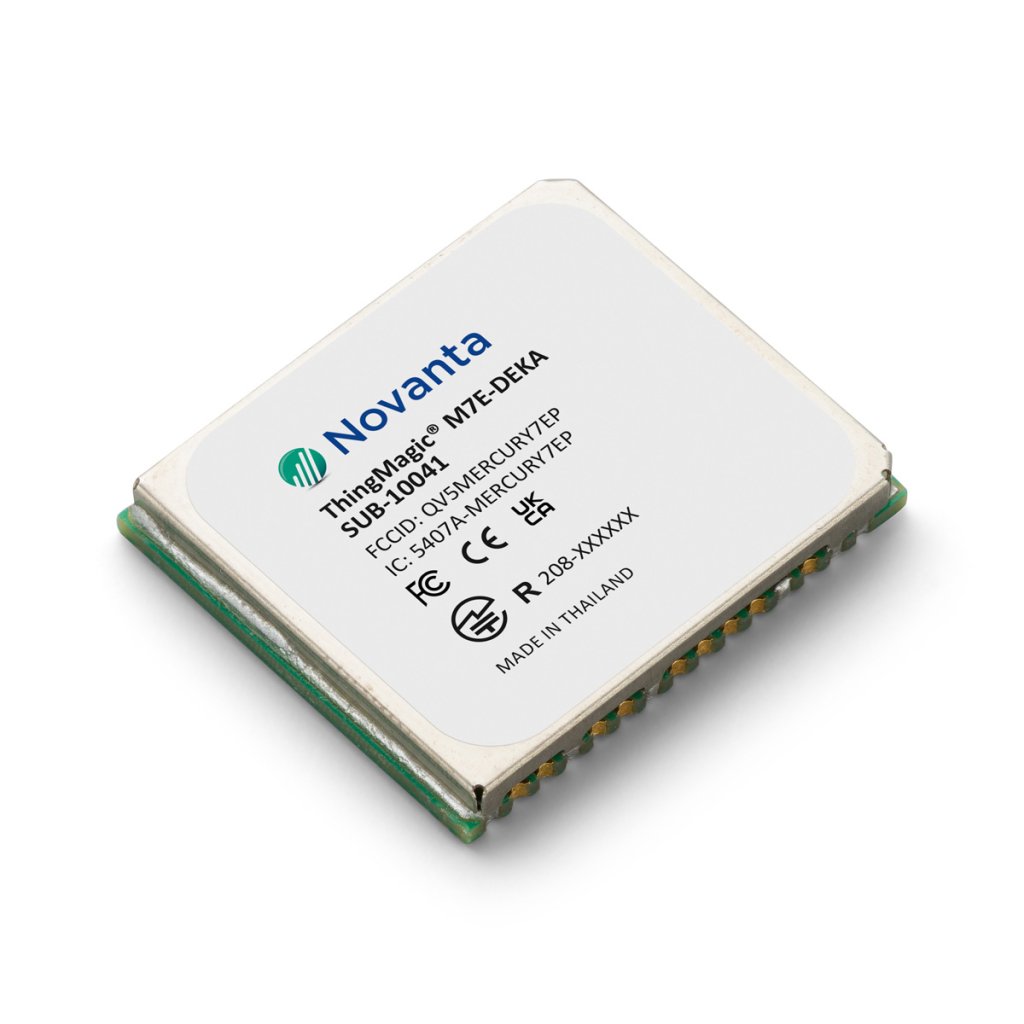
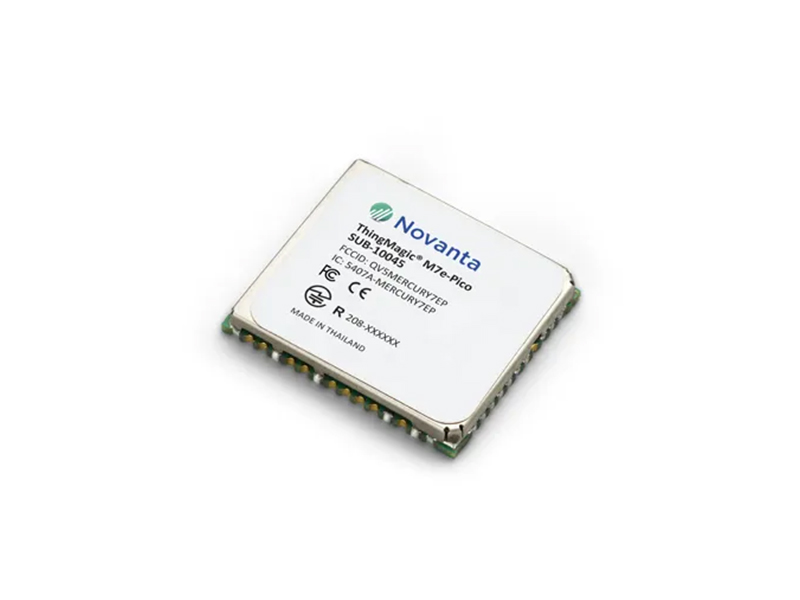
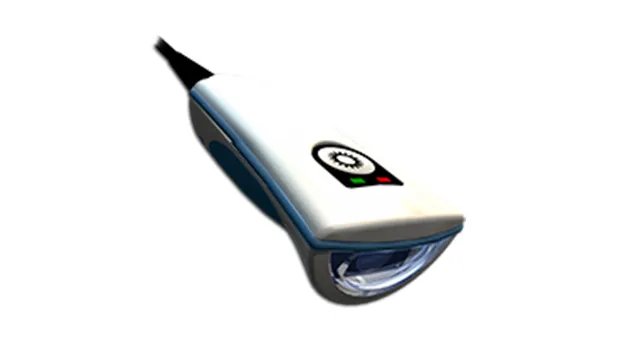
Our ThingMagic® embedded RFID modules and readers are built for exactly the problems industrial and manufacturing OEMs are trying to solve: real-time asset tracking, quality control, traceability, and supply chain visibility across a plant floor, warehouse, or distribution network. They’re available across LF, HF, and UHF protocols, so you’re not forced into a one-size-fits-all frequency choice that compromises read range or reliability for your specific application and enclosure.
In manufacturing environments specifically, RFID is used to track parts, components, and finished products in real time, automating data collection that used to depend on manual scans or paper travelers. That same identification layer supports quality control and the product recall process when something does go wrong, and gives plant operations real-time visibility into where every asset is, at every stage of production or fulfillment.
For OEMs building logistics and warehouse automation systems, embedded RFID modules deliver more accurate asset tracking, tighter inventory management, and better product security — all from a module small enough to embed directly into a reader, a robot, a conveyor gate, or a handheld scanner. Our modules are designed to be fully customizable and scalable, and our engineers work directly with yours to tailor read range, antenna configuration, and protocol support to your specific tracking application rather than handing you a datasheet and a support ticket queue.
The bigger workflow win is what happens when RFID isn’t the only subsystem you need in the system.
Machine Vision: The Advantage 182 for Inspection and Quality Control at Production-Line Speed
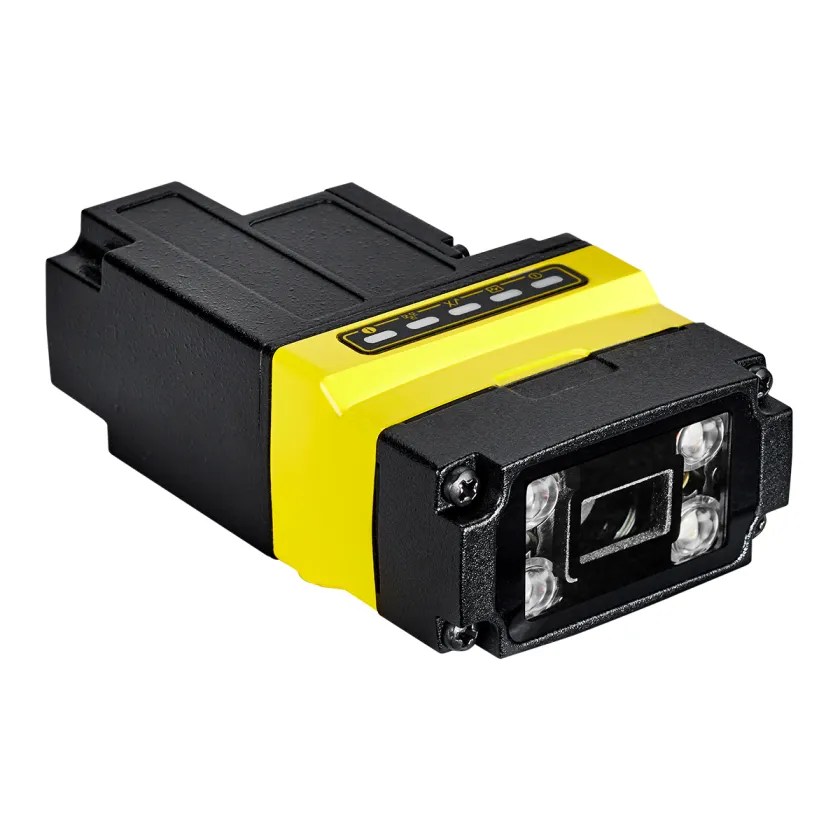
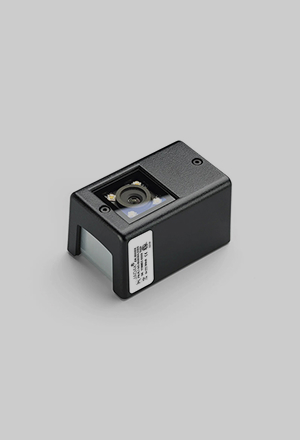
Modern manufacturing lines live or die on throughput. If your machine vision subsystem can’t keep pace with the production line, you don’t have a system — you have a bottleneck with a nice enclosure around it. This is where our best-selling machine vision camera, the Advantage 182, does its heaviest lifting. It’s our lead fixed-mount vision system for industrial OEMs precisely because it was built to give engineering teams flexibility without sacrificing speed to production.
The Advantage 182 pairs traditional rules-based vision tools with built-in edge learning — AI-based tools trained to automate and scale inspection tasks that introduce real-world variation, the kind of variation that trips up a purely deterministic vision system. Reading 1D and 2D codes on fast-moving parts, running presence/absence and defect checks, or classifying components that vary slightly from unit to unit are all tasks the Advantage 182 handles inside the same programming interface, so your team isn’t maintaining two separate toolchains for deterministic and AI-driven inspection.
That combination — AI-assisted inspection, scalable optics, and pre-qualified configurations — is exactly why the Advantage 182 has become our highest-volume camera across industrial OEM applications. It gives engineering teams a fully embedded vision solution that moves from first prototype to full production without the redesign cycles that come with piecing together a custom vision system from raw components.
For OEM engineers building the system, the bigger advantage is how the hardware itself is structured. The Advantage 182 is designed around scalable optics and illumination options, so it drops into a wide range of working distances and fields of view without a custom hardware redesign for every new application. It also ships with pre-qualified standard configurations that speed up prototyping and productization — instead of characterizing a bespoke optical setup from scratch, your team can select a proven configuration that matches your working distance and field-of-view requirements and move straight into validation. And because every hardware component carries revision control, you’re protected against the quiet cost of component obsolescence: previous engineering work carries forward instead of getting thrown away every time a part changes.
Rugged Displays: The Interface Your Operators Actually Trust
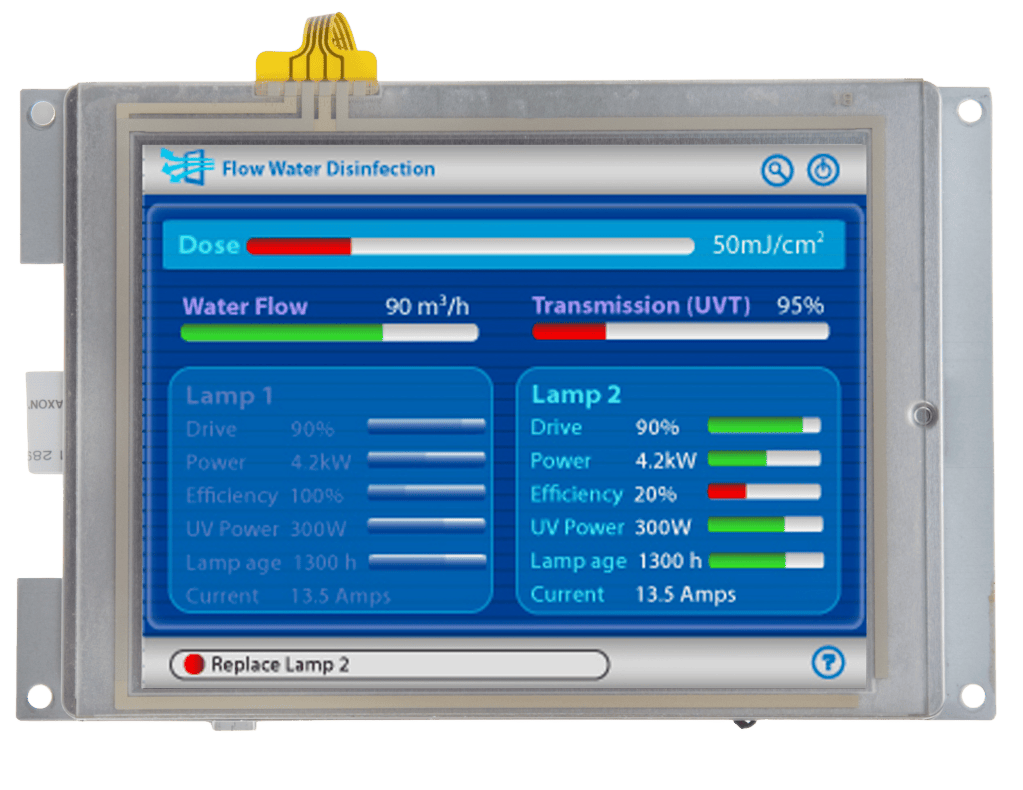
It’s easy to underweight the display when you’re deep in sensor fusion or motion control problems, but the display is what the operator actually sees and touches, often in a control room or on a factory floor that’s dusty, humid, or vibrating. If it washes out under shop-floor lighting, lags during a critical process step, or fails after eighteen months of continuous industrial use, none of the sophistication underneath matters.
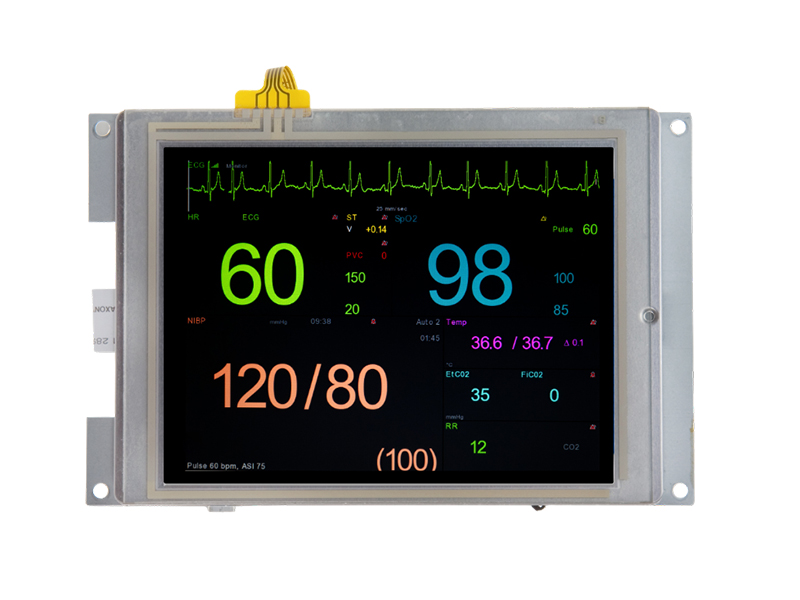
Our embedded touchscreen displays — including the G3 and SLCD-N product lines from are built specifically for sophisticated HMIs and control systems, supporting industrial I/O like CAN, I²C, and UART so they integrate cleanly into automation equipment, test and measurement systems, and rugged machinery. They scale from compact interfaces up through larger panels, with both projected capacitive and resistive touch options depending on whether your operators are working bare-handed or in gloves, and modules are designed around industry-standard LCD form factors with a 10+ year processor life, so you’re not redesigning your interface every time a component gets discontinued.
For OEMs building test and measurement equipment or automation control panels, Qt-based drag-and-drop UI tools mean your team can build a sophisticated, responsive interface without starting your graphics stack from scratch — and ESD and EMC test results are available up front to ease your regulatory and compliance testing rather than leaving you to characterize the display yourself.
Where It All Comes Together
Here’s the part that actually changes your development timeline. Novanta doesn’t just sell RFID, vision, and display components separately and wish you luck integrating them. Our engineering teams work engineer-to-engineer with yours, from initial architecture through production deployment, which tends to surface integration issues in week two of a project instead of month eight of verification testing.
Whether you’re designing an automated logistics robot that needs RFID-based asset identification alongside an Advantage 182 quality check, or a factory control panel that needs a rugged operator display paired with barcode-based part tracking, the pattern is the same: every additional vendor interface is additional risk and additional schedule. Working with a single technology partner across identification, imaging, and visualization collapses multiple qualification cycles into one — which means less time spent reconciling mismatched drivers and communication protocols, and more time spent on the parts of your system that actually differentiate it in the market.
What This Means for Your Next Design Cycle
If there’s one theme running through RFID, machine vision, and displays at Novanta, it’s this: every one of these product lines was engineered around the constraints industrial OEM engineers actually deal with — protocol flexibility and read reliability for identification, AI-assisted inspection and scalable optics in cameras like the Advantage 182, and ruggedness and long-term availability for displays — rather than adapted from a consumer product line after the fact. That distinction shows up later as fewer surprises during EMC and environmental testing, fewer firmware workarounds, and a shorter distance between your first working prototype and a design that’s ready for volume production.
Every application is different, and the right combination of RFID protocol, camera resolution, and display size depends on your specific system, environment, and volume. Rather than guessing from a spec sheet, the fastest path is a direct conversation with our engineering team about what you’re building.
Reach out to our technical team today to discuss the RFID, machine vision, and display options that are right for your application — visit our Contact Us page to get started.