














At SC26, attendees will explore the latest advances in artificial intelligence, high-performance computing, data-intensive research, and next-generation system architectures. The conference brings together researchers, engineers, technology providers, and innovators focused on pushing the boundaries of computational performance and scientific discovery.
But as systems become more powerful, another challenge is emerging:
How do people effectively interact with all that computing power?
Whether you’re developing a scientific instrument, AI-enabled device, network appliance, test and measurement platform, or advanced manufacturing system, the user experience has become a critical part of product success.
The reality is simple. No matter how sophisticated the technology behind the scenes, users still need an intuitive way to configure, monitor, control, and interpret what the system is doing.
For OEMs, that often starts with the embedded display.
More Processing Power Creates More Interface Challenges
Many of today’s devices generate tremendous amounts of information. AI models produce insights in real time. Sensors generate continuous streams of data. Advanced analytics help users make decisions faster.
The challenge is presenting that information in a way that enables action.
A cluttered or poorly designed interface can make even the most advanced system difficult to use. Conversely, a well-designed touchscreen experience can simplify complex workflows, reduce operator error, and improve productivity.
This is especially important for products used in:




As data volumes increase, user-interface design becomes less about displaying information and more about helping users understand it.
Turning Data Into Decisions
One of the recurring themes across advanced computing environments is the need to transform massive amounts of data into meaningful outcomes.
The same challenge exists at the device level.
Engineers often spend significant resources optimizing performance, integrating sensors, or developing sophisticated algorithms. Yet the user ultimately experiences the product through its interface.
The display becomes the bridge between complex computational systems and the people using them.
A thoughtfully designed embedded GUI can help users:
- Visualize system status at a glance
- Identify critical alerts faster
- Access diagnostics efficiently
- Simplify configuration and maintenance
- Improve workflow consistency
- Accelerate training and adoption
In many cases, the interface can have just as much impact on customer satisfaction as the underlying technology itself.
As connected devices become more common, cybersecurity and lifecycle management are growing priorities for OEMs across nearly every industry.
Regulatory initiatives such as the Cyber Resilience Act (CRA) are encouraging product teams to think more strategically about how devices are secured, maintained, updated, and supported throughout their lifecycle.
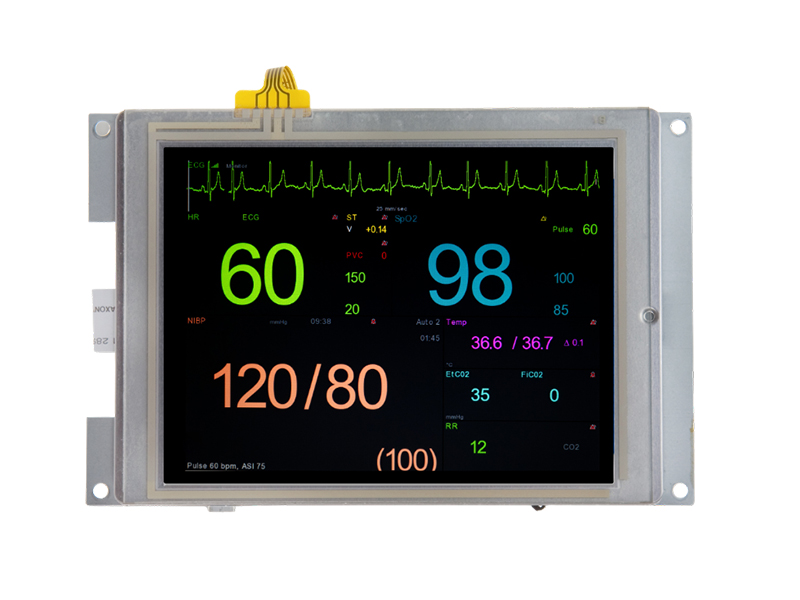
Many of Novanta’s embedded display solutions serve as the primary interface between users and complex systems. Because these displays are often integrated into connected platforms, they play an important role in enabling intuitive user experiences while supporting system architectures designed for long-term maintainability and evolution. Our display technologies are designed to integrate with modern controller platforms, helping OEMs develop products that balance usability, performance, and future readiness.
Accelerating Development Without Sacrificing Innovation
Engineering teams are under constant pressure to deliver more functionality in less time.
Rather than dedicating extensive resources to developing display hardware and user interfaces from the ground up, many OEMs are looking for ways to accelerate development while maintaining a professional user experience.
Integrated embedded display solutions can help teams:
- Reduce development complexity
- Speed prototyping
- Shorten time-to-market
- Simplify hardware integration
- Maintain user-interface consistency across product lines
This allows engineering teams to focus on the innovations that differentiate their products rather than reinventing common interface challenges.
Why OEMs Choose Novanta’s Reach Displays as a Partner
Selecting an embedded display solution is about more than hardware specifications. OEMs also need a partner that can help reduce risk, streamline development, and support products throughout their lifecycle.
When you work with Novanta’s Reach Displays team, you gain access to U.S.-based sales, customer service, and engineering resources that collaborate closely with your team from concept through production. Combined with our global manufacturing capabilities, we help OEMs accelerate development, navigate integration challenges, and bring products to market more efficiently.
Whether you’re developing scientific instruments, AI-enabled systems, industrial automation equipment, network infrastructure, or advanced test and measurement platforms, our team works alongside your engineers to understand your requirements, overcome technical challenges, and support long-term product success.
For organizations seeking greater supply-chain flexibility, Novanta’s Reach Displays solutions are backed by global manufacturing operations outside of China, providing OEMs with additional sourcing confidence while maintaining the responsiveness and technical support needed to keep projects moving forward.
The Future of Computing Still Needs a Human Interface
The innovations highlighted at SC26 will help shape the future of AI, scientific research, and high-performance computing.
Yet regardless of how powerful these systems become, people will remain at the center of decision-making.
The devices that succeed will not simply be the fastest or most capable. They will be the ones that make complex technology accessible, understandable, and actionable.
For OEMs building the next generation of intelligent systems, the user experience is no longer an afterthought.
It is a competitive advantage.
Meet Novanta’s Reach Display Team at SC26
Are you developing a scientific instrument, AI-enabled device, industrial system, networking appliance, or other product that requires a modern touchscreen interface?
Novanta’s Reach Displays team will be attending SC26 and meeting with OEMs looking to accelerate development, improve usability, simplify integration, and bring products to market faster.
Whether you’re evaluating display hardware, touchscreen interfaces, GUI development strategies, supply-chain alternatives, or long-term product roadmap considerations, we’d welcome the opportunity to connect during the event.
If you’re planning to be at SC26, let’s meet up!