
















RFID tags play a key role in security, asset tracking, and strategic decision making across multiple sectors. But what is radio frequency identification technology, and how does it work? In this article, we’ll explore everything you need to know about how RFID tags work and the benefits of using this type of technology for your organization.
What Is RFID?
RFID (radio frequency identification) is a type of technology that uses radio waves to read information in order to make decisions. Businesses can use RFID readers to scan RFID tags to learn details about an object’s location or status. The way that this works is similar to barcode scanning, but utilizes radio waves rather than image-based scanning.
RFID can be used to analyze information on objects, personnel, vehicles, and other assets to benefit efficiency, security, patient safety, and inventory management.
What Are RFID Tags?
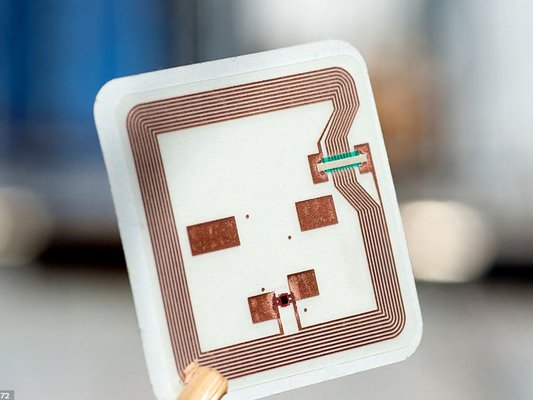
RFID tags are devices that are frequently used to track assets in retail, healthcare, manufacturing or logistics operations. RFID tags (also known as RFID chips or transponders) store information relating to an object’s unique code, status and location, using radio waves to communicate key details to an RFID reader or scanner. This information can then be analyzed and used to inform strategic decisions, improve security, or support patient safety.
Types Of RFID System
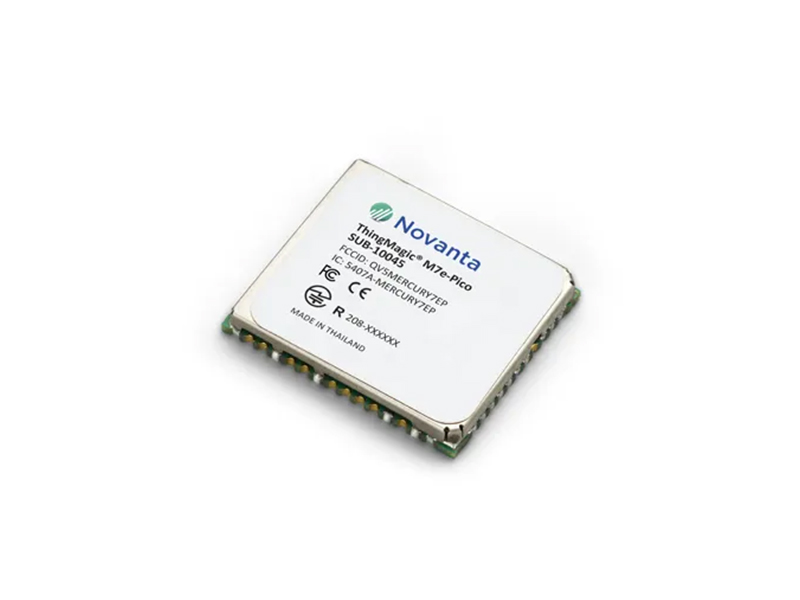
There are three main types of RFID system: low, high and ultra high frequency. JADAK’s expert engineers can advise you on the best frequency and RFID modules for your needs, and work with you to develop custom RFID solutions tailored to your specific requirements.
| Low Frequency (LF) | High Frequency (HF) | Ultra High Frequency (UHF) | |
| Frequency Range | 30 to 300 KHz | 3 to 30 MHz | 300 MHz to 3GHz |
| Typical Frequency | 125 KHz | 13.56 MHz | 433 MHz |
| Read Range | 10 cm | Up to 1 meter or several feet | 30+ feet |
| Applications | Access control, livestock tracking, vehicle tracking | Access control, ticketing, automation | Retail asset tracking, healthcare asset tracking, inventory management, race timing |
How Do RFID Tags Work?
RFID tags need to be used alongside an RFID reader, which will scan the tag to read its data. However, the way that radio frequency identification tags works will differ slightly depending on whether they are active or passive RFID tags:
- Active RFID tags: this type of RFID tag features a battery that transmits a radio signal over a long distance for RFID readers to pick up.
- Passive RFID tags: these RFID tags rely on signals transmitted by an RFID reader; when the passive tag receives these signals, it will ‘wake up’ and send its data to the reader.
When the data housed with the RFID tag has been read, the data will be sent to a central location, where it can then be interpreted and used to inform key business decisions.
What Are RFID Tags Used For?
RFID tags can be used in a variety of environments to support everything from improved security to inventory management and enhanced patient safety. Below are just some of the applications that can benefit from RFID tags:
Retail Applications
- Retail asset tracking: utilize RFID tags to monitor the movement of products within a store, from the stockroom and shop floor to checkout in order to track customer behavior.
- Retail inventory management: automate stock audits and benefit from real-time stock visibility insights thanks to RFID tags.
- RFID kiosks: enhance customer service and transform the checkout experience with an RFID-enabled smart kiosk.
- RFID smart mirrors: provide an innovative, personalized shopping experience with smart ‘magic’ mirrors embedded with RFID to help customers find and style items.
- Retail loss prevention systems: improve store security and reduce the costs associated with lost and stolen stock with a reliable RFID loss prevention system.
- RFID point of sale systems: make the checkout experience faster and smoother with point of sale (POS) solutions that incorporate RFID technology.
- RFID supermarket and grocery solutions: RFID can transform inventory management and customer experience in supermarkets and grocery stores via smart scales and smart shopping carts.
Hospital and Point of Care Solutions
- Hospital asset tracking: use RFID to track medication and medical equipment across a hospital environment.
- Medical inventory management: monitor stock levels in real time using RFID tags to support the smooth running of hospital operations.
- RFID medical cabinets: track and manage the medication within medical cabinets more accurately with RFID technology to monitor expiration dates, increase efficiency, support compliance, and reduce waste.
- Hospital access control: RFID tags in ID cards and passes can help to enhance security in healthcare facilities, preventing unauthorized access, and safeguarding patient data.
- Automated medication dispensing: reduce the risk of errors and support patient safety by developing an RFID-powered automated drug dispensing system.
- Medical consumable tracking: attach RFID tags to surgical disposables, gloves, syringes, catheters, and more to track items in real time.
In-Vitro Diagnostics
- Laboratory sample tracking: track specimens from sample collection through to analysis using RFID tags to improve visibility and security.
- Reagent inventory management: embed reagent containers with RFID tags to enable tracking and authentication in real time.
Manufacturing and Warehouse Operations
- Manufacturing automation: automate material tracking, inspection, and data analysis with RFID tags to save on labor costs and reduce the risk of human error.
- Supply chain management: get up-to-the-minute insights into assets at every stage of the supply chain to support operational efficiency.
- Real-time location systems: utilize RFID tags as part of an RTLS system to support warehouse safety, efficiency, and inventory management.
- Humanoid robotics: RFID can enable collaboration between humanoid industrial robots and human workers on a production line to support quality control and workflow efficiency.
- Metrology: track and log measurement data in real time via RFID tags to improve traceability.
Transport and Logistics
- RFID vehicle tracking: use RFID tags to track vehicles to support real-time fleet management.
- RFID baggage tracking: airports and other transport hubs use RFID tags to track passengers’ luggage across destinations for a smoother travelling experience.
- RFID package tracking: tag important packages with RFID labels for greater visibility and real-time updates into logistics operations.
Benefits of Using RFID Tags
There are many advantages of using RFID tags for multiple industries, including retail, healthcare, manufacturing, and transport and logistics. These benefits include:
- Track assets in real time: this provides businesses with up-to-the-minute insights into the status and location of assets to support retail stock management or medication safety.
- Make data-driven decisions: access to real-time insights enables organizations to make better-informed, data-driven decisions; for example, using buyer behavior data to influence future merchandizing strategies.
- Improve inventory accuracy: use RFID tags for a more accurate view of stock and inventory management in retail, healthcare, or warehouse settings.
- Increase efficiency: RFID can be used to automate some manual processes, such as in manufacturing or medication dispensing, improving speed, and efficiency, while eliminating the risk of inconsistencies.
- Reduce human error: automating processes to remove inconsistencies and other risks associated with human error can improve product quality, retail stock management, and patient safety.
- Save money: reduce spend on labor costs associated with manual tasks, as well as the cost of fixing human errors.
- Tighten security: use RFID tags as part of an access control system to prevent unauthorized access and improve overall security of entire buildings, sensitive environments, or medication.
RFID Solutions By JADAK
Experience the benefits of RFID technology for your organization by developing a custom, tailored solution with JADAK. Our highly experienced engineers will work with your in-house team to develop RFID solutions for your specific requirements to help improve efficiency, security, and asset management.
Get in touch today to find out more about our custom engineering solutions.