








- Machine vision in deep learning enables computer programs to visualize and interpret images and videos in a similar way to the human brain
- Deep learning models feature layered neural networks that can interpret information to identify patterns and make intelligent decisions
- Deep learning brings many advantages to machine vision, including faster image processing, enhanced efficiency, greater adaptability, and cost savings
- Deep learning machine vision applications are used across industries including manufacturing, in-vitro diagnostics, and retail for applications such as object recognition, image segmentation, and defect detection
In this article, we explore exactly how deep learning can work alongside machine vision technology to create highly intelligent, accurate, reliable image processing systems.
What is Deep Learning?
Deep learning is an advanced subset of machine learning, which uses complex, layered neural networks to model and understand patterns in data. Deep learning models can be used alongside machine vision technologies for intelligent image processing, segmentation, and defect detection. Deep learning algorithms are trained to mimic the way the human brain works to identify patterns, reducing the need for manual input in industrial or healthcare applications to enhance overall efficiencies.
How Does Deep Learning Work?
Deep learning models are built on neural networks formed of a series of interconnected neurons or nodes that can process information, identify patterns, and make decisions in a similar way to the human brain. These neurons are layered; as data passes through each layer, the deep learning model learns to extract more detailed or complex information, increasing the model’s intelligence and autonomous ability.
Deep learning algorithms are trained using large sets of data; those tasked with training the system will test the model’s response to particular data, programming the system so it knows when a response is correct. The model can then apply the same approach to new images or data in the future, making decisions by itself, drawing on its previous learnings, without the need for more training.
Rules-Based Machine Vision vs Deep Learning
Traditional, or rule-based, machine vision is more limited in its abilities than deep learning models. When used together, deep learning can significantly enhance machine vision, but the two applications do have some key differences.
| Traditional Machine Vision | Deep Learning |
| Trained to look for specific patterns | Learns autonomously |
| Relies on predefined rules | Improves through experience, enhancing adaptability |
| Requires minimal manual intervention | Requires large amounts of data for initial training |
| Lacks semantic understanding | Has greater semantic understanding, supporting more accurate image classification |
Read more: Rule-based vs AI-powered machine learning: which is best for your organization?
What is the Role of Machine Vision in Deep Learning?
Machine vision and deep learning can work hand in hand, with deep learning significantly enhancing MV’s abilities. When used alongside machine vision, deep learning can make imaging tech more efficient and more intelligent. Deep learning facilitates greater automation, increased adaptability, and reduces the need for manual programming.
Utilizing deep learning as part of a machine vision system enables the technology to make decisions regarding the data it sees, rather than simply processing it. This improves machine vision’s intelligence, enhancing its performance, making it faster, and improving its accuracy. Using deep learning for machine vision processes also helps organizations to manage costs by reducing the risks associated with human error, and increasing overall efficiency and productivity.
Machine Vision Deep Learning Applications
Deep learning models can enhance multiple machine vision applications, across different sectors. These include:
1. Object Recognition
Machine vision is most often used for object recognition, such as on a manufacturing production line, or in a diagnostic laboratory. Using deep learning models, machine vision cameras can be trained to recognize a larger volume of objects, and it can then learn autonomously, supporting improved efficiencies in manufacturing environments or security systems.
2. Image Classification
Deep learning machine vision systems don’t just recognize images, but are able to classify them too, based on identified patterns or specific features, improving their knowledge continually to make more intelligent decisions. This technology can complete classification tasks much faster than humans, speeding up quality control and inspection processes, enhancing overall efficiency.
3. Defect Detection
Another common use of this type of technology is to detect defects or anomalies during quality control. Deep learning models are trained on vast datasets to analyze even the most subtle patterns, so they’re able to detect even the smallest anomalies. Machine vision deep learning models will retain this information for the future, enabling them to become even more efficient.
4. Optical Character Recognition (OCR)
Deep learning algorithms can enable machine vision systems to perform OCR, reading and interpreting types and handwritten text, as well as images. As a result, the technology can be used to extract data from scanned documents, reducing the need for time-consuming manual data entry.
5. Image Segmentation
Machine vision deep learning technology can be trained to segment images based on particular patterns or features, freeing up manual resources. This can lead to improved productivity and increased efficiency elsewhere.
6. Facial Recognition
This type of technology can be trained to recognize subtle differences in faces, as well as stationary objects, with the deep learning model continuing to learn by itself once training stops. This can be useful in identification and verification, enhancing access control, while it can also be used to improve security; for example, in a retail setting.
Industries That Use Deep Learning in Machine Vision
Industries that use deep learning for machine vision applications include:
- Manufacturing, for object inspection to support quality control
- Aerospace, to improve accuracy and consistency in product inspection processes, enabling potential defects to be identified faster
- Automotive, to help eliminate inconsistency during quality control, supporting end-user safety and satisfaction
- Healthcare, where machine vision is used for tasks such as patient observation
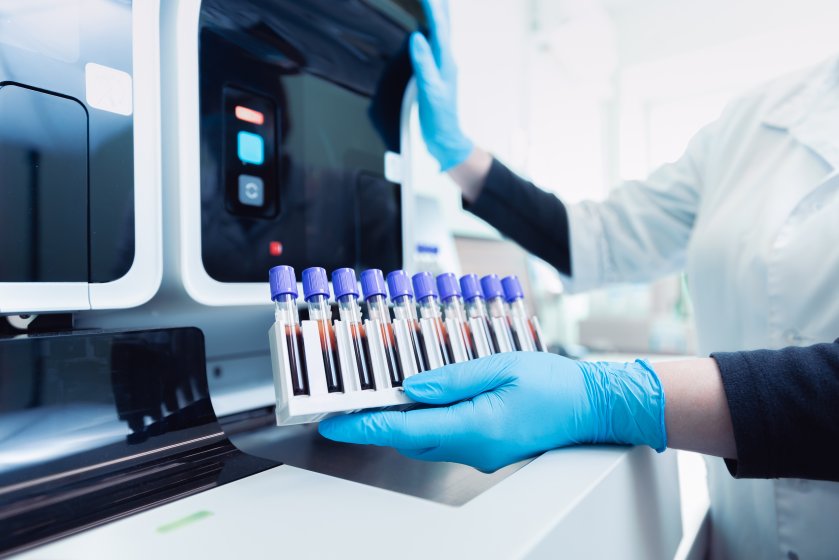
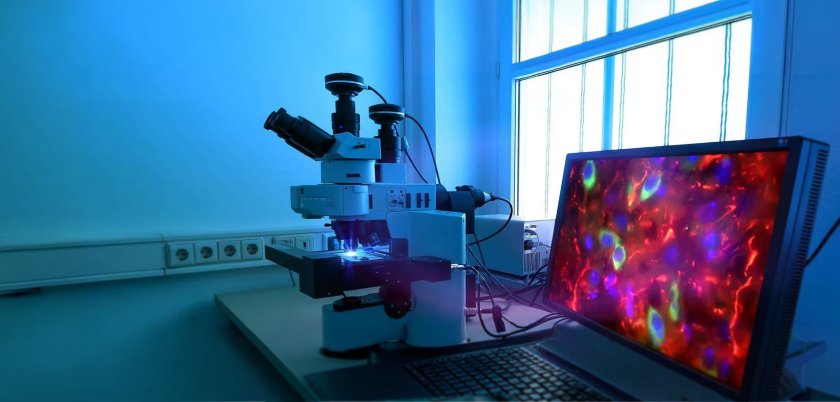
- In-vitro diagnostics, in applications such as data processing, cell counting, and sample inspection
- Retail, where facial recognition technology may be used to support store security
Read more: How does deep learning machine vision enhance in-vitro diagnostic testing?
Advantages of Deep Learning in Machine Vision
Using deep learning in machine vision applications can deliver many benefits, from improving operational efficiencies to supporting better-informed decision making. The advantages of this type of technology include:
- Autonomous learning: following initial training, deep learning models can learn to identify patterns and make subsequent decisions themselves, significantly reducing the need for manual input
- Faster image processing: deep learning machine vision applications can operate at significantly faster speeds than humans, detecting defects and anomalies quicker than the human eye. This supports overall efficiency, and could even speed up time-to-market on manufacturing production lines
- Improved accuracy: machine vision deep learning models are highly accurate, reducing the inconsistencies that can be associated with manual image classification, as well as traditional computer vision
- Real-time insights: this technology provides real-time updates, for example if a defect is detected, which means changes can be made immediately, preventing waste and the associated cost. Real-time insights mean business-critical decisions can be made faster, supporting overall product quality and end-user satisfaction
- Save costs: while there is an initial cost associated with deep learning machine vision tech, it can deliver a good return on investment. By reducing the need for human intervention, it can help to lower labor costs, while its fast processing speeds can generate cost efficiencies elsewhere
- Adaptable and scalable: deep learning models can adapt and scale with your evolving business needs. Novanta’s engineers will work with you to develop a solution tailored to your requirements. You can also train the model with new datasets in future to ensure it remains able to make the intelligent decisions that will keep your business running efficiently
Challenges Associated with Machine Vision Deep Learning Applications
There can be some limitations and challenges associated with deep learning machine vision applications. These can include:
- Implementation cost: machine vision technology that uses deep learning algorithms can carry a higher cost than traditional rules-based systems. At Novanta, we can develop a solution tailored to your specifications and budget, engineered to integrate seamlessly with your existing systems
- Model training: it can be time and resource-intensive to train deep learning models with large volumes of data, but this is necessary to ensure the technology can recognize patterns and make informed decisions without bias
- Environmental conditions: environmental factors such as lighting and brightness can impact the accuracy of decisions made by a machine vision deep learning model, so it’s important to ensure there is still some human input into inspection processes
Machine Vision Solutions by Precision Medicine
Discover advanced machine vision solutions at Novanta, including edge cameras, streaming cameras, and machine vision software, engineered to suit your organization’s requirements. Working closely with your in-house OEMs, our experienced engineers will develop a machine vision system tailored to your unique needs.
Contact us today to discuss the possibilities for building a custom-engineered deep learning machine vision solution or to get a quote for your specifications.